Description
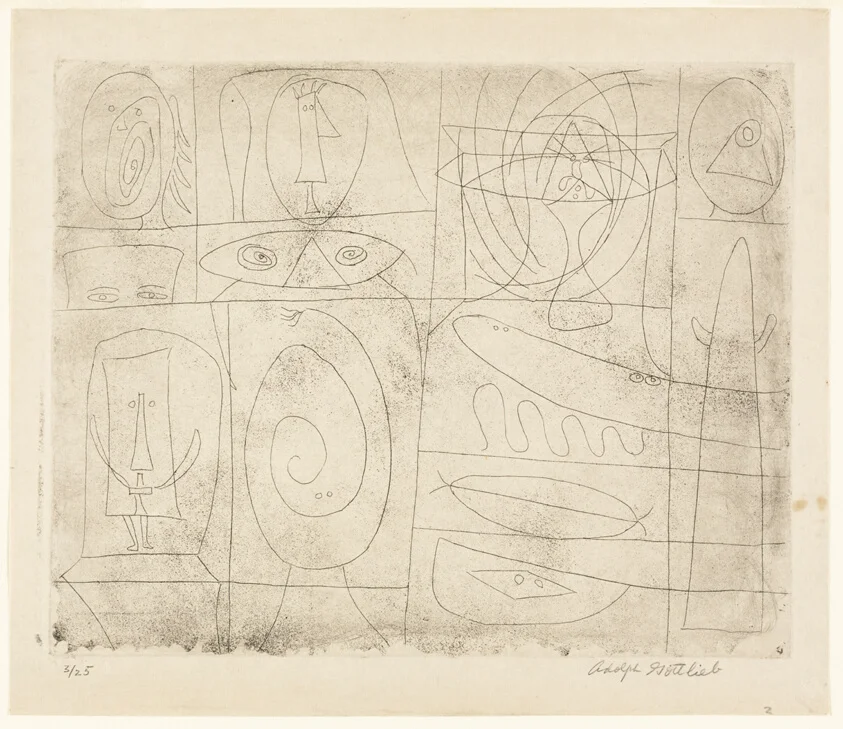
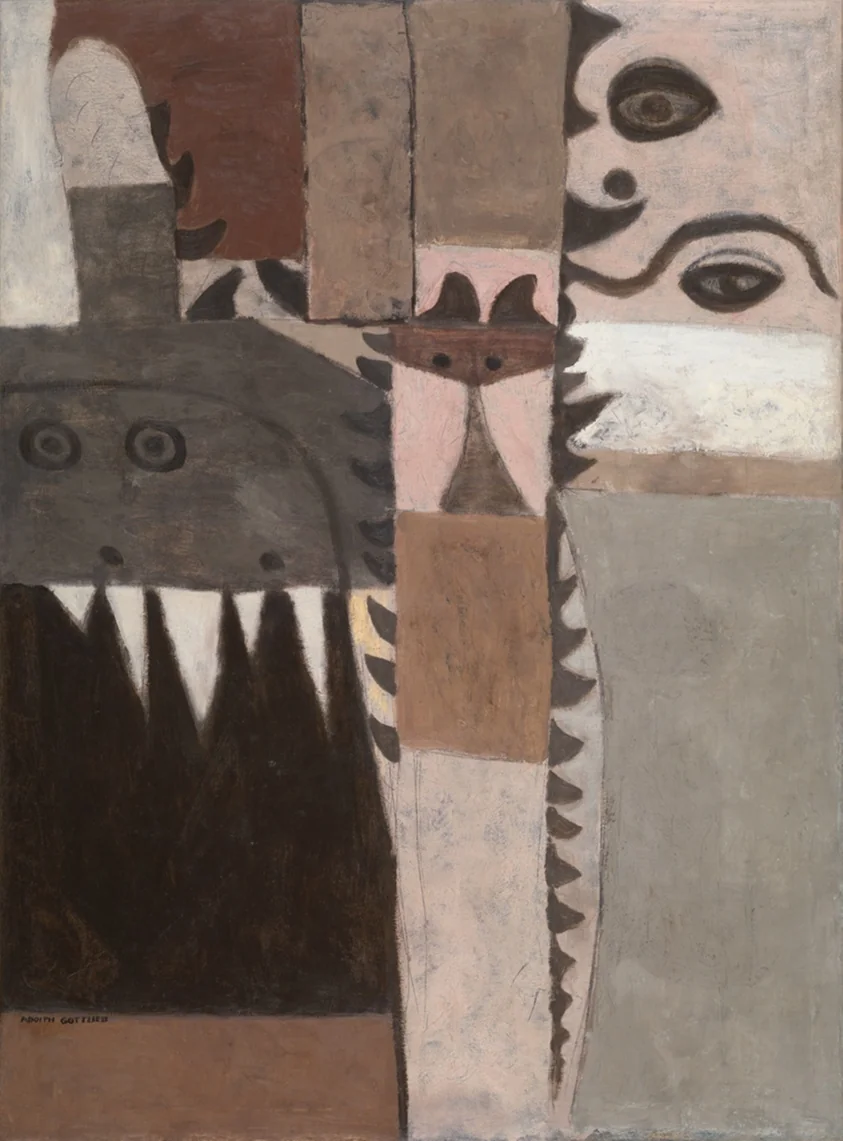
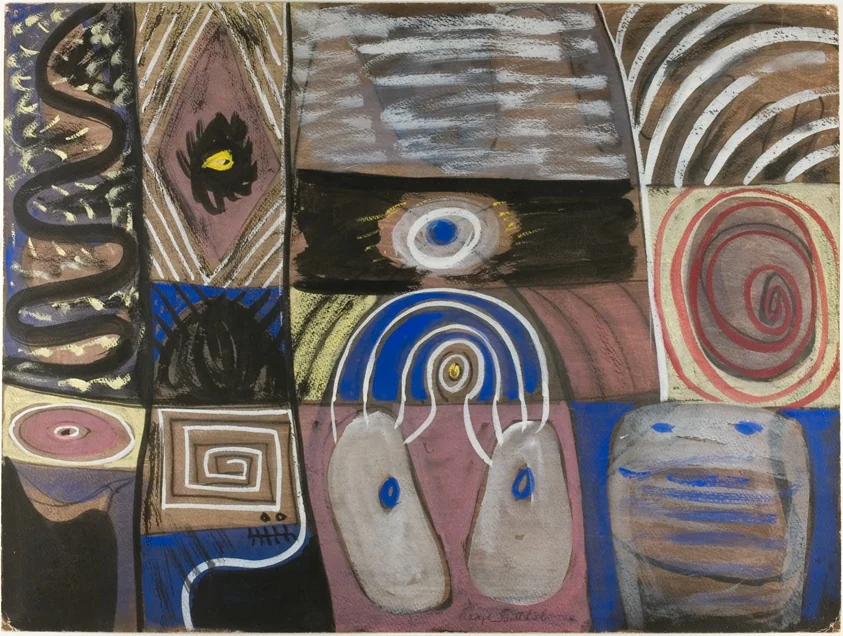
In 1941 Adolph Gottlieb began a series of paintings and drawings called Pictographs. The pictographs represent the artist’s first efforts at reconciling elements of abstraction with an exploration of the unconscious drawn from Surrealism. His aim was to create a new, uniquely American expression that would bring significant content to abstraction. The ideas Gottlieb explored in Pictographs are so varied and complex that the series occupied him for more than 10 years. Crypt was created in the course of Gottlieb’s intensive exploration of the pictograph theme.
Accession Number
111808
Medium
Gouache on cream wove paper
Dimensions
45.5 × 60.8 cm (17 7/8 × 23 7/8 in.)
Classification
gouache
Credit Line
Purchased with funds provided by Adele and Willard Gidwitz
Background & Context
Background Story
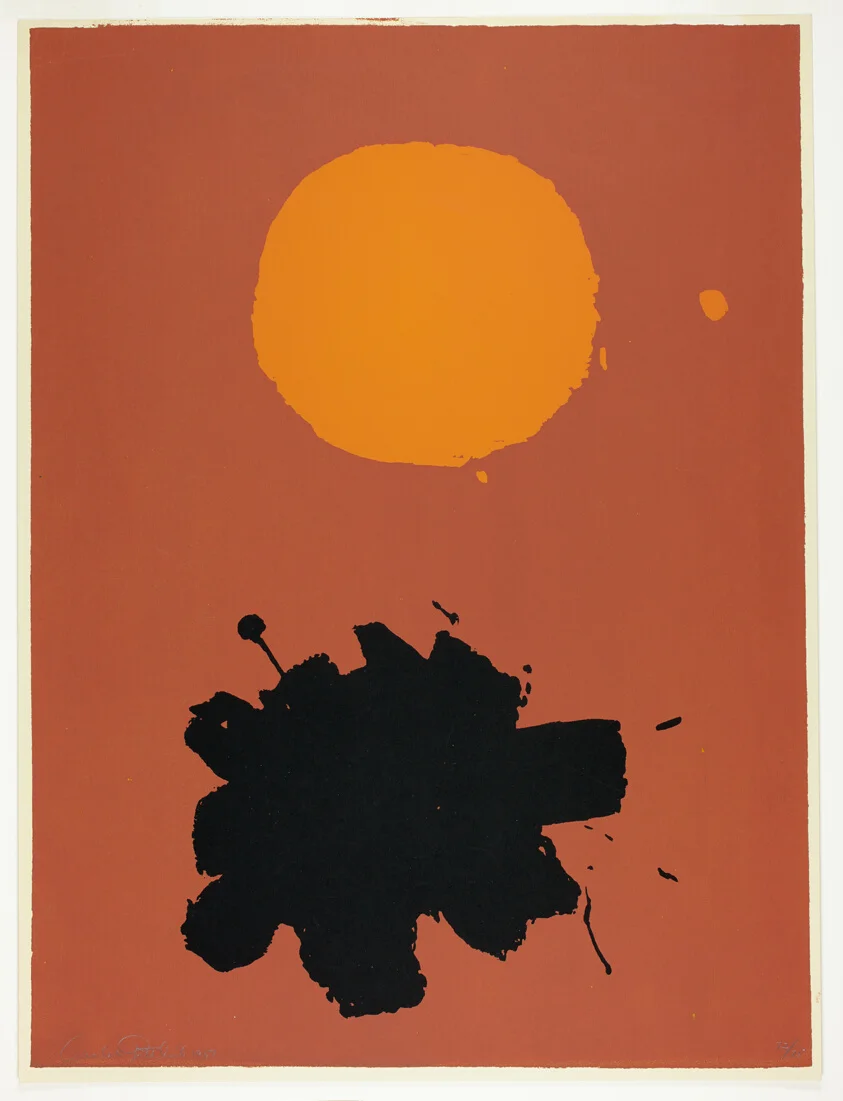
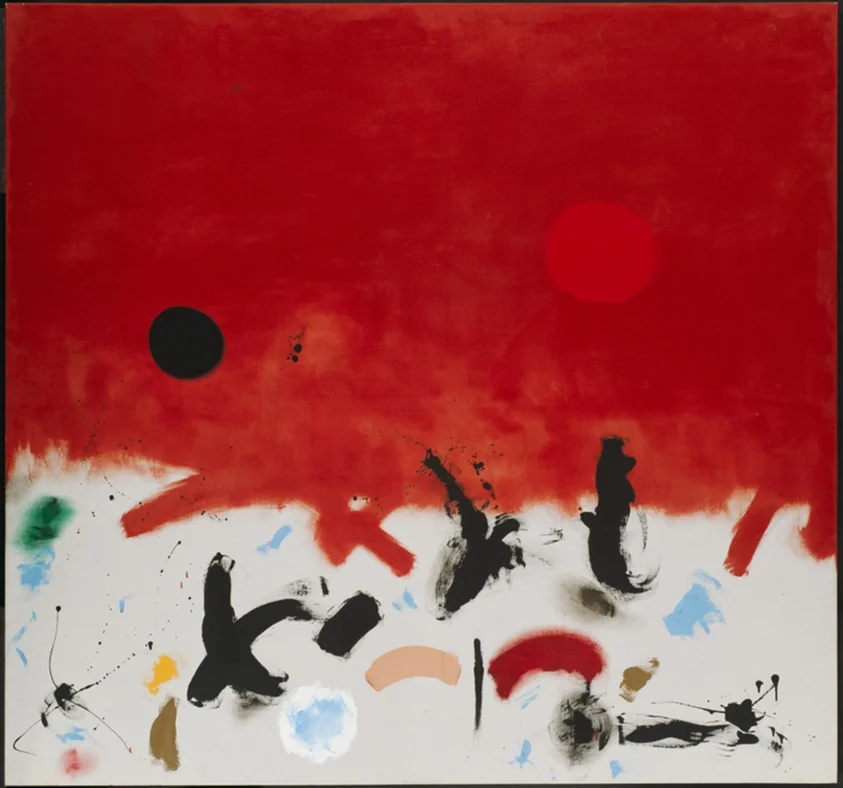
Adolph Gottlieb's Crypt, created between 1945 and 1947, represents a pivotal shift from the compartmentalized Pictograph format toward the artist's more visceral Bursts and imaginary landscapes of the 1950s. The title suggests a hidden or enclosed space—a burial chamber containing something sacred or secret—and the image delivers on that promise with a dark, hovering form suspended above a luminous band of color. The upper element reads as a dense, painterly mass that seems to press downward, while the lower zone glows with an otherworldly light, creating tension between gravitational weight and spiritual aspiration. Painted in gouache, the work has an opaque, matte quality that Gottlieb exploited to create sharp edges juxtaposed with soft atmospheric transitions. Created in the immediate aftermath of World War II and the revelation of the Holocaust, Crypt carries an unmistakable emotional charge—the sense of something concealed, devastating, and irretrievable. Yet the luminous lower zone suggests transcendence, the possibility of light emerging from darkness.
Cultural Impact
Crypt marks a critical transition in Gottlieb's work from the compartmentalized symbolism of the Pictographs toward the monumental dichotomies of his mature paintings. These small gouaches served as laboratories for ideas he would scale up dramatically in oil, and their influence extends to the color-field painters who saw in Gottlieb's horizontal divisions a prototype for their own explorations of figure-ground tension.
Why It Matters
A transitional gouache from Gottlieb's postwar period that moves from Pictograph symbolism toward the iconic Burst format, encoding themes of concealment and revelation against the backdrop of World War II's aftermath.