Accession Number
15154
Medium
Oil on canvas
Dimensions
213.4 × 228 cm (84 × 89 3/4 in.)
Classification
Painting
Credit Line
Mary and Leigh Block Fund for Acquisitions
Background & Context
Background Story
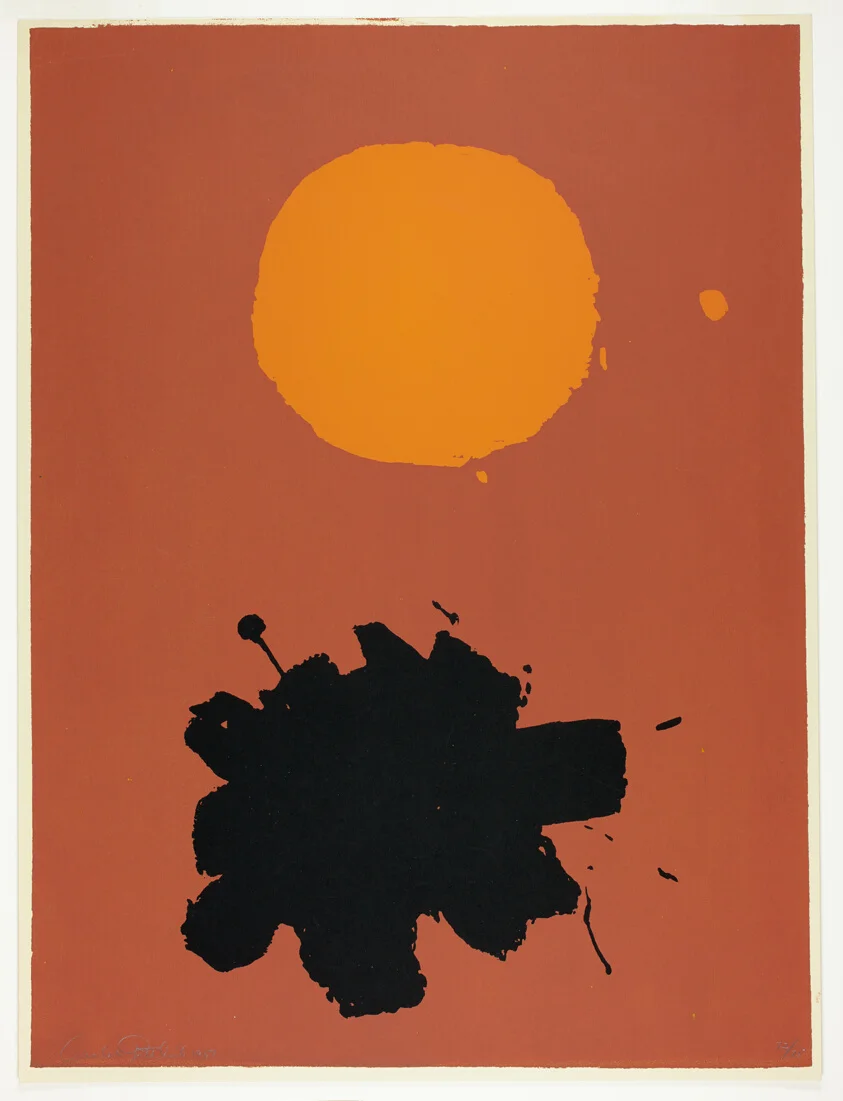
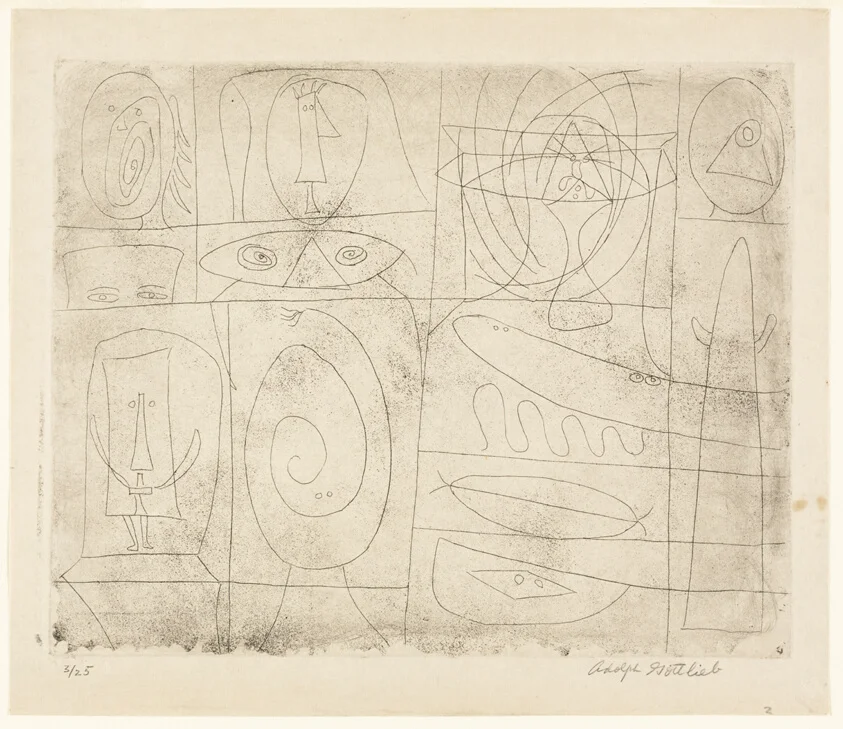
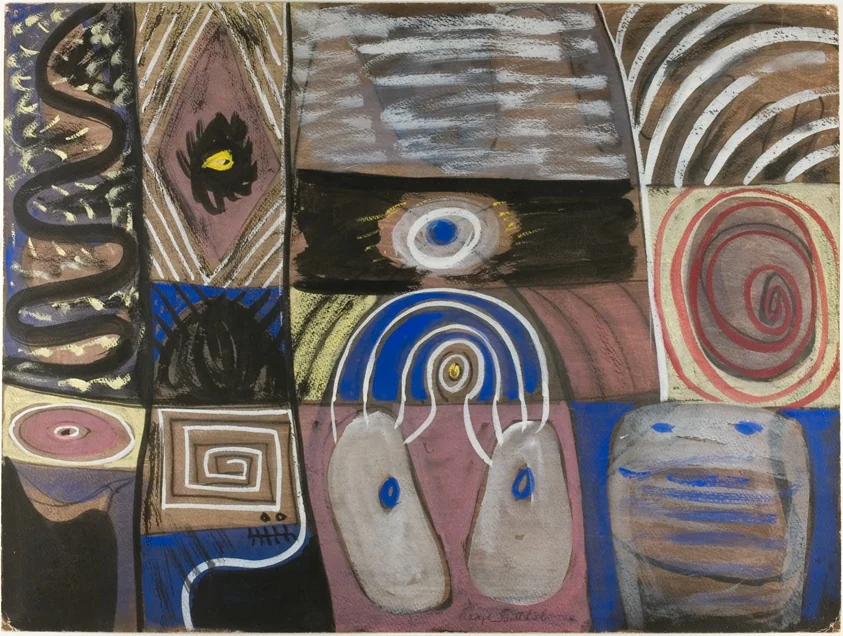
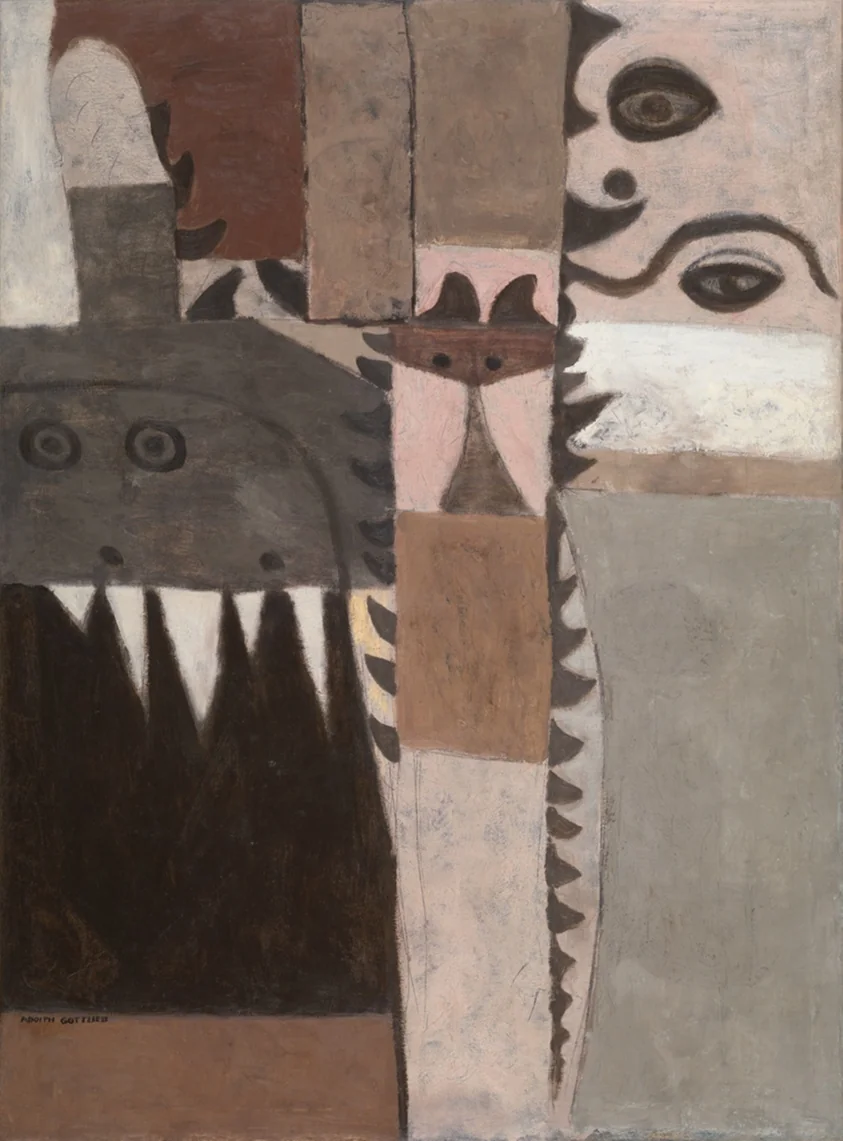
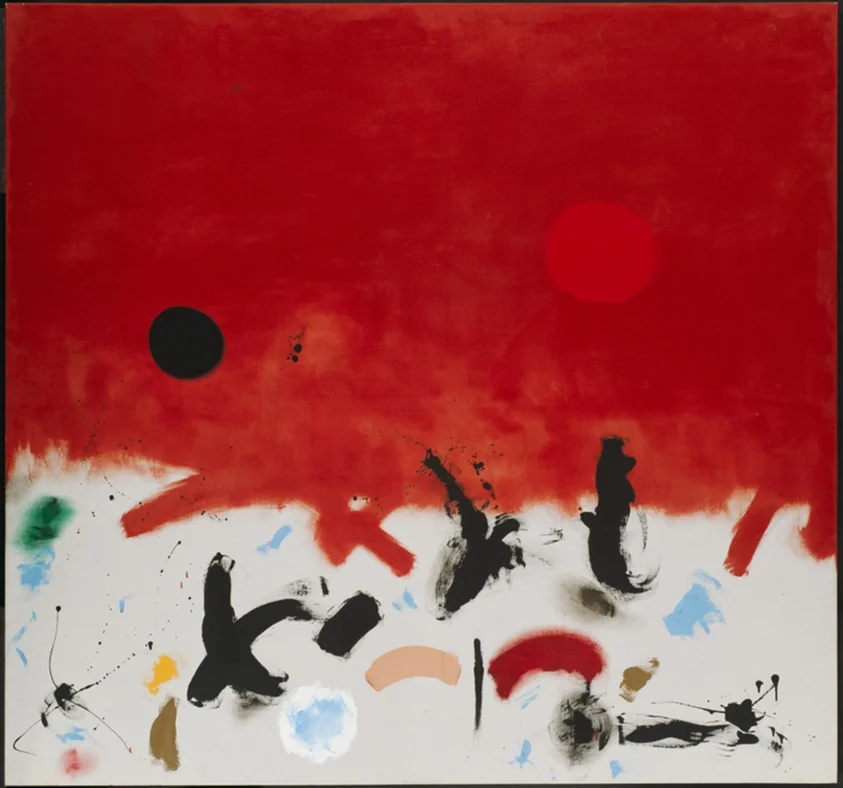
"Primeval" is a 1962 oil on canvas by Adolph Gottlieb that captures the American Abstract Expressionist in his mature "Burst" period, when he had moved beyond the compartmentalized grids of the "Pictograph" series toward a more open, explosive composition that suggests both cosmic creation and psychological release. The composition shows a large circular form—the "sun" or "orb"—hovering above a gestural, explosive mark—the "burst" or "explosion"—the two elements creating a dialogue between stability and chaos, order and energy, that defines Gottlieb's late work. The scale is imposing—213.4 × 228 centimeters—making the canvas a physical presence that envelops the viewer and demands a bodily response, the size of the painting matching the cosmic ambition of its title. The palette is characteristically bold and reductive—probably a few high-contrast colors, perhaps black and white with a single accent—that creates the visual impact of a poster or a sign while suggesting the infinite depth of space. The 1962 date places this work in the period of Gottlieb's greatest international recognition, when he was representing the United States at the Venice Biennale and achieving the kind of critical acclaim that validated the Abstract Expressionist project. Art historians have connected this painting to the broader tradition of cosmic imagery in modern art, from the stellar abstractions of Mondrian to the galactic fields of Pollock, noting that Gottlieb's treatment is more structured, more focused on the relationship between two distinct forms than the all-over compositions of these contemporaries. The work also demonstrates Gottlieb's engagement with Jungian psychology and the collective unconscious: the circle and the burst are archetypal forms that recur across cultures and periods, and Gottlieb's use of them suggests a belief in universal symbols that transcends individual experience.
Cultural Impact
This 1962 monumental Burst-period canvas made cosmic creation physically enveloping through high-contrast orb-and-explosion dialogue, using reductive bold palette to structure universal Jungian archetypes into Abstract Expressionist poster impact.
Why It Matters
It matters because Gottlieb painted a sun and an explosion and made them look like they were arguing about the beginning of the world—proving that even two shapes could be a universe if the scale was big enough.