Pictograph-Symbol

Description

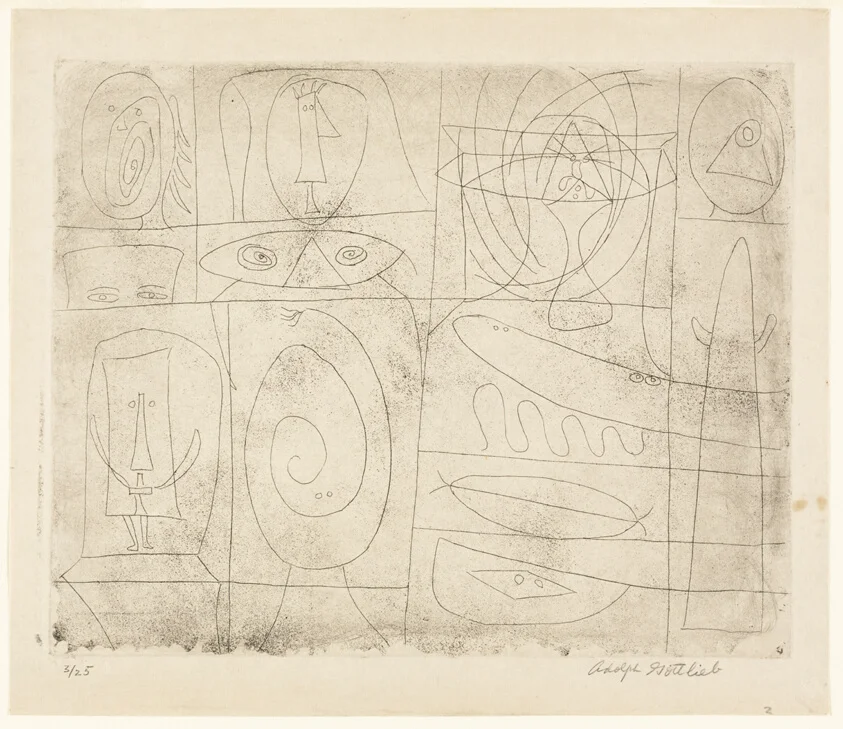
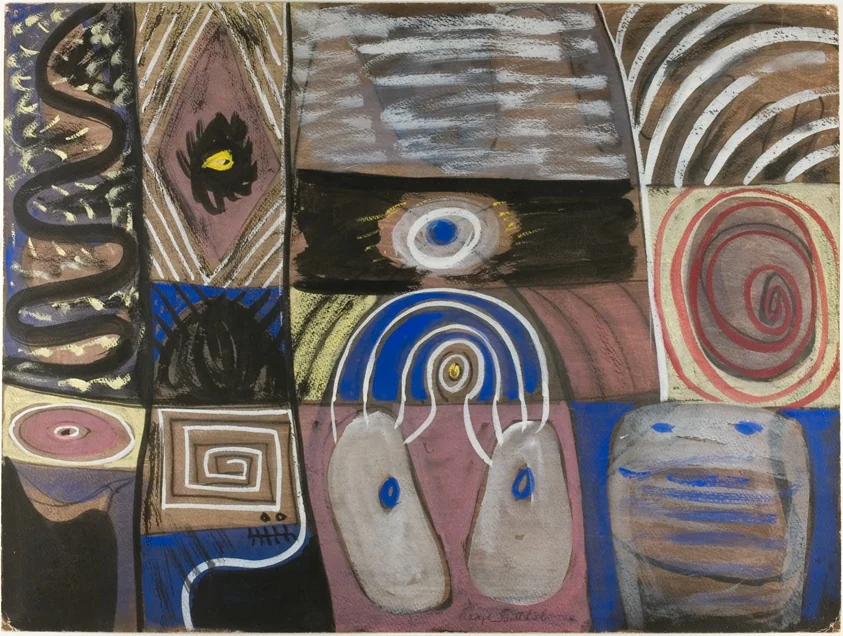
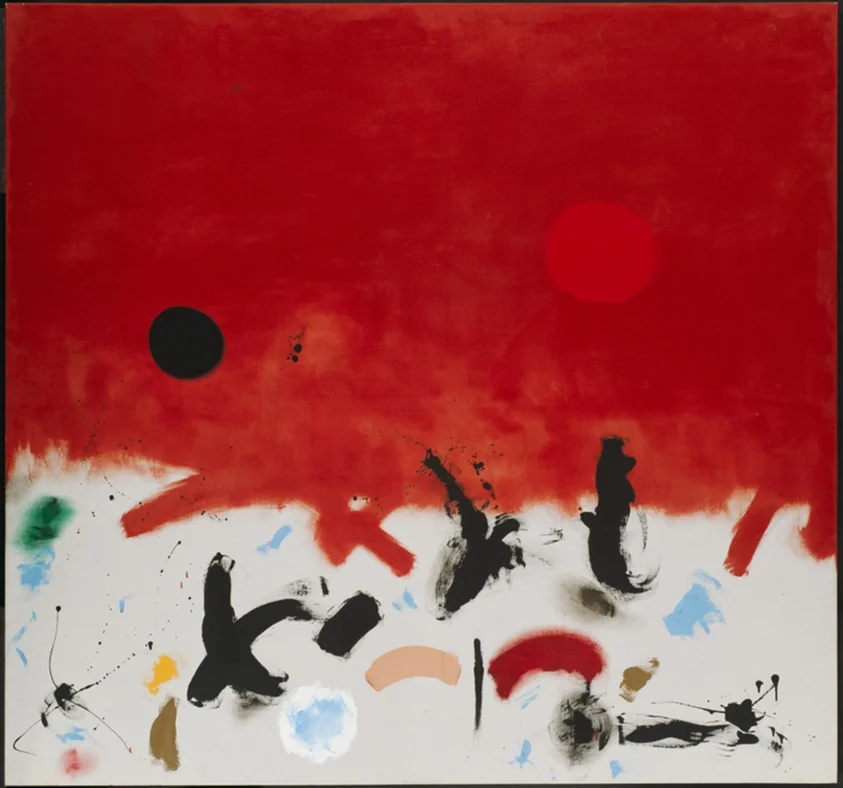
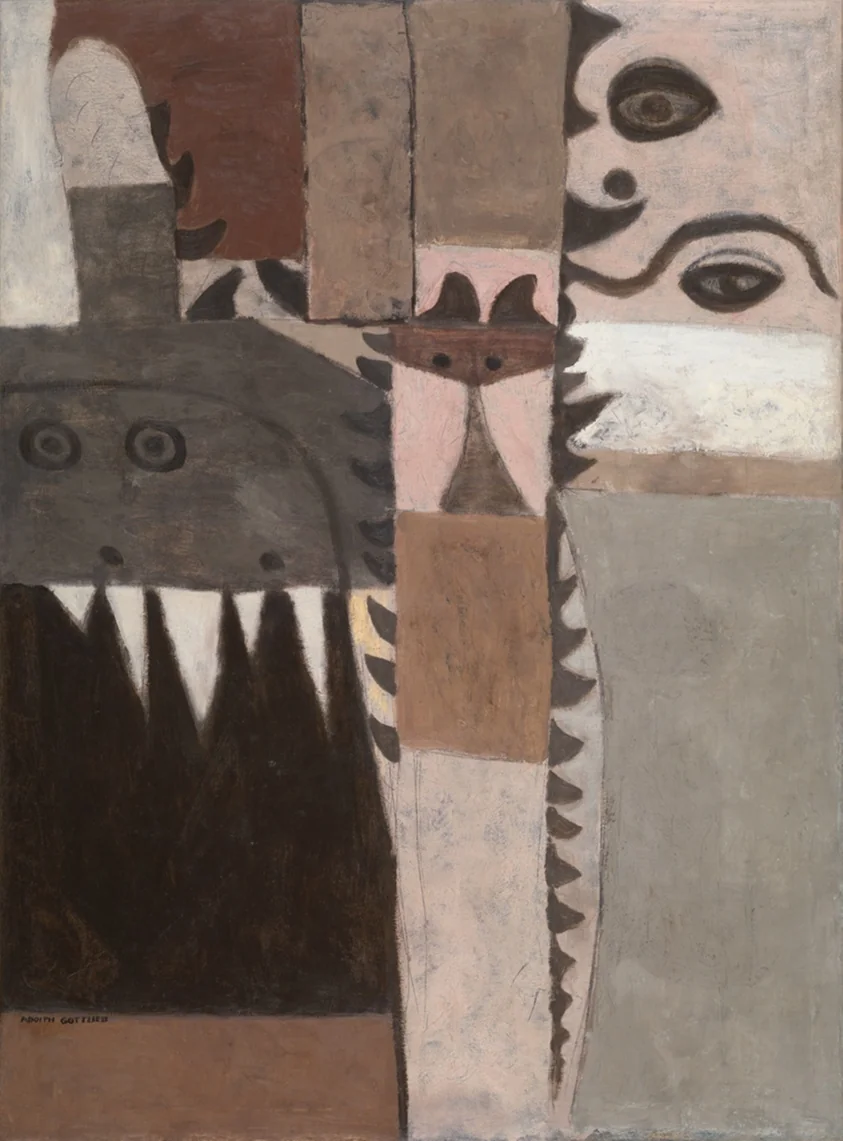
Adolph Gottlieb’s Pictograph series, created between 1941 and 1951, represents the artist’s early efforts at reconciling elements of abstraction with an exploration of the subconscious. To make these works, the artist laid down a grid as an organizing structure. Using a process of free association and intuition influenced by the Surrealist technique of automatism, or automatic drawing, he decided to employ symbols to fill the grid. Mining eclectic source material from non-Western cultures and modern art, Gottlieb invented a pictorial language that aimed to represent and convey universal ideas to the viewer.

Provenance

Sold by the artist, New York, to Kenneth MacPherson, New York, 1945; given to Esther Gottlieb, 1948; bequeathed to the Adolph and Esther Gottlieb Foundation, 1988; given to the Art Institute (in exchange), 2003.

Pictograph-Symbol

Adolph Gottlieb

1942

Accession Number

181775

Medium

Oil on canvas

Dimensions

Without frame: 137.2 × 101.9 cm (54 1/16 × 40 1/8 in.); 137.2 × 102 cm (54 × 40 1/8 in.)

Classification

oil on canvas

Museum

The Art Institute of Chicago

Chicago, United States

Credit Line

Through prior gift of Society for Contemporary American Art
Background & Context

Background Story

"Pictograph-Symbol" is a 1942 oil on canvas by Adolph Gottlieb that belongs to the "Pictograph" series that established the American artist's reputation as a major figure in the emerging New York School and that provided a crucial bridge between European Surrealism and American Abstract Expressionism. The composition shows a grid or compartmentalized field filled with abstract symbols—biomorphic shapes, geometric forms, and calligraphic marks that suggest both primitive writing and modernist abstraction, the overall effect a kind of visual language that communicates without translatable meaning. The technique is characteristic of Gottlieb's early style: the paint is applied in flat, matte layers that create a surface resembling ancient wall painting or cave art, the colors—probably earth tones and muted reds—evoking the archaeological and ethnographic sources that inspired the artist's search for universal symbols. The 1942 date places this work in the same year as the first "Pictograph" paintings and the artist's increasing engagement with the European émigré Surrealists who were then arriving in New York, the painting reflecting both the influence of automatism and the artist's own interest in archaic and primitive art forms. Art historians have connected this painting to the broader tradition of the artist as shaman or prophet, from the cave painters of prehistory to the modernist primitivism of Picasso and Giacometti, noting that Gottlieb's treatment is more systematic, more grid-like than these more spontaneous predecessors, the compartmentalization suggesting a codification of the primitive impulse. The work also demonstrates Gottlieb's influence on the development of Abstract Expressionism: the "Pictograph" series provided a model for the combination of automatic gesture and symbolic content that would characterize the mature work of Pollock, Rothko, and Newman.

Cultural Impact

This 1942 oil canvas codified primitive-modernist visual language through compartmentalized earth-tone matte layers, using grid-like symbol arrangement to bridge European Surrealist automatism with emerging New York School abstraction.

Why It Matters

It matters because Gottlieb painted shapes that looked like they came from a cave and a subway at the same time—proving that even symbols could be new and ancient if the grid was right.