Accession Number
1943.3.2756
Medium
color drypoint, softground etching, and aquatint on laid paper
Dimensions
plate: 42.55 x 29.85 cm (16 3/4 x 11 3/4 in.) | sheet: 56.67 x 43.02 cm (22 5/16 x 16 15/16 in.)
Classification
Credit Line
Rosenwald Collection
Tags
Print Impressionist & Modern (1851–1900) Etching Paper American
Background & Context
Background Story
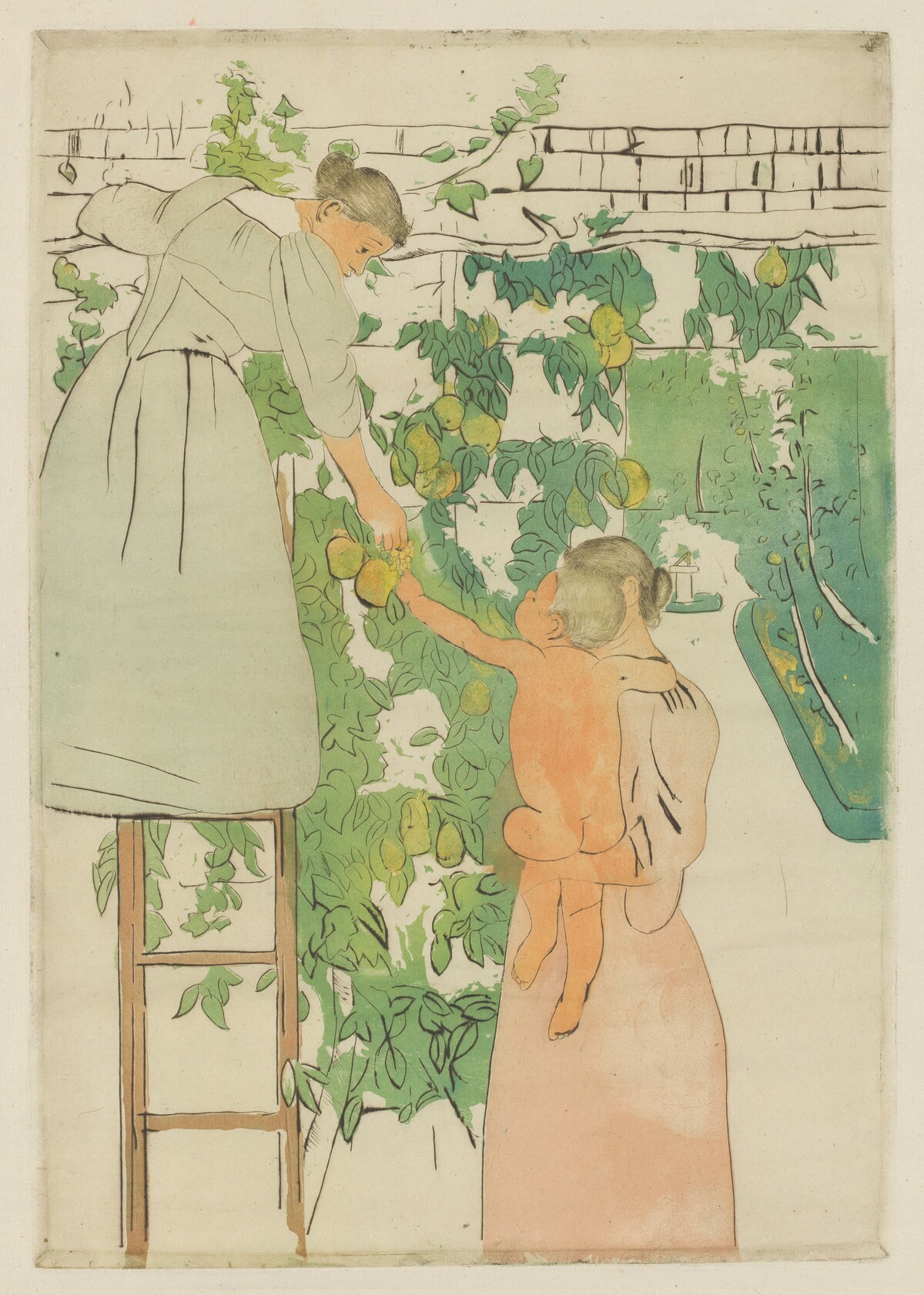
Gathering Fruit (c. 1893) depicts women and children engaged in fruit harvesting—a subject that combines Cassatt's interest in domestic and maternal themes with the outdoor genre subject of agricultural labor. The print's date, c. 1893, places it during Cassatt's most productive period of printmaking, when she was creating the color drypoints that established her reputation as one of the finest printmakers of her generation. The fruit-gathering subject—women and children working together in an orchard or garden—provided Cassatt with a setting that combined her signature themes (maternal care, domestic activity, women's work) with the outdoor light and landscape observation that connected her work to the broader Impressionist engagement with open-air subjects. The harvest setting also carries symbolic resonance: the fruit represents nature's bounty, the gathering represents communal labor, and the participation of children represents the transmission of knowledge and skill from one generation to the next. These symbolic dimensions—the fertility, community, and tradition that fruit harvesting represents—enrich the print's apparently simple subject. Cassatt's treatment, influenced by Japanese composition, presents the figures within a landscape defined by patterns of foliage and fruit, creating a visual unity between the human and natural elements.
Cultural Impact
Cassatt's fruit-gathering prints influenced how women's agricultural work was represented in Impressionist art, combining the outdoor genre scene with the intimate maternal subject that was her specialty. The prints influenced later women artists who similarly depicted women's productive labor in garden and orchard settings. The harvest subject influenced how community labor was represented in art, connecting individual activity to collective purpose.
Why It Matters
This painting matters because it connects Cassatt's signature mother-and-child theme to the broader social context of women's agricultural labor—demonstrating that the domestic intimacy she depicted was part of a larger economic system where women's work sustained communities. The print argues that gathering fruit is not merely a picturesque genre scene but a representation of the productive labor that supports family and community life.