Provenance
Purchased from the artist by (Durand-Ruel, New York);[1] (sale, Durand-Ruel, New York, 23 October - 12 November 1926, no. 13, as _Femme à l'Eventail_); Chester Dale [1883-1962], New York; bequest 1963 to NGA.
[1] According to the Chester Dale papers in NGA curatorial file, Durand-Ruel purchased the painting directly from the artist.
Accession Number
1963.10.95
Medium
oil on canvas
Dimensions
overall: 85.5 x 65.1 cm (33 11/16 x 25 5/8 in.) | framed: 108.6 x 88.9 cm (42 3/4 x 35 in.)
Classification
Painting
Credit Line
Chester Dale Collection
Tags
Painting Impressionist & Modern (1851–1900) Oil Painting Canvas American
Background & Context
Background Story
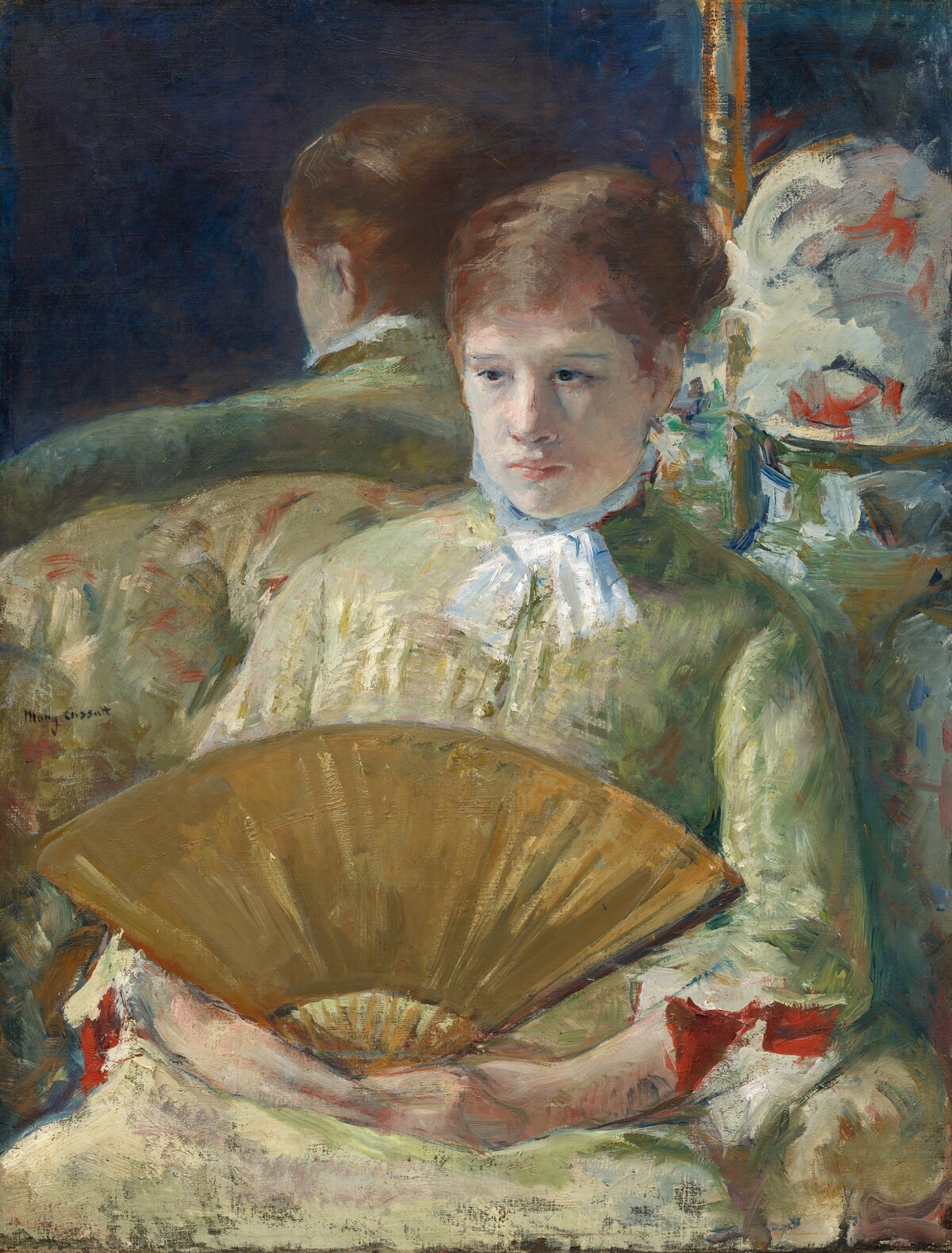
Mary Cassatt's Woman with a Fan (c. 1878/1879) represents the American artist's engagement with the female portrait as practiced within French Impressionism. Cassatt, who had settled permanently in Paris by 1874, brought an American directness to the more elaborate conventions of French portraiture, creating images of women that combined social observation with psychological insight. The fan—a fashionable accessory that served both practical and social functions—provided Cassatt with a compositional device that organized the picture plane while documenting contemporary costume. The fan's elaborate decoration—often featuring painted scenes or printed patterns—offered a secondary visual field within the painting, creating a dialogue between the woman's presence and the object she holds. The 1878-79 date places this at the moment when Cassatt was being recruited by Degas into the Impressionist circle—she would exhibit with the group beginning in 1879. The painting likely shows the influence of Degas's compositional principles—an unusual viewpoint, a cropped composition, and the asymmetrical balance that distinguished his work from more conventional portraiture. Cassatt's woman, with her fan, is both a specific individual and a representative of her social class—the leisured bourgeoise whose identity was constructed partly through objects like fans that signified refinement and taste.
Cultural Impact
Cassatt's fan paintings influenced how women's accessories were represented in Impressionist portraiture, establishing the fan as a significant compositional and social element rather than merely a decorative prop. The paintings influenced later women artists who similarly engaged with fashion's social significance. The fan subject influenced how 19th-century female identity was understood, connecting personal style to social position.
Why It Matters
This painting matters because it demonstrates how Cassatt's American perspective transformed French Impressionist portraiture—her woman with a fan has a directness and psychological presence that distinguishes her from more conventional French portraitists. The fan, a socially loaded object, becomes in Cassatt's treatment both a compositional element and a marker of the social constraints that shaped women's lives.