Accession Number
105235
Medium
Acrylic on paper
Dimensions
Sight: 171.4 × 122.8 cm (67 1/2 × 48 3/8 in.)
Classification
drawings (visual works)
Credit Line
Gift of the Mark Rothko Foundation
Background & Context
Background Story
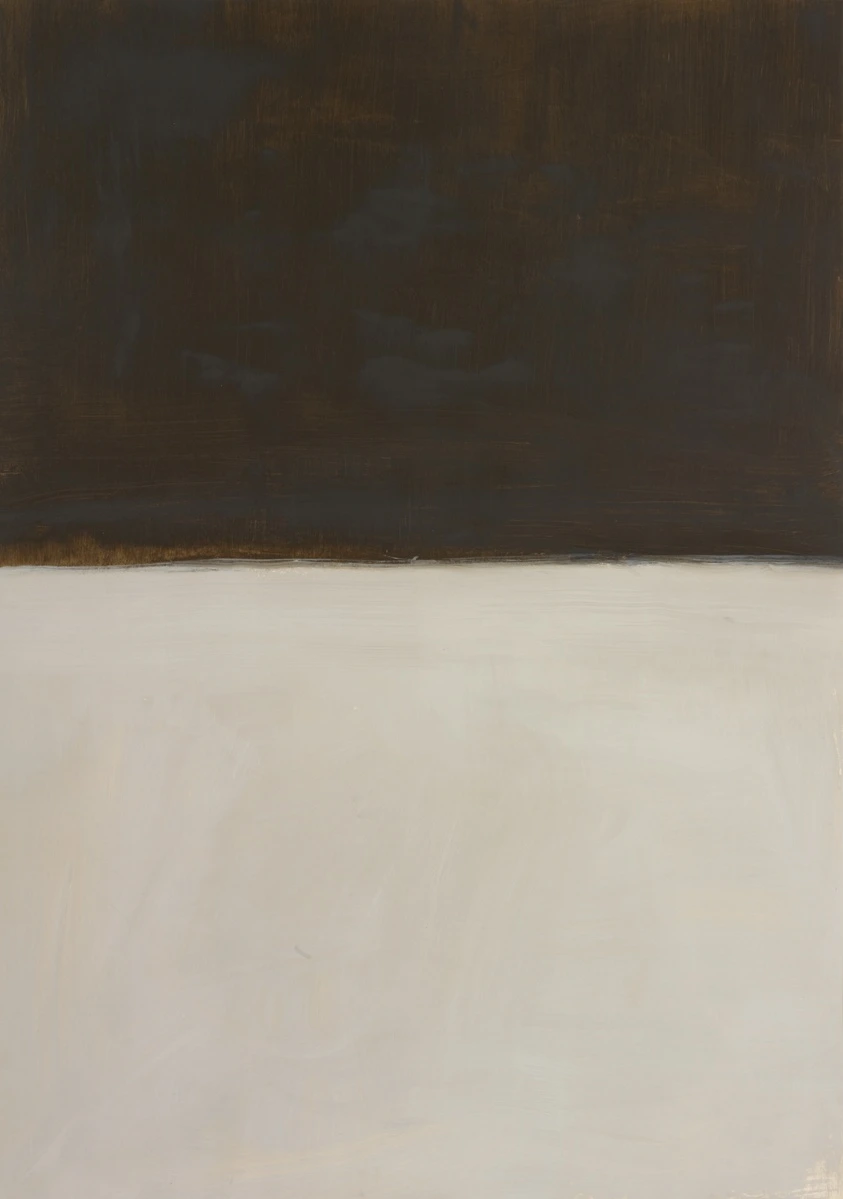
"Untitled (Brown and Gray)" is a 1969 acrylic on paper by Mark Rothko that captures the American Color Field painter in his final years, the image showing a composition in brown and gray with the same soft focus and emotional depth that characterized his late work, but with a darker, more somber palette that reflects the artist's declining psychological state. The composition is a large work—sight 171.4 × 122.8 centimeters—showing floating rectangles of brown and gray with the acrylic on paper creating a surface of extraordinary luminosity and emotional weight. The acrylic medium allows for a flatter, more matte application than the oil of his classic period, the paper support adding a dimension of fragility and vulnerability that suits the late psychological tenor of the work. The 1969 date places this work in the final year of Rothko's life, when he was producing the dark, somber works that presaged his tragic death. Art historians have connected this work to the broader tradition of the late style in modern art, from the dark paintings of Turner to the final works of the abstract expressionists, noting that Rothko's treatment is more focused on the emotional weight and the psychological depth, the transformation of color into existential meditation, than the chromatic brilliance or the spiritual uplift of his earlier work.
Cultural Impact
This 1969 acrylic paper made late Rothko existentially somber through large 171cm brown-gray floating rectangles matte acrylic fragility and paper-support psychological vulnerability, using final-year decline to transform color into existential meditation beyond earlier spiritual chromatic uplift.
Why It Matters
It matters because Rothko painted brown and gray and made the paper feel like it was holding the weight of a man's final thoughts—proving that even darkness could be honest if the acrylic was true enough.