Untitled (Painting)

Description

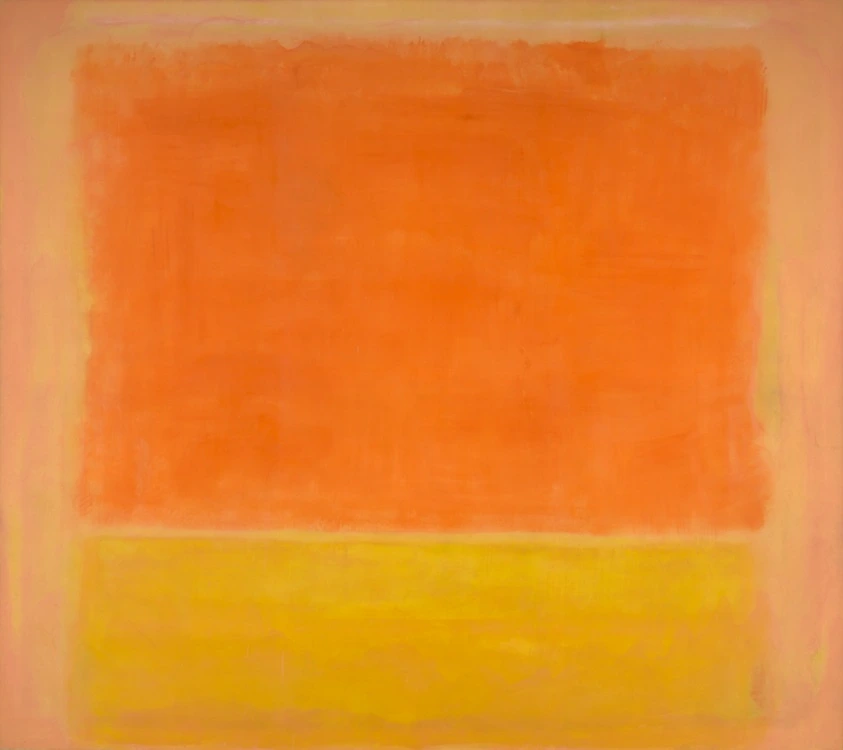
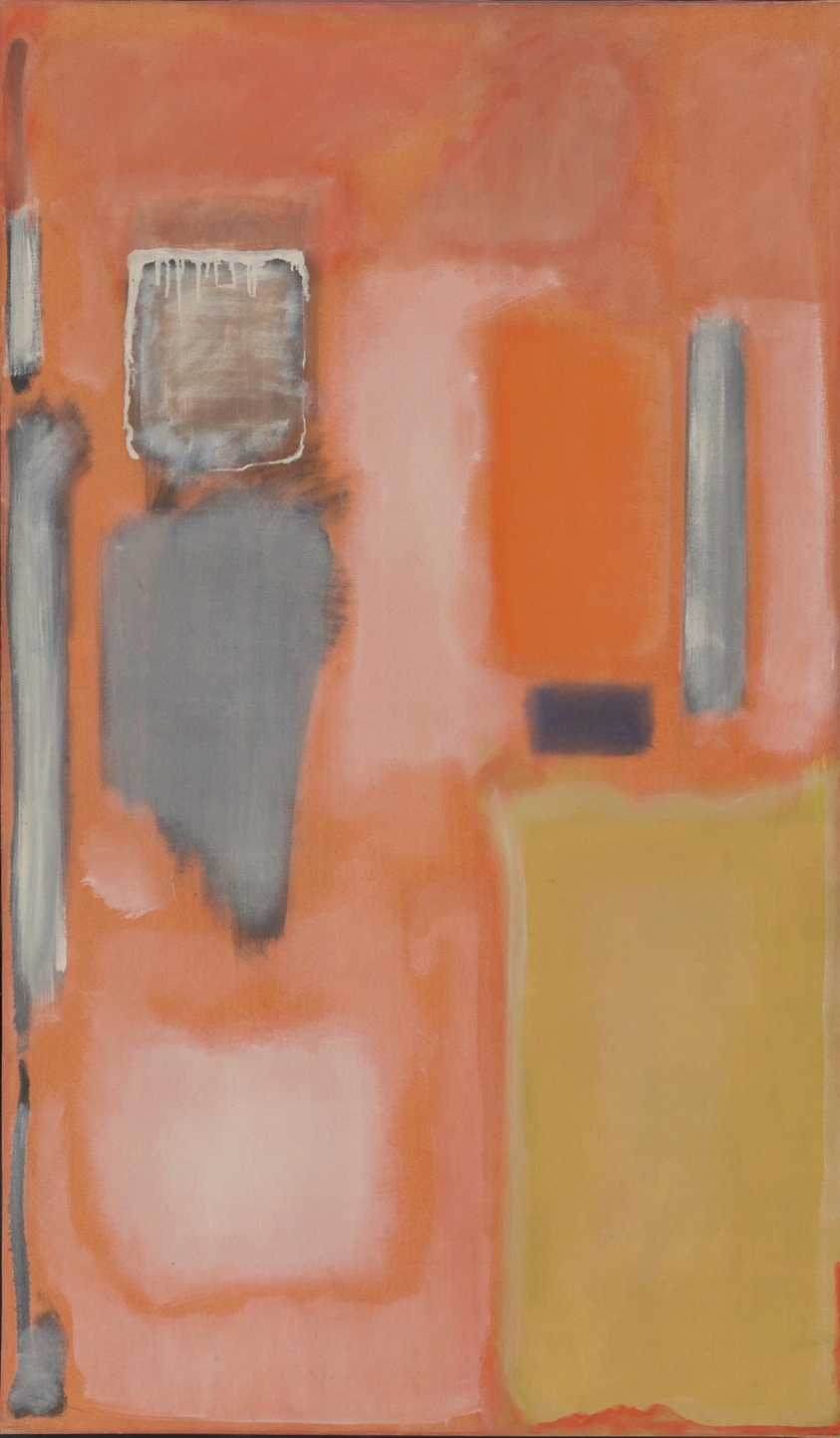
Known for an impassioned form of painting predicated on the poetics of color, Mark Rothko was one of the leading proponents of color-field painting, a type of nongestural Abstract Expressionism that entailed large canvases distinguished by monumental expanses of form and tone. The canvas of Untitled (Painting) burns with subtle variations of orange and yellow hues. The painting follows the characteristic format of Rothko’s mature work, according to which stacked rectangles of color appear to float within the boundaries of the canvas. By directly staining the fabric of the canvas with many thin washes of pigment and by paying particular attention to the edges where the fields interact, he achieved the effect of light radiating from the image itself. This technique suited his metaphysical aims: to offer painting as a doorway into purely spiritual realms, making it as immaterial and evocative as music, and to communicate directly the most essential, rawest forms of human emotion. Rothko described his art as the “elimination of all obstacles between the painter and the idea, between the idea and the observer.” In place of overt symbolism, he used color, overwhelming scale, and surface luminosity to elicit an emotive, profound response from the viewer.

Provenance

Sold by the artist, New York, to the Art Institute, 1954.

Untitled (Painting)

Mark Rothko

1953/54

Accession Number

82410

Medium

Oil on canvas

Dimensions

Unframed: 265.1 × 298.1 cm (104 3/8 × 117 3/8 in.); 265.2 × 298.2 cm (104 3/8 × 117 3/8 in.)

Classification

Painting

Museum

The Art Institute of Chicago

Chicago, United States

Credit Line

Friends of American Art Collection
Background & Context

Background Story

Mark Rothkos Untitled (Painting) from 1953-54 is an oil on canvas that represents a pivotal moment in the artists development, when he was transitioning from the Surrealist-influenced figurative paintings of the early 1950s to the pure color-field abstractions that would define his mature style and make him one of the most influential painters of the 20th century. The years 1953-54 bracket the period when Rothko was eliminating the vestiges of figuration from his paintings and arriving at the format of stacked rectangular color fields that would occupy him for the rest of his career, and this untitled painting hovers between the earlier and later styles, containing both the residual figuration of his transitional work and the pure chromatic abstraction of his mature canvases. The oil on canvas medium, applied in the thin washes and scumbled surfaces that Rothko developed to create the effect of light emanating from within the painting rather than being reflected from its surface, produces the luminous depth and chromatic saturation that distinguish his best work. The lack of a title, which was Rothkos preference for his mature paintings, refuses the viewer the guidance of a named subject and insists that the painting be experienced as a purely visual and emotional event rather than as a representation of something outside itself.

Cultural Impact

Rothkos transitional paintings of 1953-54 are key documents in the development of Color Field painting, and their influence on the history of abstract painting extends through the Minimalists and the Post-Minimalists who recognized in his work a model of chromatic and emotional intensity that could be achieved without figuration. Untitled (Painting) exemplifies the pivotal moment when figuration was eliminated from his work.

Why It Matters

A 1953-54 oil painting by Rothko marking the pivotal transition from Surrealist-influenced figuration to pure color-field abstraction, hovering between residual figuration and the stacked rectangular format in luminous thin washes that would define his mature style.