Untitled (Purple, White, and Red)

Description

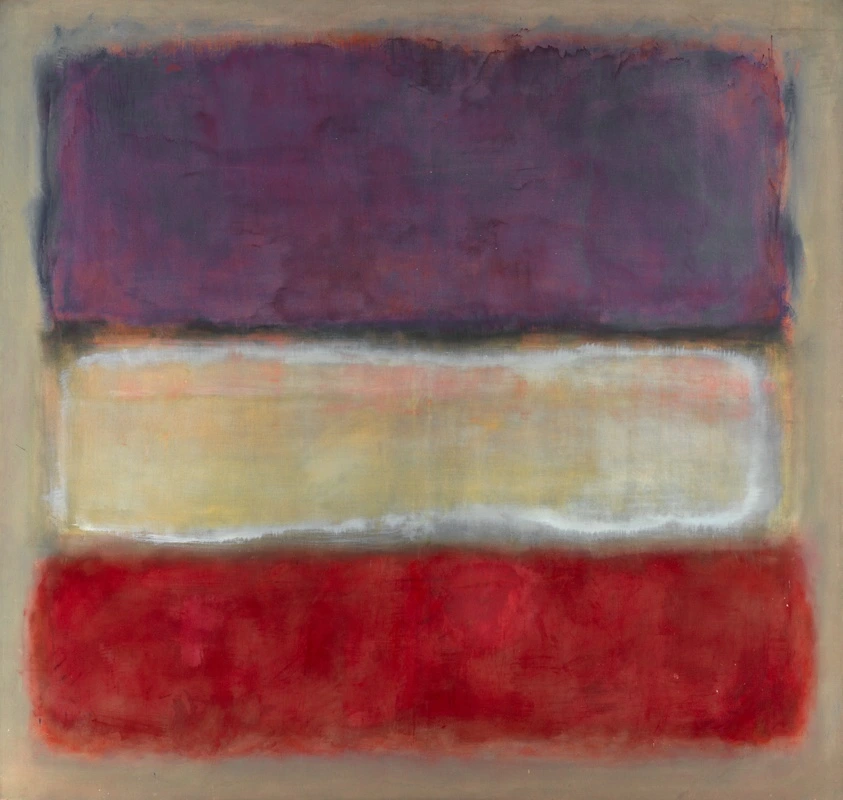
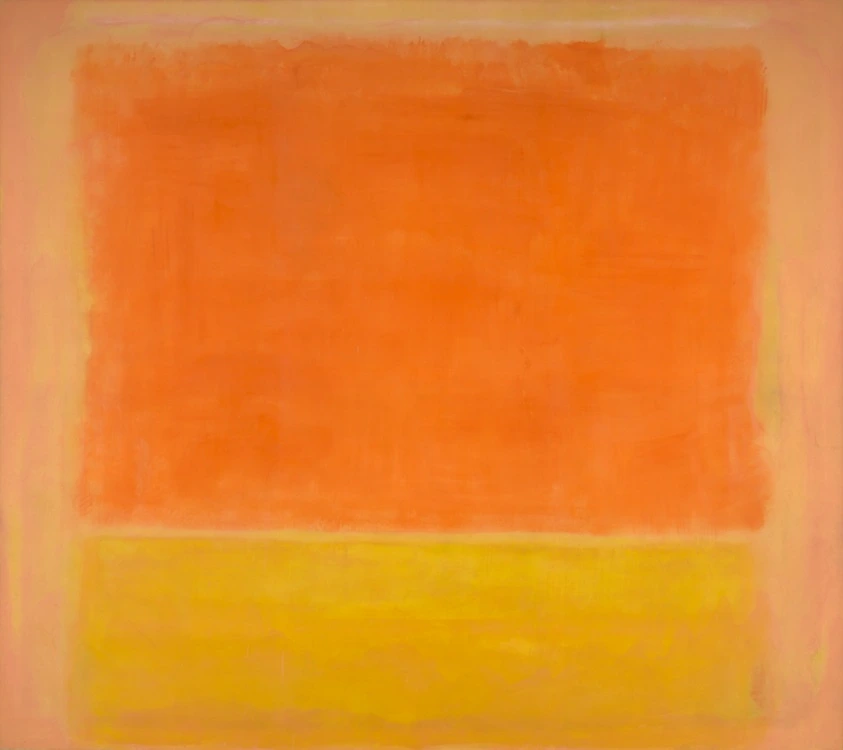
Untitled (Purple, White, and Red) follows the characteristic format of Mark Rothko’s mature work, in which stacked rectangles of color appear to float within the boundaries of the canvas. By directly staining the canvas with many thin washes of pigment and paying particular attention to the edges where the fields interact, he achieved the effect of light radiating from the image itself. This technique suited Rothko’s metaphysical aims: to offer painting as a doorway into purely spiritual realms, making it as immaterial and evocative as music, and to directly communicate the most essential, raw forms of human emotion.

Provenance

Estate of the artist, 1970; sold, Marlborough A. G., Liechtenstein/Marlborough Gallery, New York, to Sigmund E. Edelstone, Chicago, 1970; partially given to the Art Institute, 1983; remaining percentage bequeathed to the Art Institute, 1984.

Untitled (Purple, White, and Red)

Mark Rothko

1953

Accession Number

100472

Medium

Oil on canvas

Dimensions

Unframed: 197.5 × 207.7 cm (77 13/16 × 81 13/16 in.); 197.5 × 207.7 cm (77 3/4 × 81 3/4 in.)

Classification

oil on canvas

Museum

The Art Institute of Chicago

Chicago, United States

Credit Line

Gift of Sigmund E. Edelstone
Background & Context

Background Story

"Untitled (Purple, White, and Red)" is a 1953 oil on canvas by Mark Rothko that captures the American Color Field painter in his most mature and chromatically sublime mode, the image showing floating rectangles of purple, white, and red with the same soft edges and luminous depth that made Rothko's classic works among the most powerful expressions of abstract spiritualism in twentieth-century art. The composition is a very large canvas—197.5 × 207.7 centimeters—showing three floating color fields with the oil on canvas creating a surface of extraordinary scale and emotional impact. The 1953 date places this work in the period of Rothko's most classic and influential color field paintings, when he was producing the works that established his reputation as the leading abstract expressionist painter. Art historians have connected this painting to the broader tradition of the sublime in modern art, from the paintings of Newman to the installations of the contemporary period, noting that Rothko's treatment is more focused on the chromatic resonance and the emotional transcendence, the transformation of color into spiritual experience, than the compositional structure or the formal analysis of these other traditions.

Cultural Impact

This 1953 oil canvas made purple-white-red classically sublime through very large 197cm soft-edge floating rectangles and luminous emotional transcendence, using mature classic period to transform three-color field into spiritual experience beyond Newman formal compositional analysis.

Why It Matters

It matters because Rothko painted purple and red and made the canvas feel like it was holding its breath before something infinite—proving that even a color could be a cathedral if the scale was vast enough.