Accession Number
39234
Medium
Acrylic on canvas
Dimensions
297.2 × 175.3 cm (117 × 69 in.)
Classification
Painting
Credit Line
Gift of Society for Contemporary Art
Background & Context
Background Story
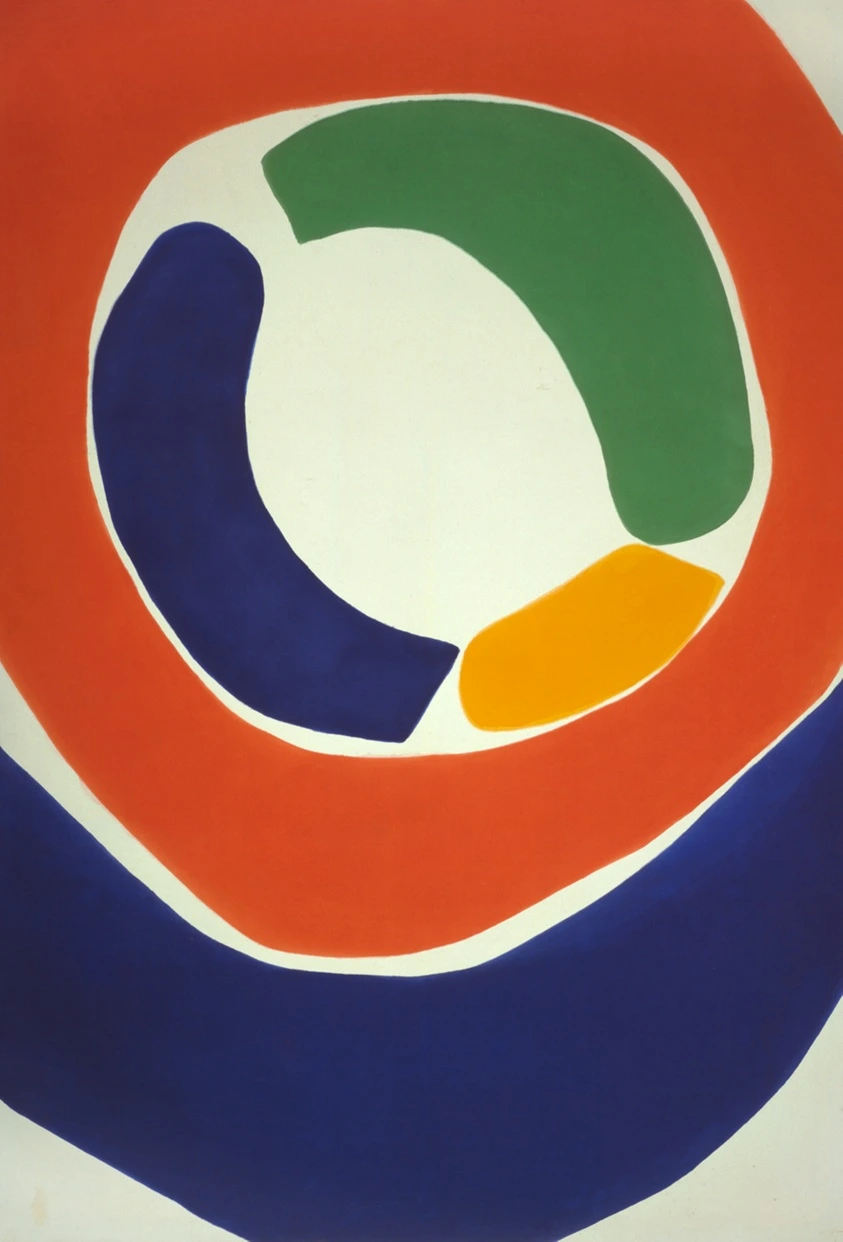
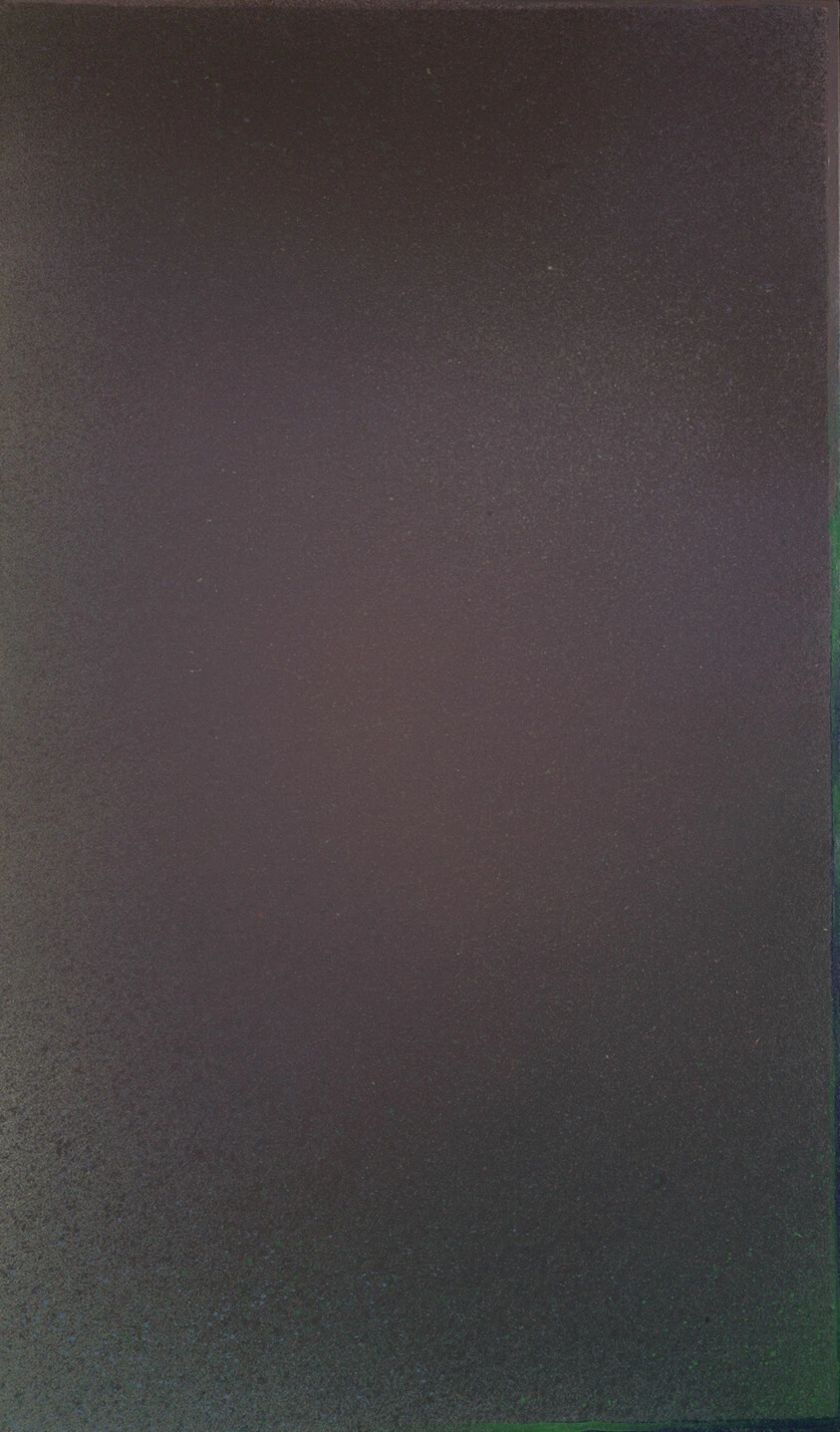
"Green Marfak" is a 1969 acrylic on canvas by Jules Olitski that demonstrates the Russian-American Color Field painter's continued exploration of the stained-canvas technique during the period of his most mature and refined work, the image showing a green field with the same atmospheric depth and chromatic richness that characterized his entire career. The composition is a large vertical canvas—297.2 × 175.3 centimeters—showing a single, unified field of green that suggests both the natural world of vegetation and the abstract space of pure color, the acrylic medium creating a surface of extraordinary smoothness and optical depth that seems to recede into infinite space. The 1969 date places this work in the period of Olitski's international recognition and his representation of the United States at the Venice Biennale, the painting demonstrating both his technical mastery and his aesthetic ambition. Art historians have compared this painting to the green fields of Monet and the environmental sculptures of Smithson, noting that Olitski's treatment is more focused on the optical experience and the phenomenological presence, the direct encounter between the viewer and the color field, than the naturalistic observation or the conceptual framework of these other traditions.
Cultural Impact
This 1969 acrylic canvas made green field optically infinite through large vertical 297cm smooth stained-surface depth and chromatic atmospheric richness, using Venice-Biennale-period mastery to create phenomenological color-world beyond Monet naturalistic observation.
Why It Matters
It matters because Olitski painted a green field and made the canvas feel like it was growing toward the sky—proving that even a color could be alive if the acrylic was smooth enough.