Accession Number
122785
Medium
Etching and drypoint on buff Japanese paper
Dimensions
Image/plate: 21 × 16 cm (8 5/16 × 6 5/16 in.); Sheet: 38 × 29 cm (15 × 11 7/16 in.)
Classification
drypoint
Credit Line
Print and Drawing Club Fund
Background & Context
Background Story
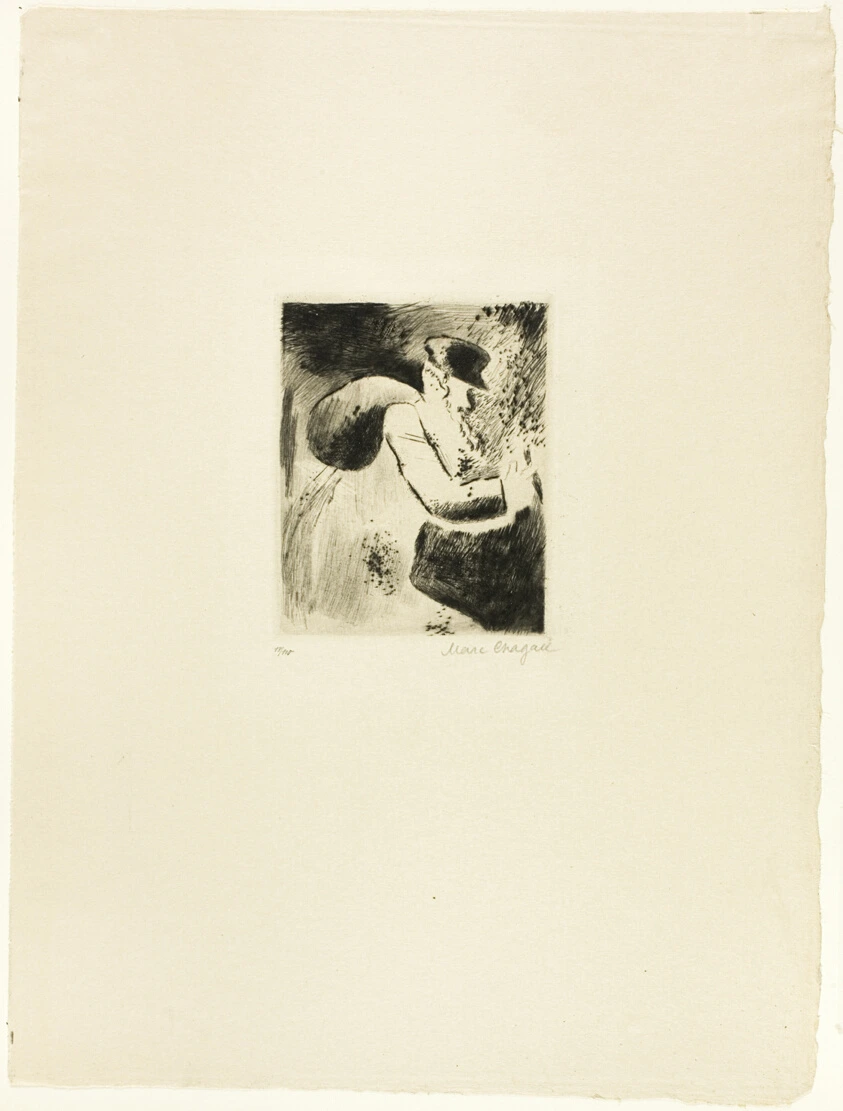
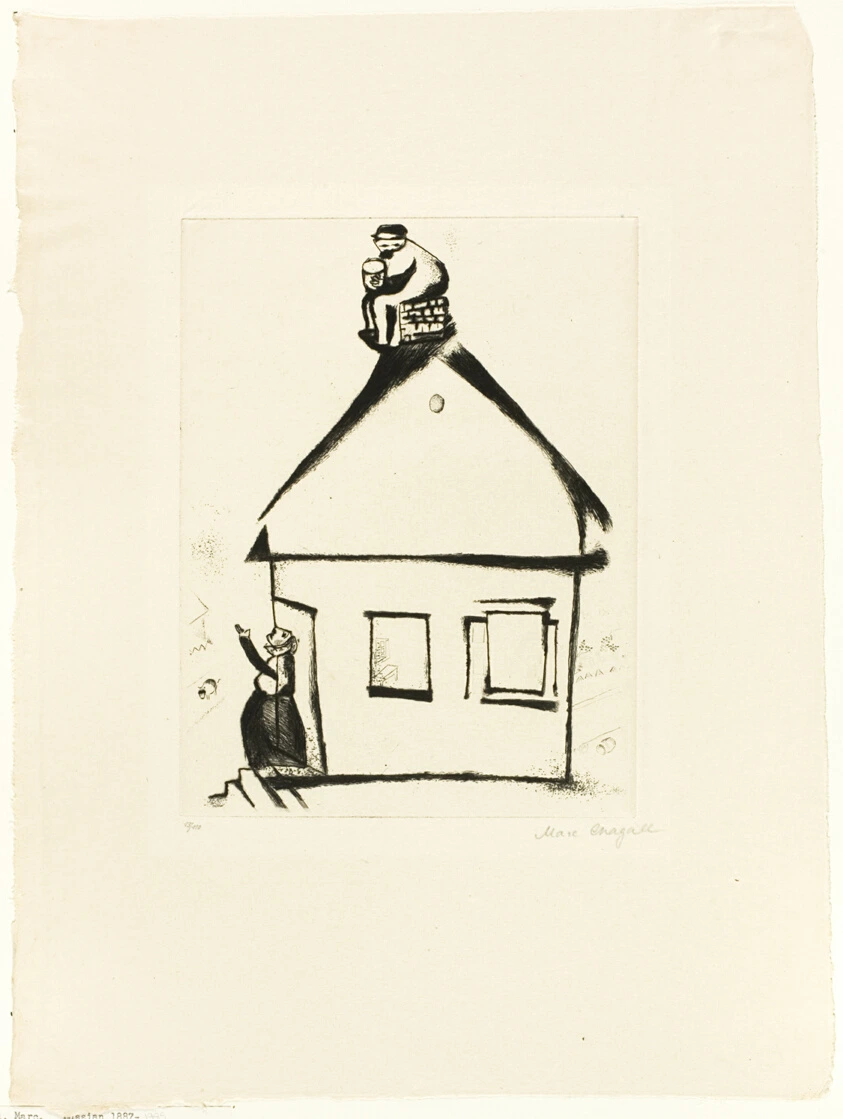
"Grandfather's House, plate twelve from Mein Leben" is a 1922 etching and drypoint by Marc Chagall, published 1923, that captures the Russian-French artist in his most nostalgically intimate and graphicly refined mode, the image showing his grandfather's house rendered with the same dreamlike memory and tender emotion that characterized his entire autobiographical series. The composition is a medium-sized print—image/plate 21 × 16 centimeters, sheet 38 × 29 centimeters—showing the grandfather's house with the etching and drypoint on buff Japanese paper creating a surface of extraordinary delicacy and emotional warmth. The buff Japanese paper provides a warm, sympathetic ground that makes the etched lines appear rich and substantial, enhancing the sense of memory and longing. The 1922 publication date places this work in the period of Chagall's exile from Russia and his production of the autobiographical prints that established his reputation as a leading printmaker and established the visual narrative of his childhood and family. Art historians have connected this print to the broader tradition of the autobiographical image in modern art, from the paintings of Rembrandt to the prints of the German Expressionists, noting that Chagall's treatment is more focused on the nostalgic memory and the tender emotion, the transformation of personal history into universal poetry, than the documentary record or the political commentary of these other traditions.
Cultural Impact
This 1922 etching drypoint published 1923 made grandfather's house nostalgically delicate through medium 21cm autobiographical etched-line and buff-Japanese-paper warm memory, using Russian-exile Mein Leben series to transform personal family history into universal tender poetic beyond Rembrandt documentary political commentary.
Why It Matters
It matters because Chagall etched a house from his childhood and made the paper feel like it was folding around a dream of home—proving that even a roof could fly if the memory was tender enough.