Accession Number
122786
Medium
Etching and drypoint on buff Japanese paper
Dimensions
Image/plate: 12.3 × 9.8 cm (4 7/8 × 3 7/8 in.); Sheet: 38.3 × 28.4 cm (15 1/8 × 11 3/16 in.)
Classification
drypoint
Credit Line
Print and Drawing Club Fund
Background & Context
Background Story
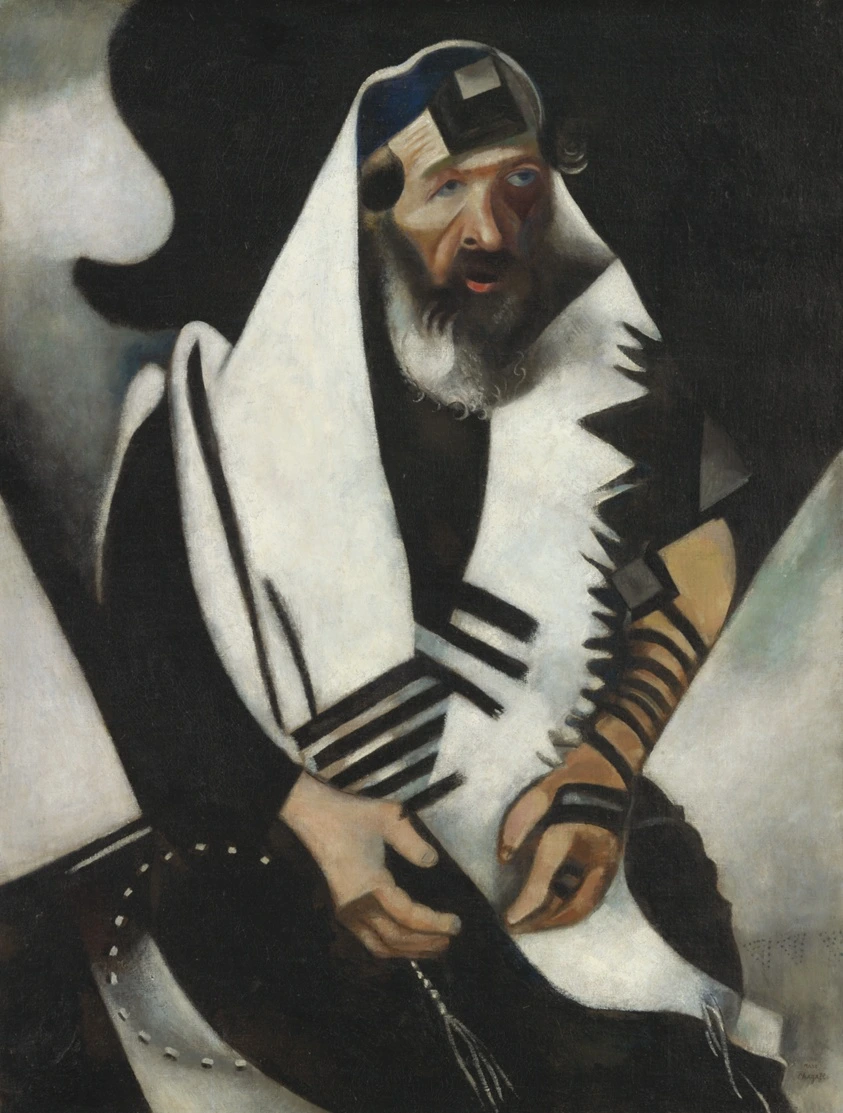
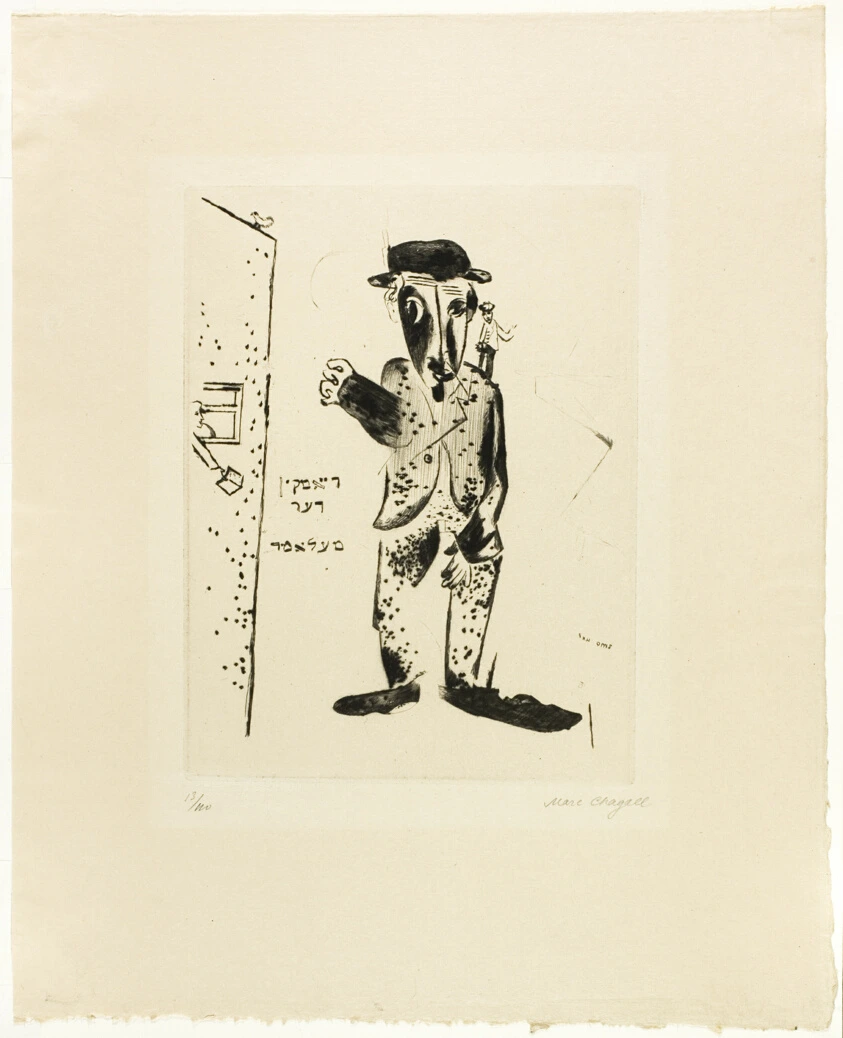
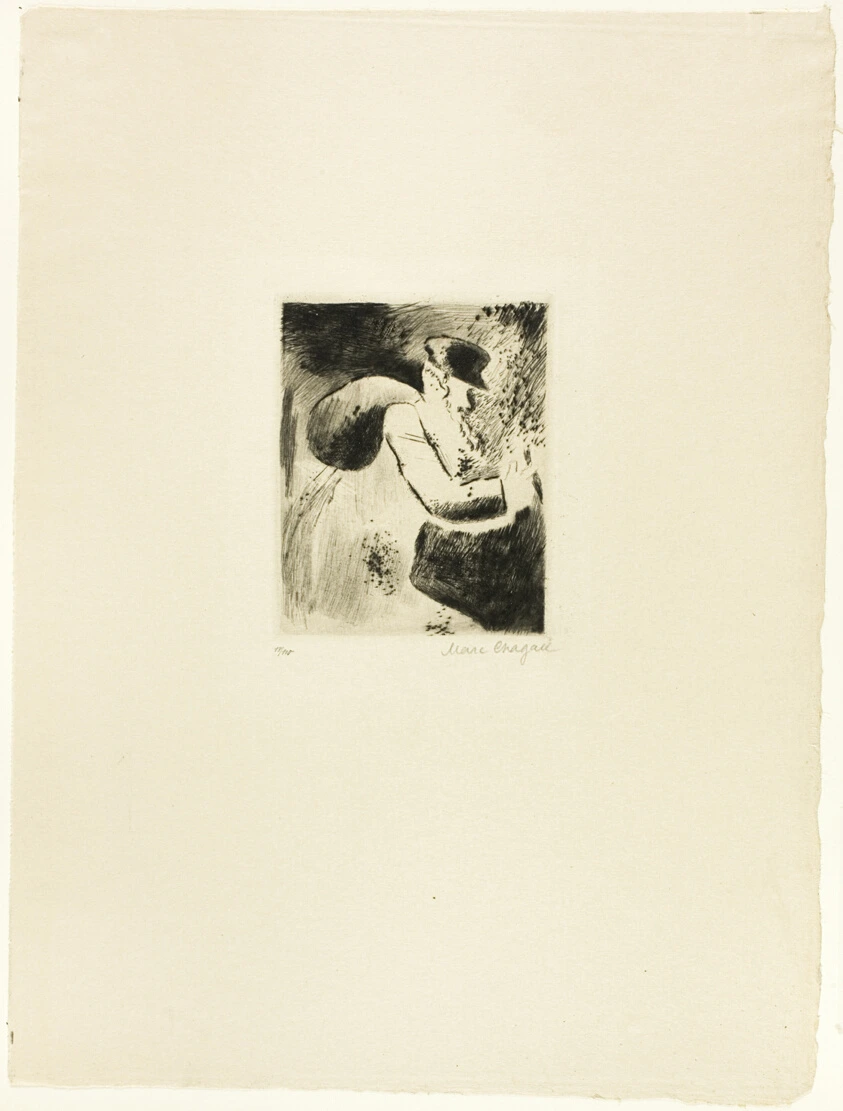
"An Old Jew, plate thirteen from Mein Leben" is a 1922 etching and drypoint that continues Marc Chagall's autobiographical project of memorializing the inhabitants of his native Vitebsk, the Eastern European town whose Jewish community was destroyed in the Holocaust decades after Chagall had immortalized it in his art. The image shows an elderly Jewish man, his face lined with the wrinkles of age and experience, his eyes looking directly at the viewer with a gaze that is simultaneously weary and wise. The technique is extraordinarily refined for so early a work: the drypoint burr creates a softness around the edges of the figure that suggests both the frailty of old age and the dignity that survives it. The small scale of the image—barely 12 × 10 centimeters—makes the portrait feel intimate, like a keepsake or a memento mori, the kind of image one carries to remember a person after they are gone. The buff Japanese paper provides a warm, almost golden ground that makes the black lines appear to glow, creating an atmosphere of reverence that elevates the specific portrait to universal symbol. Art historians have connected this image to the broader tradition of Jewish portraiture, from the biblical patriarchs of Rembrandt to the street photographs of Roman Vishniac, noting that Chagall's treatment combines the sacred and the domestic in ways that few artists achieved. The 1922 date places this work in the same period as Chagall's famous painting "The Praying Jew," and the two images share a common subject and emotional register, though the print's smaller scale makes it feel more private, less public than the canvas.
Cultural Impact
This 1922 intimate drypoint memorialized Vitebsk's vanished Jewish elders through glowing buff-paper reverence, combining Rembrandt's sacred gravity with private memento mori scale.
Why It Matters
It matters because Chagall drew an old man he had known and made him look like a prophet—proving that even ordinary people could become scripture if someone remembered them carefully.