Accession Number
193872
Medium
Pen and brown and black ink, with watercolor, over graphite, on ivory wove paper
Dimensions
12.3 × 20.4 cm (4 7/8 × 8 1/16 in.)
Classification
prints and drawing
Credit Line
Margaret Day Blake Fund
Background & Context
Background Story
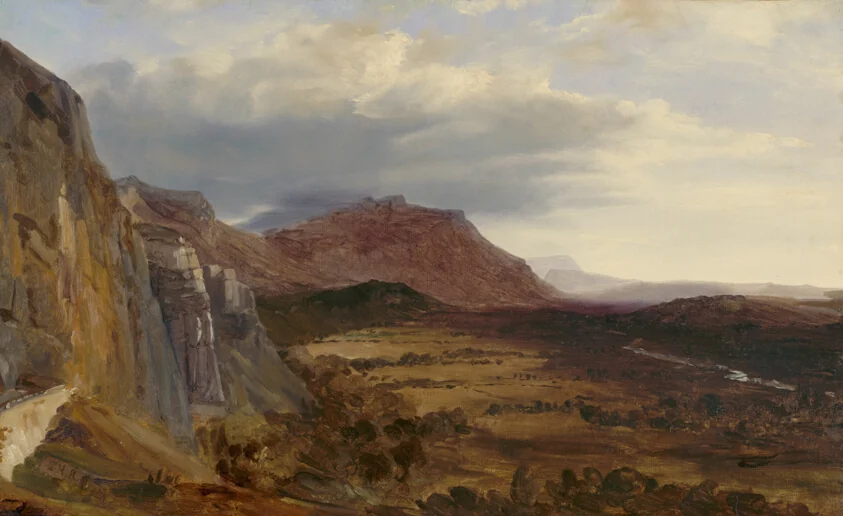
Theodore Rousseaus Footpath in the Barbizonnieres from 1864 is a pen and ink drawing with watercolor over graphite on ivory wove paper that depicts a footpath in the area around the village of Barbizon, the rural community on the edge of the Forest of Fontainebleau where Rousseau and his fellow landscape painters established the artistic colony that gave the Barbizon School its name. The footpath, with its sandy surface and its borders of low vegetation and scattered trees, provided Rousseau with a subject that combined the specific topography of the French countryside with the more general theme of the rural landscape as a place of contemplation and refuge from urban civilization. The combination of pen and ink and watercolor over graphite reveals Rousseaus working method, in which the composition is first sketched in graphite, then refined in pen and ink, and finally enriched with watercolor washes that provide the atmospheric depth and chromatic richness that distinguish his best work. The year 1864 places this drawing in the final years of Rousseaus career, when he was producing works of extraordinary subtlety and depth despite the personal difficulties that had diminished his productivity. The Barbizonnieres of the title, meaning the area around Barbizon, identifies the specific location of the footpath and connects the drawing to the tradition of Barbizon landscape painting that Rousseau and his colleagues had created over the previous three decades.
Cultural Impact
Rousseaus drawings of the Barbizonnieres are important documents for understanding the development of the Barbizon School and the practice of landscape drawing in 19th-century France, and Footpath in the Barbizonnieres demonstrates the combination of specific topography and atmospheric depth that makes his work significant. The drawing influenced the development of landscape drawing and the broader tradition of French landscape art.
Why It Matters
A 1864 pen and ink and watercolor drawing by Rousseau over graphite on ivory wove paper depicting a footpath in the Barbizonnieres, revealing his working method from graphite sketch through pen refinement to watercolor enrichment in the Barbizon tradition of rural landscape contemplation.