Accession Number
97762
Medium
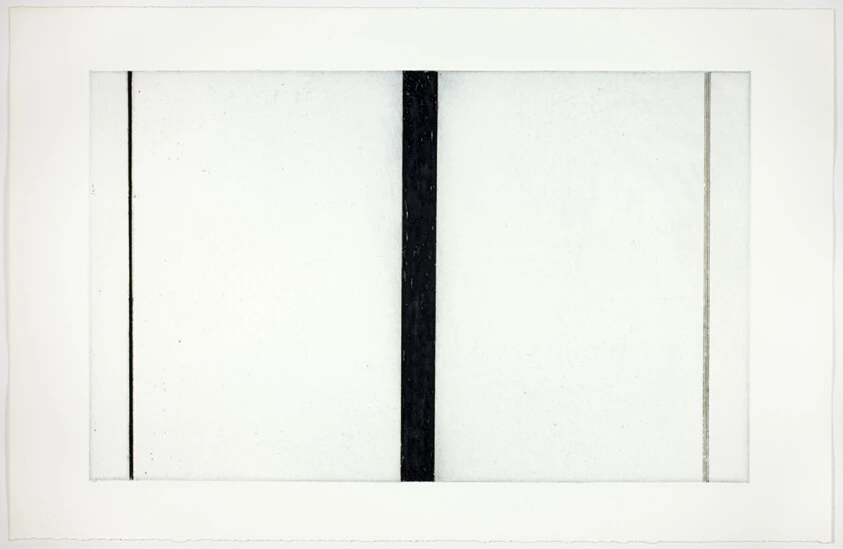
Etching with heavy bluish plate tone on white wove paper
Dimensions
Image/plate: 37.5 × 60.4 cm (14 13/16 × 23 13/16 in.); Sheet: 49.1 × 75.2 cm (19 3/8 × 29 5/8 in.)
Classification
etching
Credit Line
U.L.A.E. Collection acquired through a challenge grant of Mr. and Mrs. Thomas Dittmer; purchased with funds provided by supporters of the Department of Prints and Drawings; Centennial Endowment; Margaret Fisher Endowment Fund
Background & Context
Background Story
Barnett Newmans Untitled Etching 1 from 1969, printed with heavy bluish plate tone on white wove paper, distills the artists signature vertical zip into the intimate and demanding medium of etching. In his paintings, Newmans zips divide vast fields of color into zones of existential encounter, and the same principle operates here, compressed into the smaller scale of printmaking. The heavy bluish plate tone creates a field of atmospheric color that differs from the saturated flatness of his canvases, introducing a degree of warmth and variation that makes this etching a distinct work rather than merely a reproductive translation of a painting idea. Newman was deeply interested in printmaking as a medium that could extend his investigation of the zip into new formal territory, and the four etchings he produced in 1969 represent his most sustained engagement with the medium. The plate tone, an inked residue left on the printing plates surface rather than wiped clean, creates a subtle halo around the zip that softens its edge without diminishing its authority, suggesting Newman found in etching a way to make the zip more atmospheric without sacrificing its declarative power.
Cultural Impact
Newmans etchings from 1969 are among the most Minimalist prints ever made, rivaling the radical reductions of Malevichs square in their willingness to strip visual expression to its barest elements. They demonstrated that printmaking could serve as a primary medium for major artists rather than merely a reproductive one, influencing the printmaking renaissance of the 1970s.
Why It Matters
A minimalist etching by Newman that compresses his signature zip into printmaking format, using heavy bluish plate tone to create an atmospheric field that extends the existential encounter of his canvases into a new medium.