Accession Number
149069
Medium
Etching, aquatint, and spitbite in black on ivory China paper laid down on white wove paper (chine collé)
Dimensions
Plate: 30 × 22.6 cm (11 13/16 × 8 15/16 in.); Sheet: 46.5 × 37.2 cm (18 5/16 × 14 11/16 in.)
Classification
etching
Credit Line
Purchased with funds provided by Kaye and Howard Haas
Background & Context
Background Story
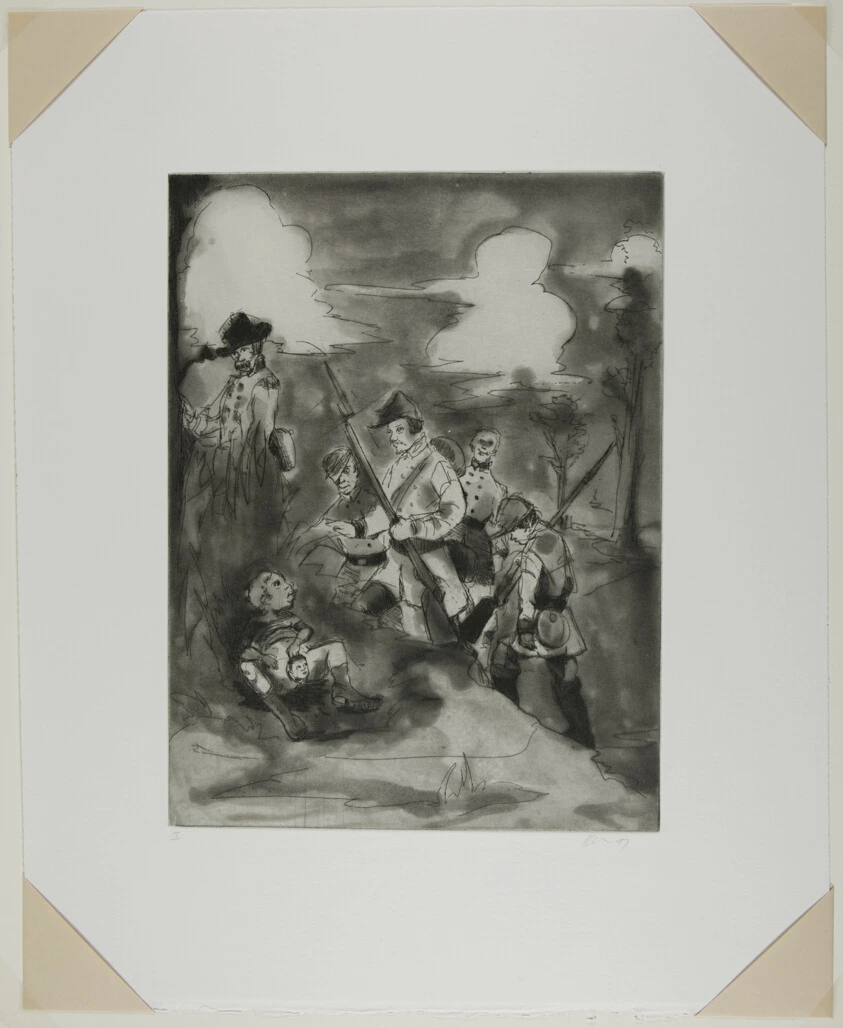
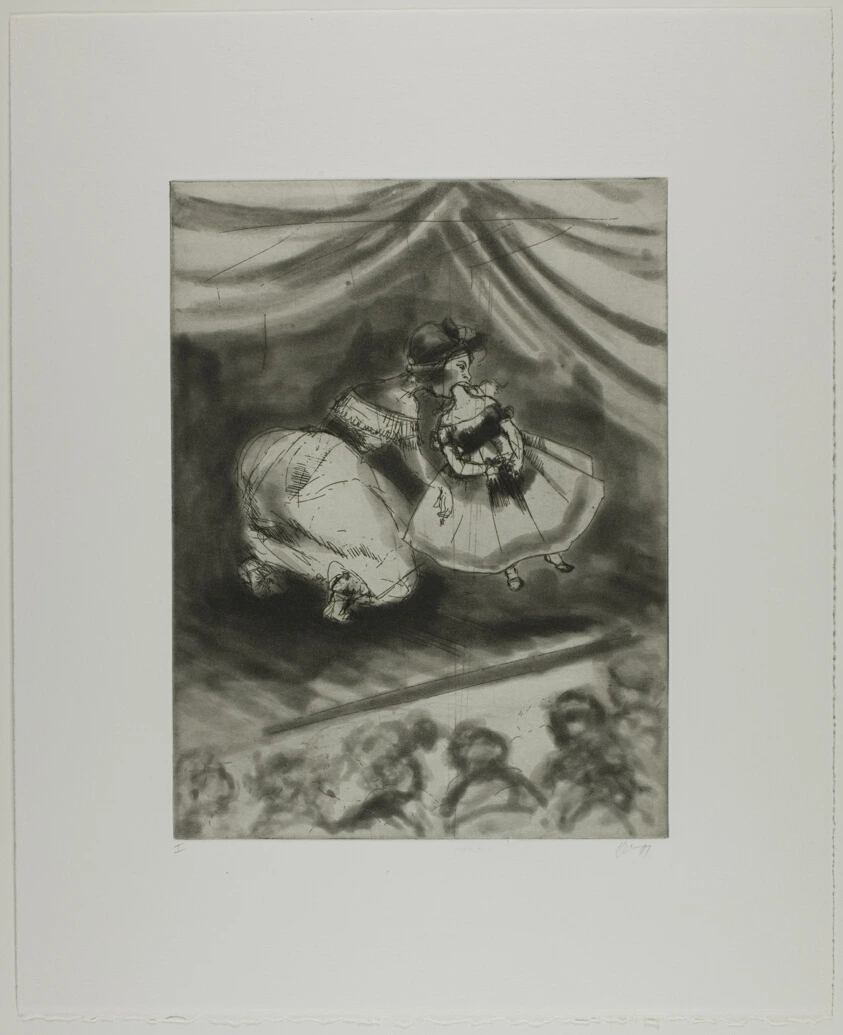
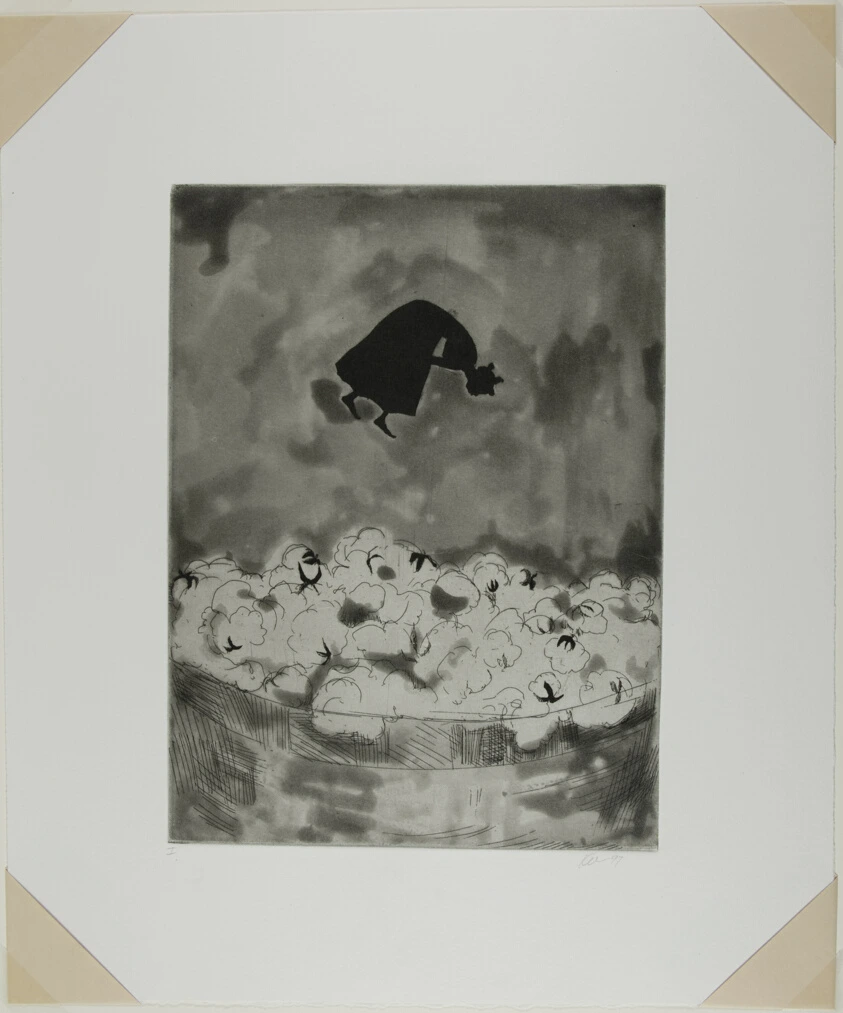
Kara Walkers Cotton from 1997 is an etching with aquatint and spitbite on China paper chine colle that uses the commodity of cotton as both subject and title to explore the relationship between American visual culture and the system of chattel slavery that produced the wealth on which that culture was built. Cotton, the crop that powered the American economy before the Civil War and that was harvested by enslaved labor, serves in Walkers print as a metonym for the entire system of racial exploitation that the silhouette tradition both depicted and concealed. The title, with its single-word directness, refuses the euphemisms that American culture has developed to avoid confronting the reality of slavery, naming the commodity that was harvested by enslaved hands and that clothed the bodies of the free. The etching with aquatint and spitbite creates the same range of tonal effects as Walkers other prints from this series, combining sharp silhouette edges with atmospheric washes that give the black figures a sculptural presence against the tonal background. The chine colle technique gives the print surface a delicacy that contrasts with the violence of the historical subject, creating a tension between medium and content that forces the viewer to confront the relationship between aesthetic refinement and racial atrocity that Walkers work consistently exposes.
Cultural Impact
Cotton is one of Walkers most direct engagements with the commodity that powered the American slave economy, and its title refuses euphemism in a way that exemplifies her strategy of confronting American racial history through the genteel traditions of 19th-century visual culture. The print influenced the development of contemporary printmaking as a medium for confronting difficult historical subjects.
Why It Matters
A 1997 etching with aquatint and spitbite on chine colle by Walker titled Cotton, using the commodity of American slavery as both subject and title to expose the relationship between aesthetic refinement and racial atrocity with direct confrontation that refuses euphemism.