Accession Number
149067
Medium
Etching, aquatint, and spitbite in black on ivory China paper laid down on white wove paper (chine collé)
Dimensions
Plate: 30 × 22.6 cm (11 13/16 × 8 15/16 in.); Sheet: 46.4 × 37.1 cm (18 5/16 × 14 5/8 in.)
Classification
etching
Credit Line
Purchased with funds provided by Kaye and Howard Haas
Background & Context
Background Story
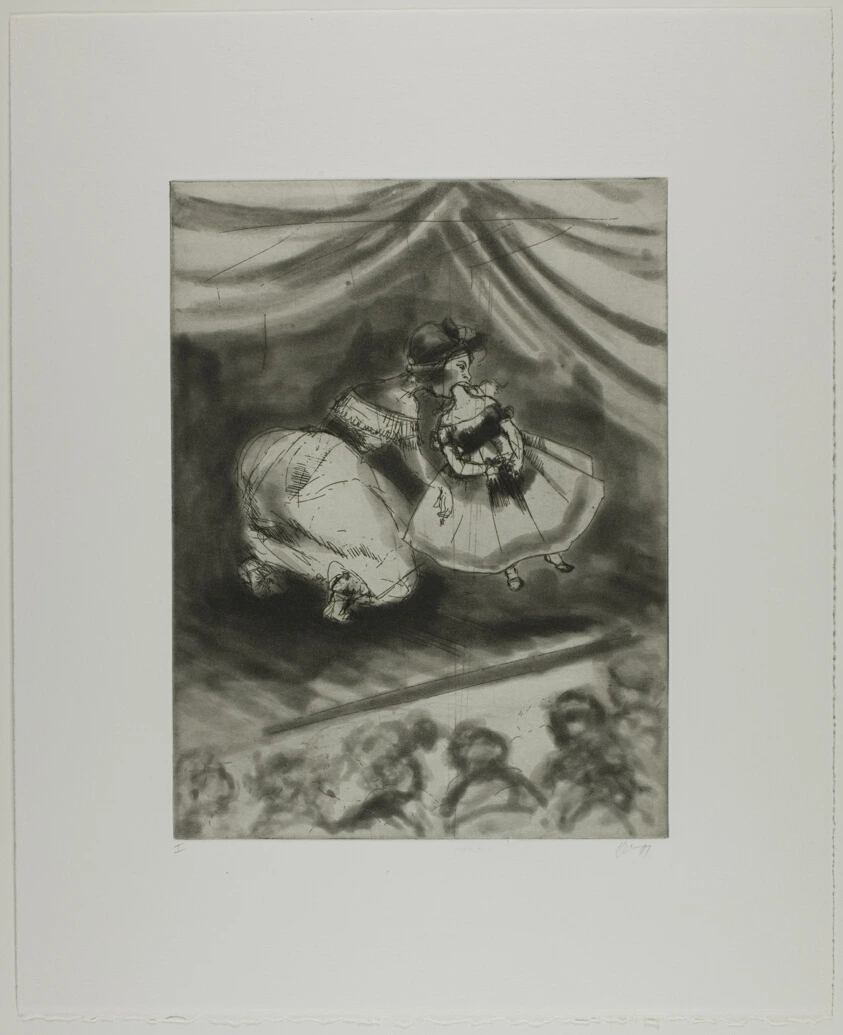
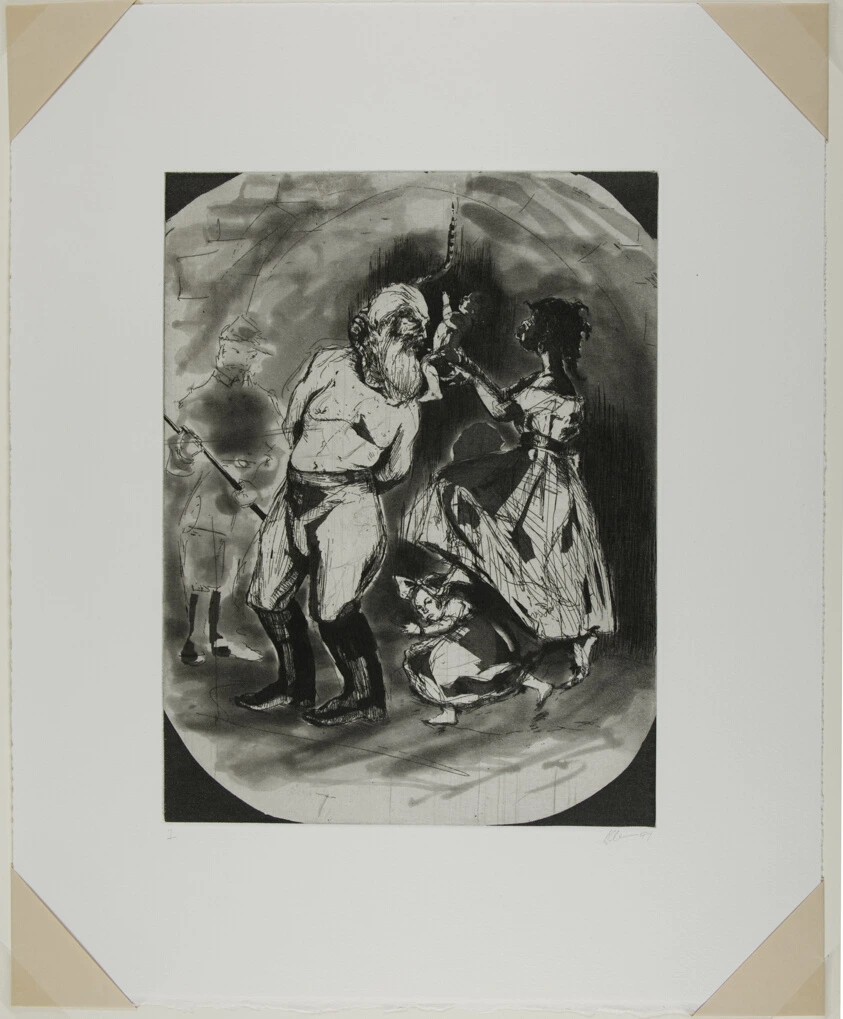
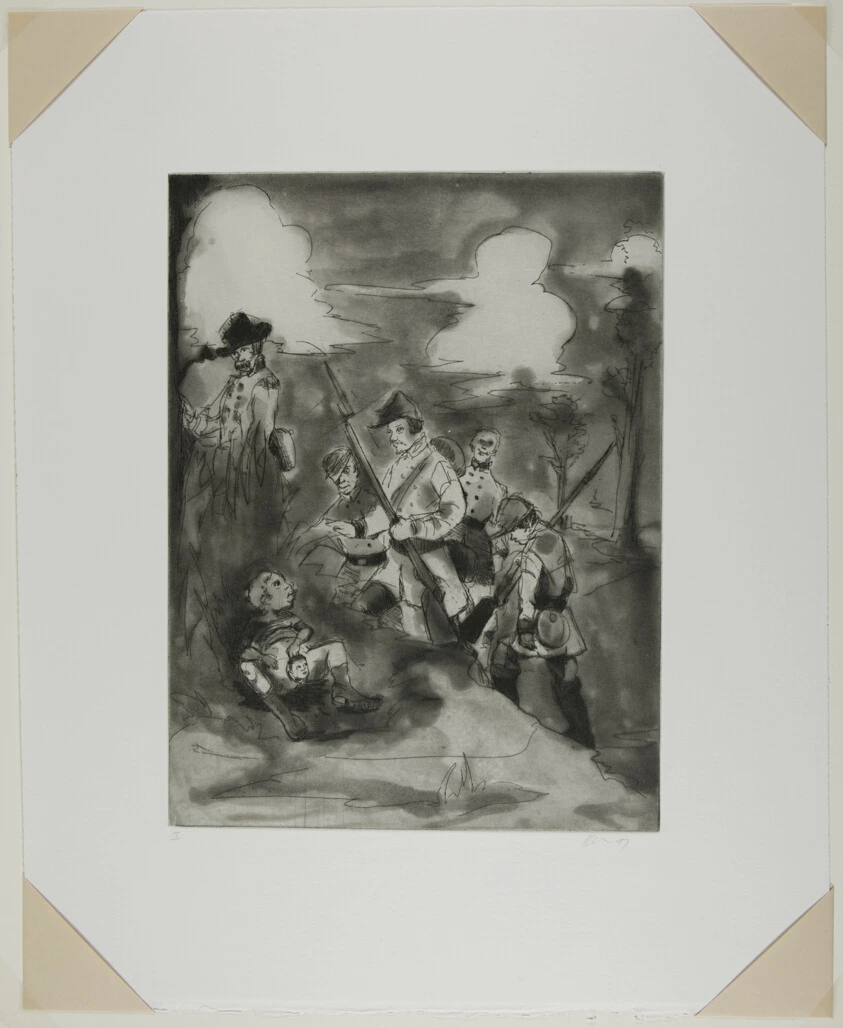
"Li'l Patch" is a 1997 etching, aquatint, and spitbite print by Kara Walker that belongs to the series of small-scale works that established her technical mastery of traditional printmaking while deploying that mastery in the service of radical content, the delicate chine collé technique creating a physical and aesthetic refinement that contrasts sharply with the violence of the imagery. The composition shows a silhouette scene in Walker's characteristic style: black figures on white ground, the forms created through the etching needle's precise line and the aquatint's tonal gradation, the result a miniature world of horror and beauty that rewards close inspection. The title "Li'l Patch" suggests both the small scale of the print and the diminutive, childlike quality of the figure or figures it depicts, the affectionate diminutive contrasting with the probable violence of the scene, a typical Walker strategy of making the viewer complicit through charm. The technique of chine collé—the laying of thin China paper onto the heavier support—creates a physical layering that mirrors the thematic layering of the image: the delicate surface seems to float above the ground, the figures suspended in a space that is both material and ethereal. The 1997 date places this work in the period of Walker's first major exhibitions and the critical controversy that greeted her rise to prominence, the debates about the representation of slavery and the ethics of aestheticizing violence that continue to define her reception. Art historians have connected this print to the broader tradition of etching in American art, from the nineteenth-century reproductive prints to the modernist experiments of the 1960s, noting that Walker's treatment is more historically self-aware, more critically engaged with the medium's associations with gentility and refinement. The work also demonstrates Walker's influence on the development of contemporary printmaking: her combination of traditional technique and radical content has inspired a generation of artists who use the medium for political and social critique.
Cultural Impact
This 1997 chine-collé etching miniature made viewers complicit through charm-scale contrast, using delicate China-paper layering to float silhouette horror between material refinement and radical racial content.
Why It Matters
It matters because Walker etched a tiny scene of violence and made it look like a jewel—proving that even the worst stories could be beautiful if the paper was thin enough.