Accession Number
149068
Medium
Etching, aquatint, and spitbite in black on ivory China paper laid down on white wove paper (chine collé)
Dimensions
Plate: 30 × 22.6 cm (11 13/16 × 8 15/16 in.); Sheet: 46.2 × 37.5 cm (18 1/4 × 14 13/16 in.)
Classification
etching
Credit Line
Purchased with funds provided by Kaye and Howard Haas
Background & Context
Background Story
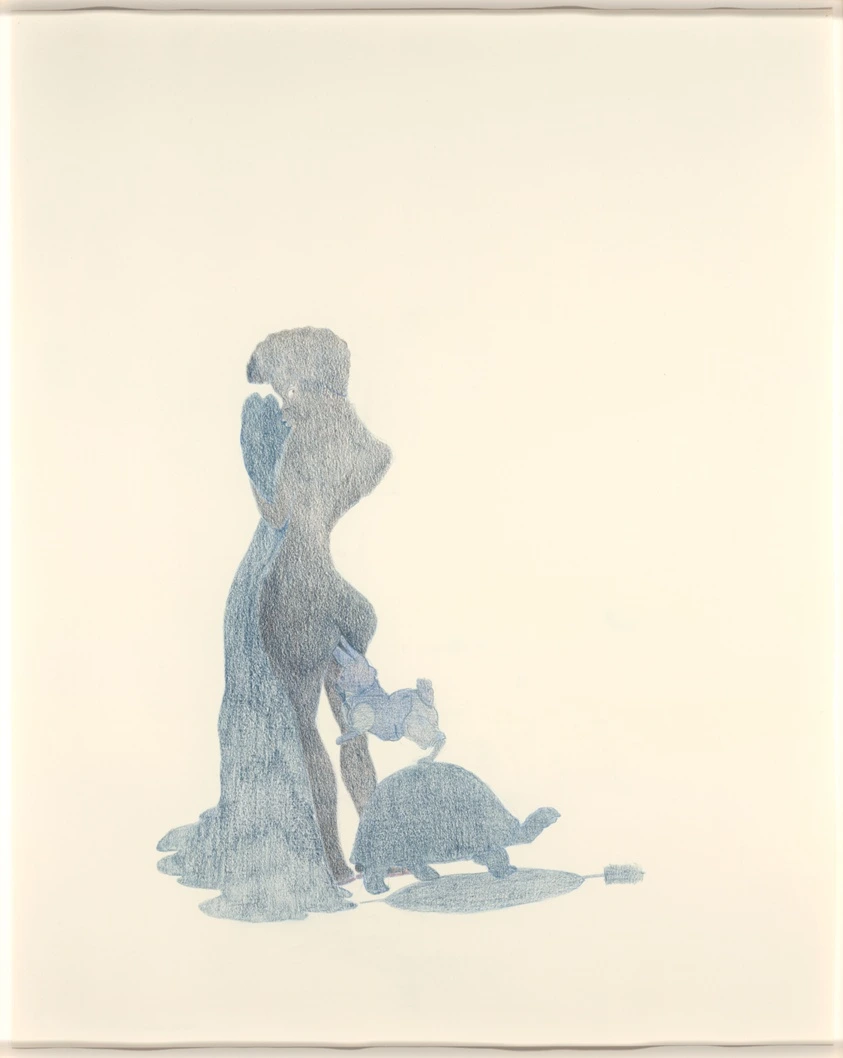
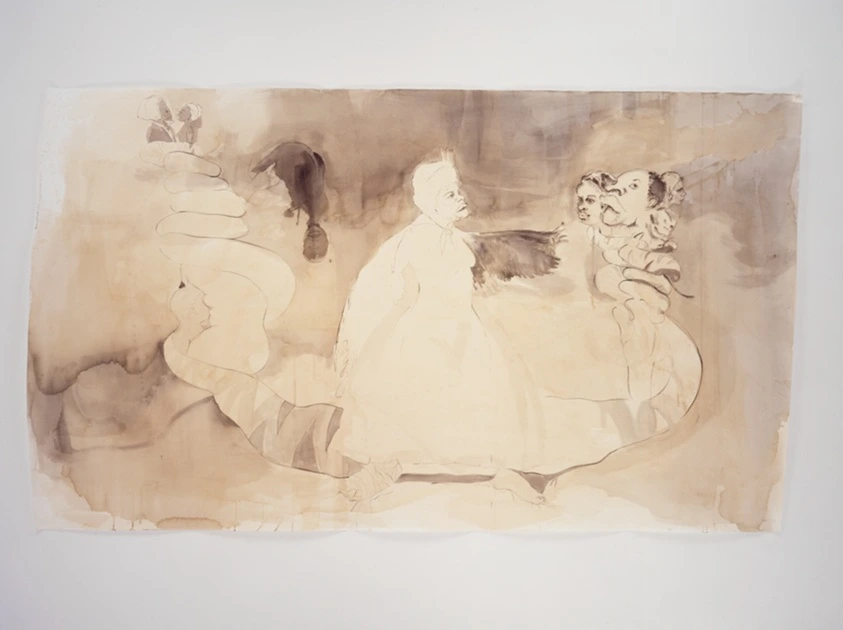
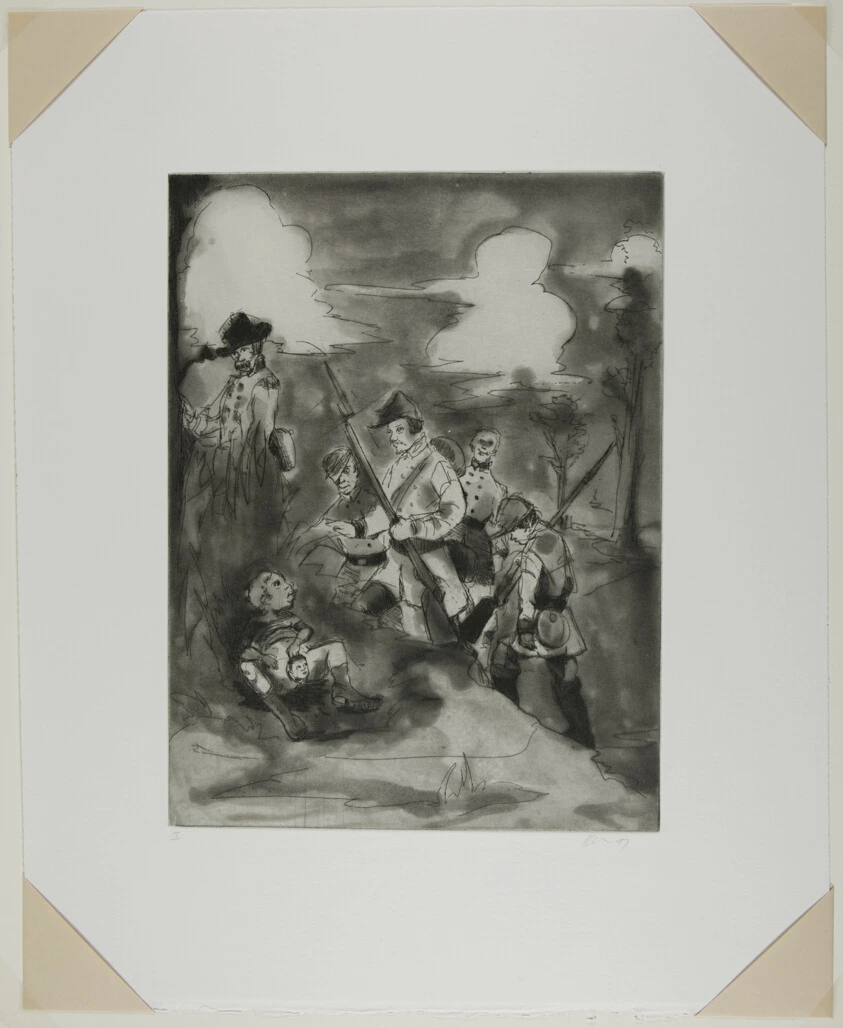
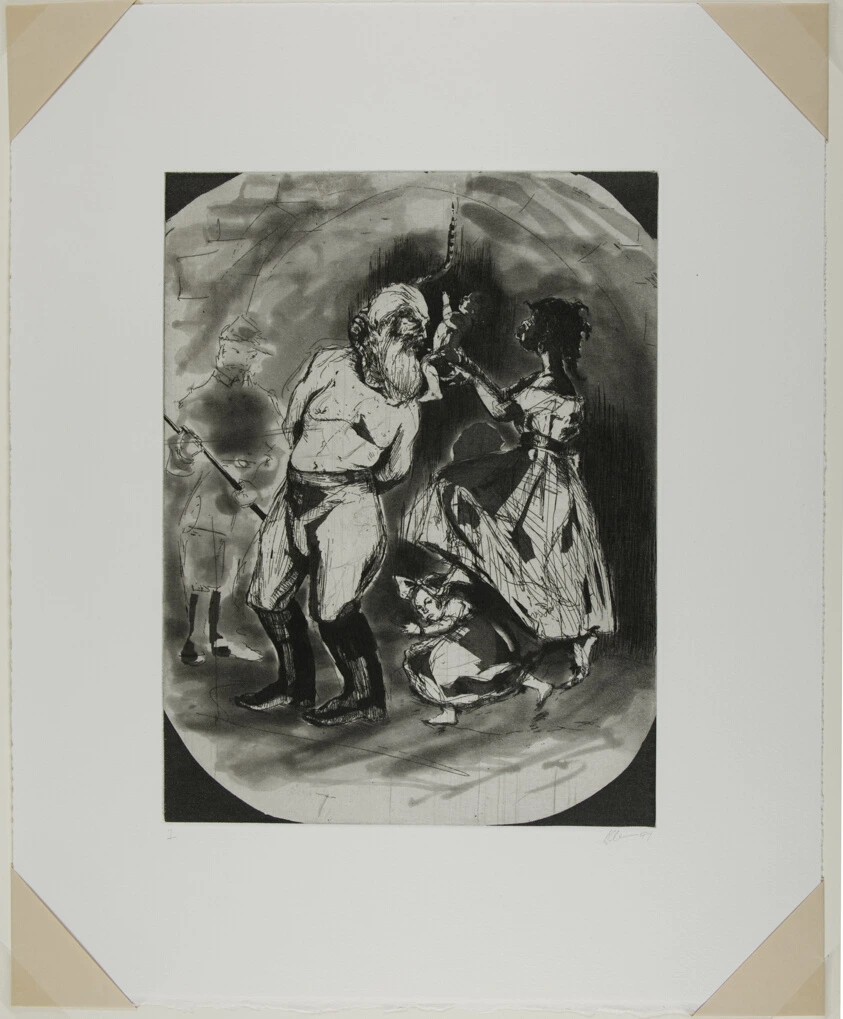
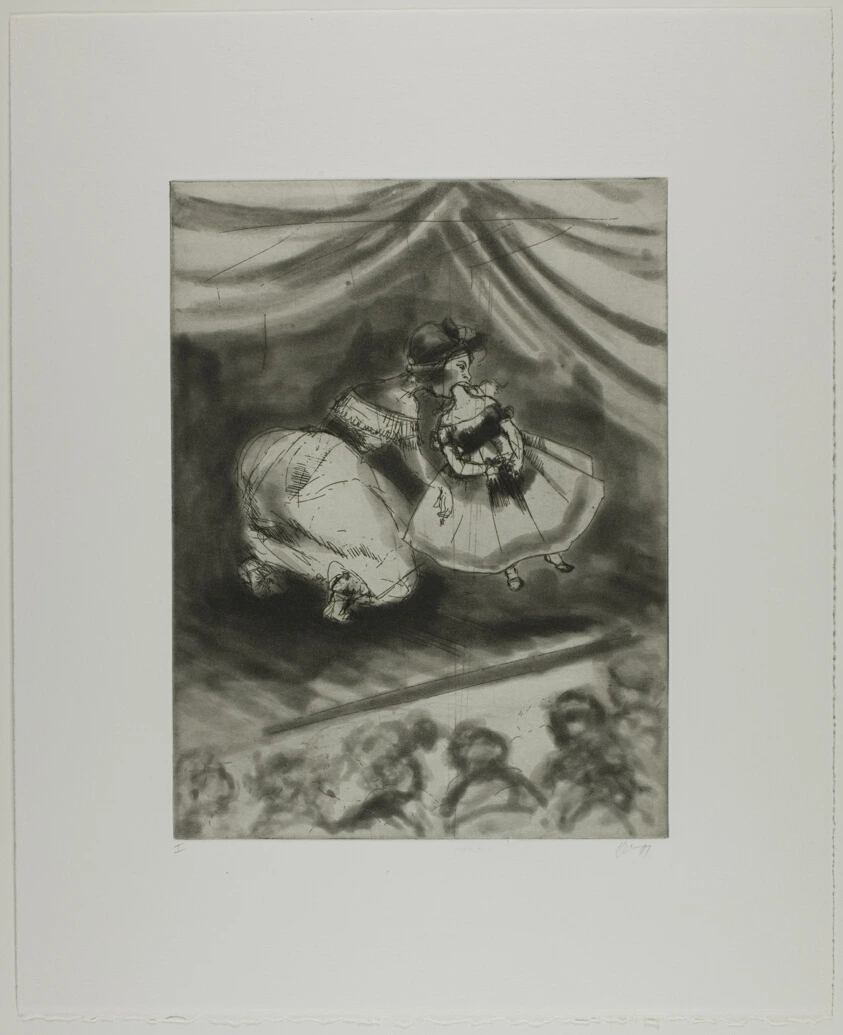
"Vanishing Act" is a 1997 etching, aquatint, and spitbite print by Kara Walker that continues her exploration of the silhouette as a medium for racial and sexual narrative, the title suggesting both the disappearance of the figure and the theatrical trick by which that disappearance is achieved, the "act" of vanishing as a performance that conceals as much as it reveals. The composition shows a silhouette scene in which a figure or figures seem to be dissolving or disappearing, the black forms merging with the white ground in a way that suggests both presence and absence, the visible and the invisible, the remembered and the forgotten. The technique is extraordinarily subtle: the etching creates the sharp contours that define the figures, the aquatint provides the tonal gradations that suggest depth and atmosphere, and the spitbite adds the soft, bleeding edges that make the forms feel like they are evaporating into the surrounding space. The chine collé technique—the laying of thin China paper onto the white wove support—creates a physical delicacy that enhances the sense of ephemerality, the image seeming to float rather than sit heavily on the page. The 1997 date places this work in the same period as "Li'l Patch" and the other early prints, suggesting that Walker conceived of these works as a related group, each one exploring a different aspect of the silhouette's capacity for narrative and metaphor. Art historians have connected this print to the broader tradition of the vanishing act in American culture, from the disappearance of Native Americans in nineteenth-century painting to the erasure of African American history in official memory, noting that Walker's treatment makes the vanishing itself visible, the act of disappearance becoming the subject rather than the outcome of representation. The work also demonstrates Walker's mastery of ambiguity: the image can be read as escape or erasure, liberation or loss, and this undecidability is central to its power.
Cultural Impact
This 1997 etching made disappearance itself visible through aquatint-spitbite evaporation and chine-collé delicacy, using silhouette ambiguity to transform American cultural erasure into performed liberation-or-loss undecidability.
Why It Matters
It matters because Walker drew a figure vanishing and made the empty paper feel like a scream—proving that even absence could be louder than presence if the edges were soft enough.