Provenance
William A. Clark [1839-1925]; bequest 1926 to the Corcoran Gallery of Art, Washington; acquired 2014 by the National Gallery of Art.
Accession Number
2014.136.36
Medium
oil on canvas
Dimensions
overall: 114.94 × 89.54 cm (45 1/4 × 35 1/4 in.) | framed: 146.05 × 119.38 × 12.7 cm (57 1/2 × 47 × 5 in.)
Classification
Painting
Credit Line
Corcoran Collection (William A. Clark Collection)
Tags
Painting Neoclassical & Romantic (1751–1850) Oil Painting Canvas French
Background & Context
Background Story
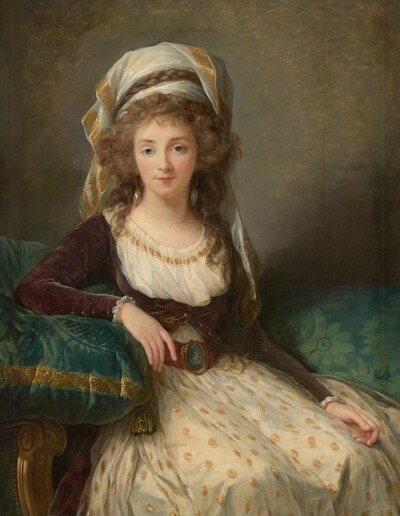
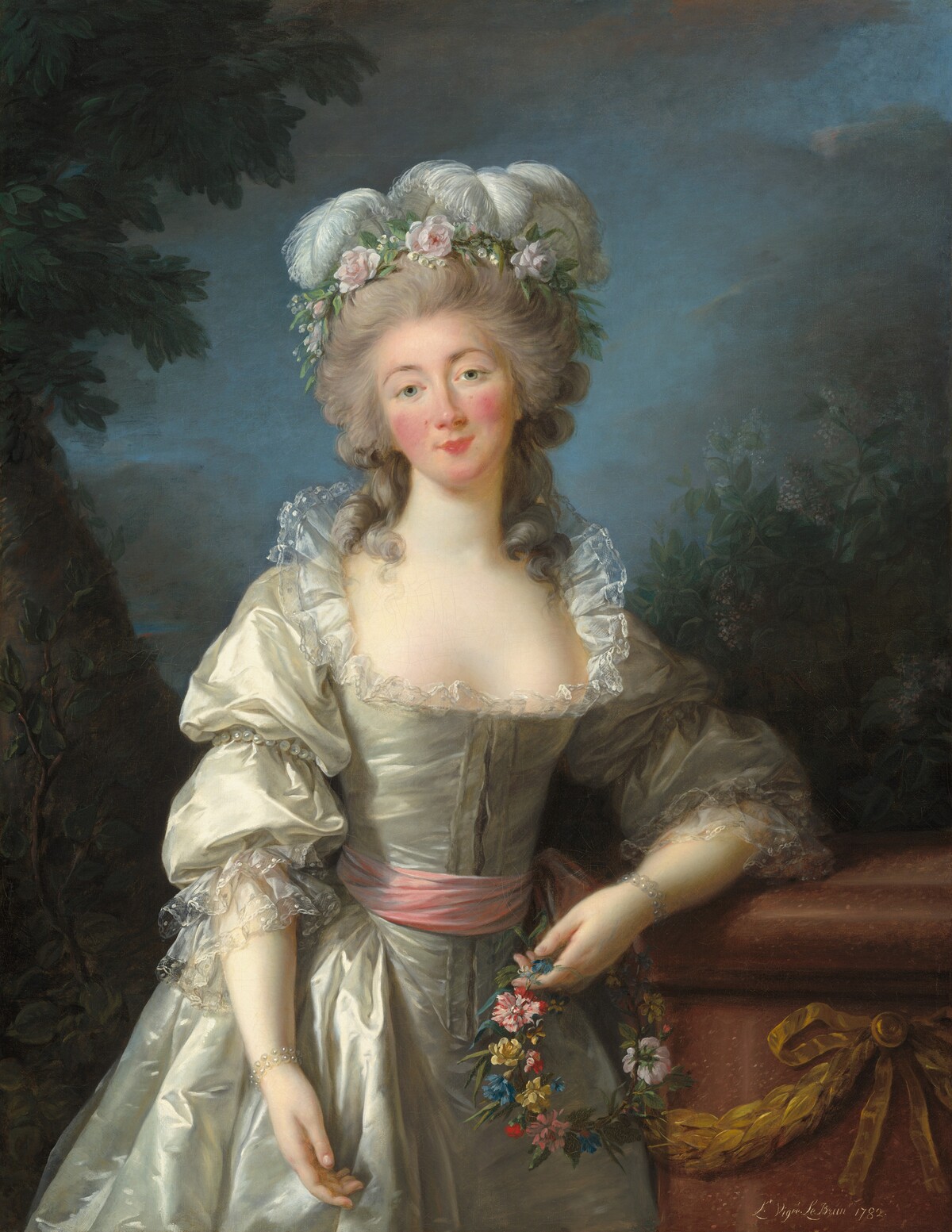
Élisabeth-Louise Vigée Le Brun (1755-1842) was one of the most successful portrait painters of the 18th century, known for her portraits of Marie-Antoinette and the French aristocracy. Madame du Barry from 1782 depicts the last mistress of Louis XV in a portrait that transforms the notorious courtesan into a figure of aristocratic elegance. Vigée Le Brun's treatment demonstrates her ability to find the flattering angle for any sitter—even one whose reputation was as controversial as du Barry's—while maintaining the compositional elegance and tonal subtlety that distinguish her best portraiture.
Cultural Impact
Vigée Le Brun's portrait of Madame du Barry is important in the history of women's portraiture because it demonstrates the political complexity of painting a woman whose reputation was as controversial as du Barry's. The portrait transforms the last royal mistress into a figure of aristocratic elegance, demonstrating Vigée Le Brun's ability to navigate the political complexities of aristocratic portraiture with both tact and artistic skill.
Why It Matters
Madame du Barry is Vigée Le Brun navigating aristocratic portraiture's political complexities: the last mistress of Louis XV transformed into a figure of aristocratic elegance. The 1782 portrait combines likeness with the compositional elegance that Versailles demanded.