Masters of Their Craft
Artists
Discover the visionaries who shaped the course of art history.
39,743 artists in the collection
Florence Sampson
American
1892 - 1989
Florence Vincent Robinson
Florence Wyman Ivins
American
1881 - 1948
Florentine

Florentine 15th Century
Italian
The Crusades of the 15th century are those Crusades that follow the Crusades after Acre, 1291–1399, throughout the next hundred years. In this time-period, the threat from the Ottoman Empire dominated the Christian world, but further threats—from the Mamluks, Moors, and heretics—impinged upon the Christian West as well. The Ottomans gained significant territory in all theaters, but did not defeat Hospitaller Rhodes, nor advance past the Balkans; in addition, the Reconquista was completed, and heresies continued to be suppressed. The Fall of Constantinople in 1453 marked the end of the Byzantine Empire, and the Teutonic Knights were spent as a fighting force. The Crusades would continue for almost another 100 years, with the expansion of the Ottoman Empire into a major world power—a level of international influence that lasted into the 20th century.
Florentine 16th/17th Century
Italian
Florentine 16th Century
Italian
The Florentine Diamond is a large diamond, known for its long association with European royalty. A possession of the House of Habsburg-Lorraine since 1737, it was widely thought to have been lost in the aftermath of the fall of the Austro-Hungarian Empire in 1918, but was revealed in November 2025 to have remained with the family in secret. Reportedly of Indian origin, the Florentine Diamond is light yellow in colour with very slight green overtones. It is cut in the form of an irregular (although very intricate) nine-sided 126-facet double rose cut, with a weight of 137.27 carats (27.454 g). The stone is also known as the Tuscan, the Tuscany Diamond, the Grand Duke of Tuscany, the Austrian Diamond, Austrian Yellow Diamond, and the Dufner Diamond.

Florentine 17th Century
Italian
Florentine biscuit (or simply, Florentine) is a sweet biscuit of nuts and fruit. It was most likely invented in France in the 17th century and not in Italy (despite their name). Florentines are made of nuts (typically hazelnuts and almonds) and candied cherries mixed with sugar melted together with butter and honey, cooked in an oven. They are often coated on the bottom with chocolate, which is traditionally scored in a wave pattern with the tines of a fork for decoration. Other types of candied fruit are used as well. They typically contain neither flour nor eggs.
Florentin Lauter
German
Flor Garduño
Flor Garduño
Mexican
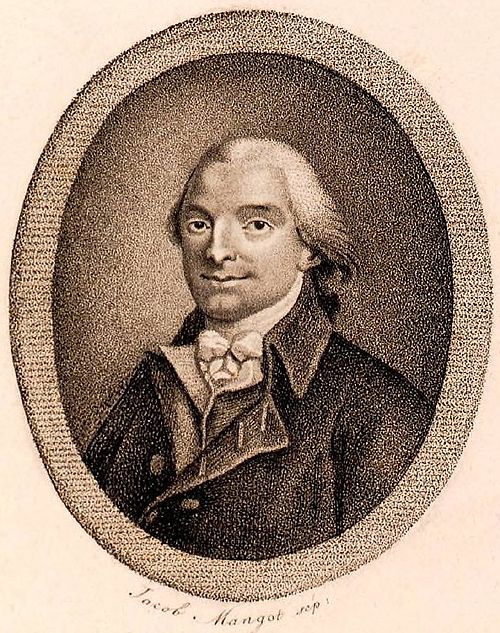
Florian
French
French, 1755 - 1794
Jean-Pierre Claris de Florian (6 March 1755 – 13 September 1794) was a French poet, novelist and fabulist. He is best known for writing the poem Plaisir d'amour as part of his novel, Célestine, which was later set to the music composed by Jean-Paul-Égide Martini. The song received popularity after composer Hector Berlioz arranged it for orchestra. Additionally, the song formed the basis of Elvis Presley's iconic hit Can't Help Falling in Love (1961). Throughout his lifetime, de Florian was well known for his fables, which have been reprinted numerous times, as well as his plays.