Masters of Their Craft
Artists
Discover the visionaries who shaped the course of art history.
39,743 artists in the collection
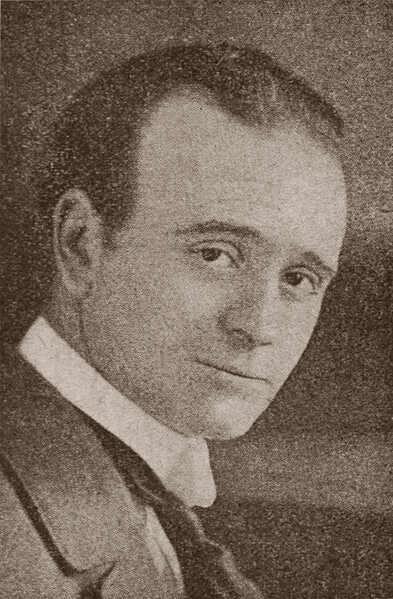
Dyson, Will
Australian
Australian, 1880 - 1938
William Henry ('Will') Dyson (3 September 1880 – 21 January 1938) was an Australian illustrator, artist and political cartoonist who achieved international recognition. He initially worked as a freelance artist in Australia, developing a specialty as a caricaturist, notably in The Bulletin magazine. In 1909 Dyson married Ruby Lindsay and the couple settled in London soon afterwards. As cartoonist for The Daily Herald newspaper, Dyson became widely known as an illustrator and commentator supporting progressive social reforms in Britain. His cartoons were often controversial, tackling difficult issues such as poverty, inequality and war, and were characterised by their biting wit and artistic impact. At the outbreak of World War I Dyson directed his scathing artwork at German militarism. In 1916 he applied to join the Australian forces at the Western Front as an artist. He was appointed an honorary lieutenant and joined the Anzac troops in France in January 1917. By the following May his appointment as Australia's first official war artist was formalised. After the death of his wife in March 1919 Dyson went through a difficult emotional period, during which his artistic output suffered...
Dyula

Dzama, Marcel
Canadian
Canadian, born 1974
Marcel Dzama (born May 4, 1974) is a contemporary artist from Winnipeg, Manitoba, Canada who currently lives and works in New York City. His work has been exhibited internationally, in particular his ink and watercolor drawings.
Dzubas, Friedel
American
American, 1915 - 1994
Friedel Dzubas (April 20, 1915 in Berlin, Germany – December 10, 1994 in Auburndale, Massachusetts) was a German-born American abstract painter.
Eadweard J. Muybridge
American
1830 - 1904
Eadweard Muybridge
Eagerton, Robert Pierce
American
American, born 1940
Energy Reserves Group, Inc. v. Kansas Power & Light Co., 459 U.S. 400 (1983), is a U.S. Supreme Court decision interpreting the Contract Clause of the U.S. Constitution. The Court upheld the Kansas Natural Gas Price Protection Act, finding that it did not unconstitutionally interfere with existing private contracts. The case arose when Energy Reserves Group, Inc. challenged the Kansas law. Energy Reserves Group’s predecessor had previously entered into two intrastate gas contracts with Kansas Power & Light Co., both of which included price escalator clauses. After the Federal Natural Gas Policy Act of 1978 was passed to promote the deregulation of natural gas, the state of Kansas passed a law that restricted price increases in contracts. Kansas Power & Light followed the state law, refusing to pay higher prices. Energy Reserves Group argued that the law violated the Contract Clause by interfering with contract pricing terms. The Supreme Court disagreed, finding that Kansas had a legitimate interest in protecting consumers from price hikes. The Court made clear that the Contract Clause does not ban all state involvement in private contracts.
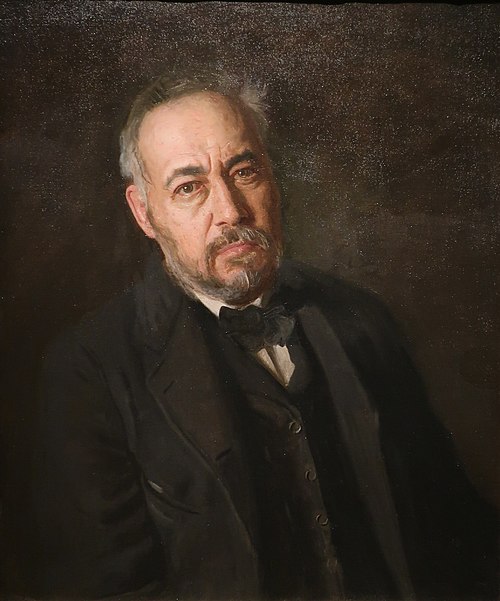
Eakins, Thomas
American
American, 1844 - 1916
Thomas Cowperthwait Eakins (; July 25, 1844 – June 25, 1916) was an American realist painter, photographer, sculptor, and fine arts educator. He is widely acknowledged to be one of the most important American artists. For the length of his professional career, from the early 1870s until his health began to fail some 40 years later, Eakins worked exactingly from life, choosing as his subject the people of his hometown of Philadelphia. He painted several hundred portraits, usually of friends, family members, or prominent people in the arts, sciences, medicine, and clergy. Taken en masse, the portraits offer an overview of the intellectual life of contemporary Philadelphia of the late 19th and early 20th centuries. In addition, Eakins produced a number of large paintings that brought the portrait out of the drawing room and into the offices, streets, parks, rivers, arenas, and surgical amphitheaters of his city. These active outdoor venues allowed him to paint the subject that most inspired him: the nude or lightly clad figure in motion. In the process, he could model the forms of the body in full sunlight, and create images of deep space utilizing his studies in perspective. Eakins took...
E. Albert Cox
Eames and Young, Architects
E. and Wm. Sage
Eanger Irving Couse