Provenance
(Galerie van Diemen & Co., Berlin) 1920; Stichting Nederlandsch Kunstbezit, no. 1216; (sale, Sotheby's, London, 25 March 1982, no. 54); acquired 1982 (via David Tunick) by NGA.
Accession Number
1982.38.2
Medium
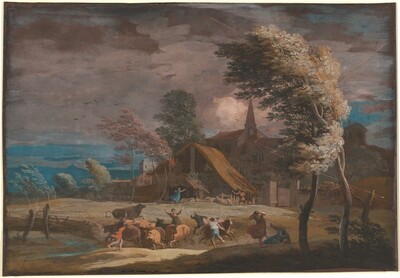
gouache on kidskin
Dimensions
overall: 30.9 × 45.3 cm (12 3/16 × 17 13/16 in.)
Classification
Drawing
Credit Line
Ailsa Mellon Bruce Fund
Tags
Drawing Baroque (1600–1750) Gouache Italian
Background & Context
Background Story
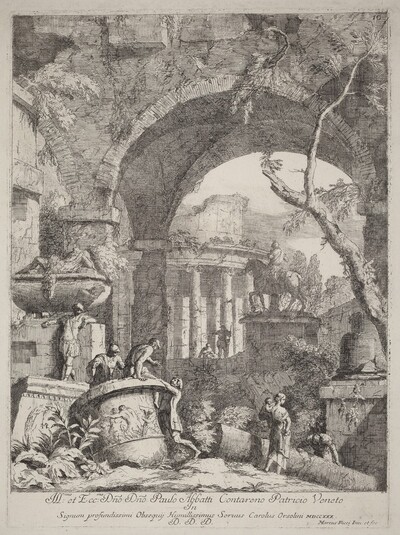
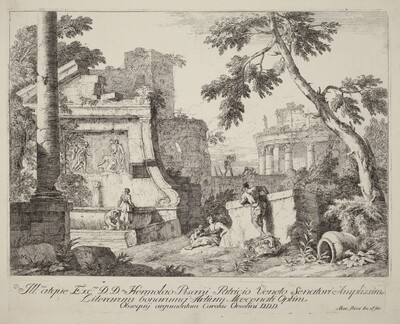
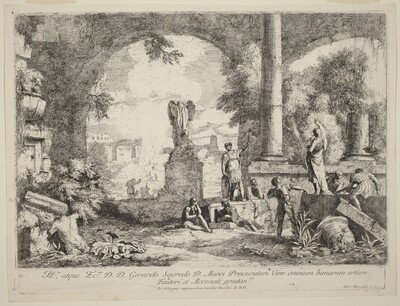
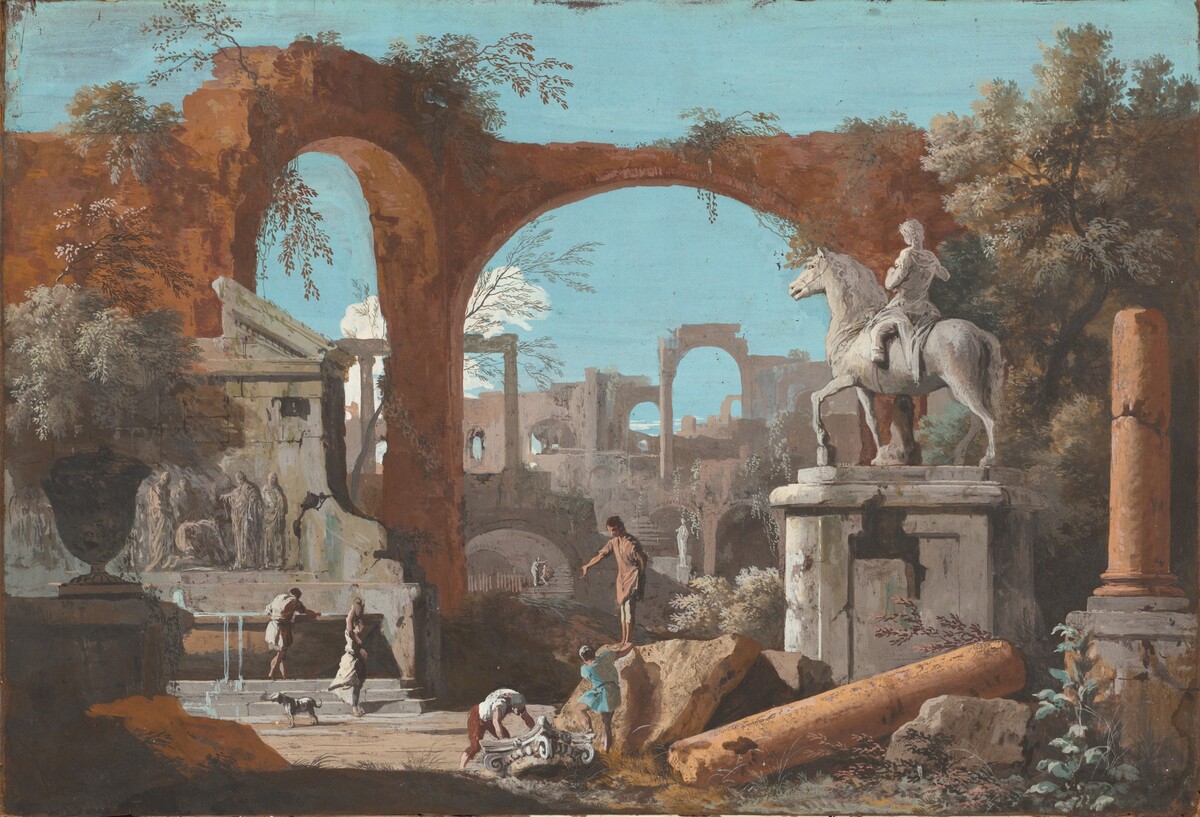
Marco Ricci (1676-1730) was a Venetian painter who specialized in landscape capricci—imaginary compositions combining real architectural elements in fictional arrangements—and was one of the most influential landscape painters of the early 18th century. A Capriccio of Roman Ruins from 1727-29 depicts an imaginary arrangement of Roman architectural fragments—the kind of composition that made Ricci famous throughout Europe as a painter of the Picturesque. The capriccio format allowed Ricci to combine real architectural elements in ways that never existed in reality, creating compositions that were more dramatically satisfying than topographically accurate views.
Cultural Impact
Ricci's capricci were among the most influential landscape paintings of the 18th century because they defined the Picturesque aesthetic that would dominate European taste for decades. A Capriccio of Roman Ruins combines real architectural elements in an imaginary arrangement that is more dramatically satisfying than any topographically accurate view could be—and the combination of authentic details with fictional composition is the essence of the Picturesque.
Why It Matters
A Capriccio of Roman Ruins is Ricci defining the Picturesque: real architectural fragments combined in imaginary arrangements that are more dramatically satisfying than topographically accurate views. The gouache on kidskin medium gives the capriccio a luminosity and precision that oil on canvas cannot match—the perfect medium for an art that combines real details with fictional composition.