Provenance
Princess Sophia Matilde [1773-1844], Gloucester; Henry, Duke of Grafton; (David Tunick, Inc.); acquired 1980 by the National Gallery of Art.
Accession Number
1980.13.1
Medium
gouache on kidskin backed with paper
Dimensions
overall (approximate): 30.6 × 44.3 cm (12 1/16 × 17 7/16 in.)
Classification
Drawing
Credit Line
Ailsa Mellon Bruce Fund and Gift of David Tunick
Tags
Drawing Baroque (1600–1750) Gouache Paper Italian
Background & Context
Background Story
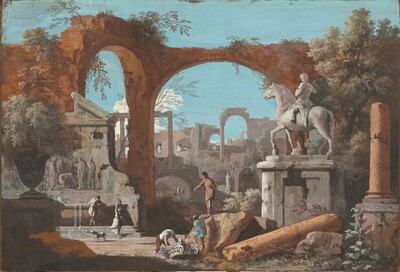
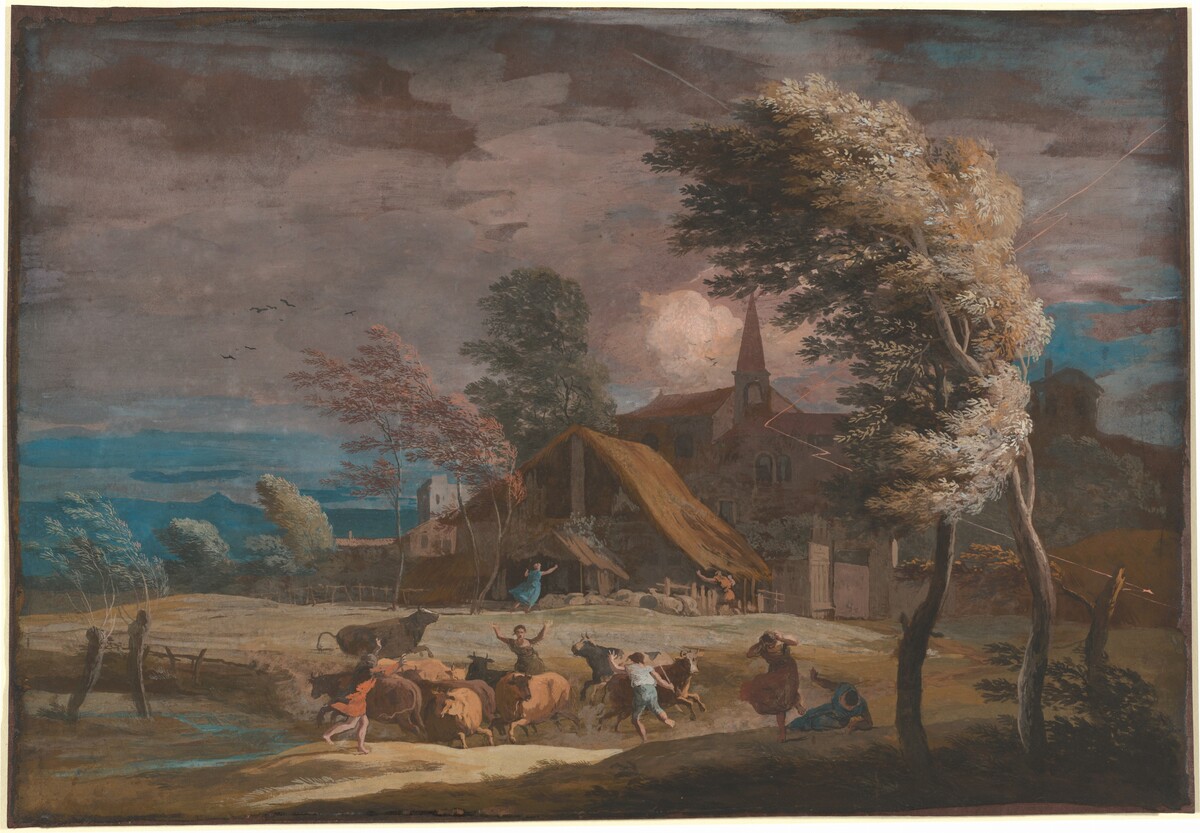
A Stormy Landscape from c. 1725 is one of Ricci's most dramatic compositions, depicting a landscape under the effects of a storm with the kind of turbulent natural scenery that was his specialty. Ricci was the first Italian painter to specialize in stormy landscapes, and his treatment of atmospheric effects—dark clouds, driving rain, trees bent by wind—would influence the development of the Sublime in landscape painting throughout the 18th century. The gouache on kidskin medium gives the storm its luminosity and precision, allowing Ricci to render the atmospheric effects of the storm with a directness and subtlety that oil painting cannot match.
Cultural Impact
Ricci's stormy landscapes were among the most influential paintings in the development of the Sublime aesthetic because they demonstrated that landscape painting could evoke the terror of nature as effectively as history painting evoked the terror of human events. A Stormy Landscape from c. 1725 is one of Ricci's most accomplished evocations of the Sublime: the dark clouds, driving rain, and wind-bent trees create an atmosphere of natural power that anticipates the Sublime landscapes of Friedrich and Turner by nearly a century.
Why It Matters
A Stormy Landscape is Ricci defining the Sublime in landscape: dark clouds, driving rain, and wind-bent trees creating an atmosphere of natural power that anticipates Friedrich and Turner by nearly a century. The gouache on kidskin medium gives the storm its luminosity and precision—the perfect medium for an art that evokes the terror of nature as effectively as history painting evoked the terror of human events.