Description
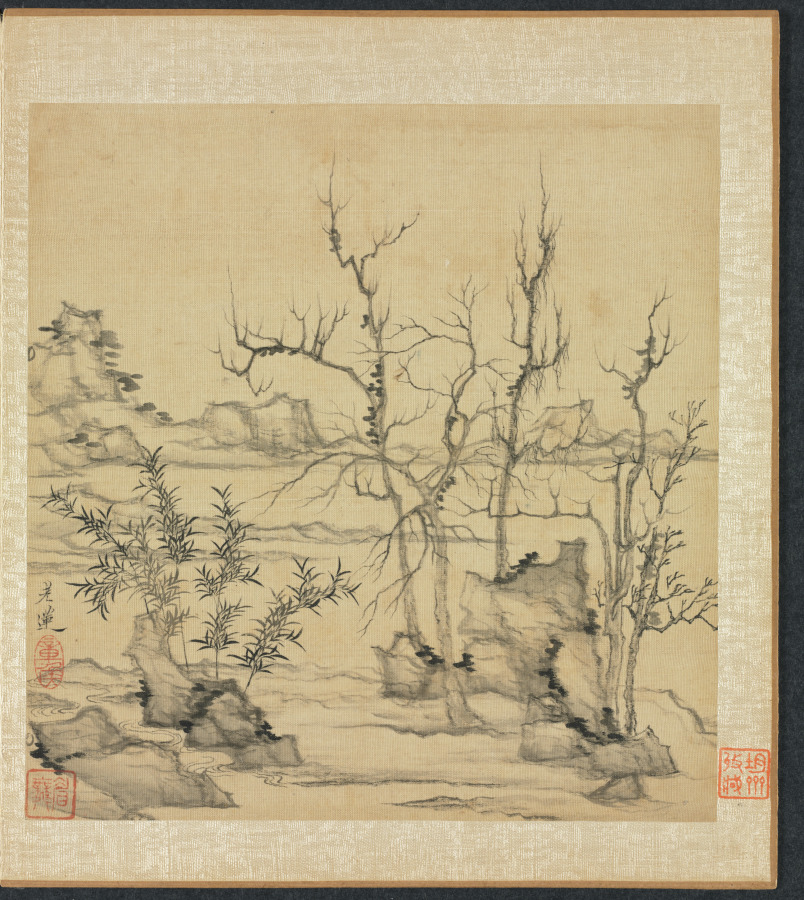
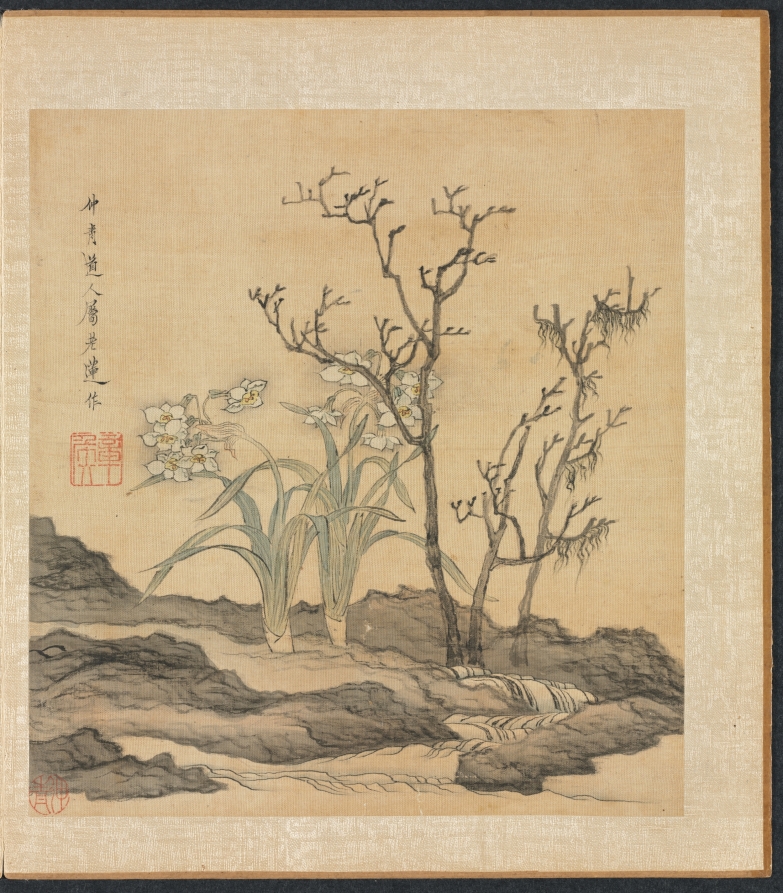
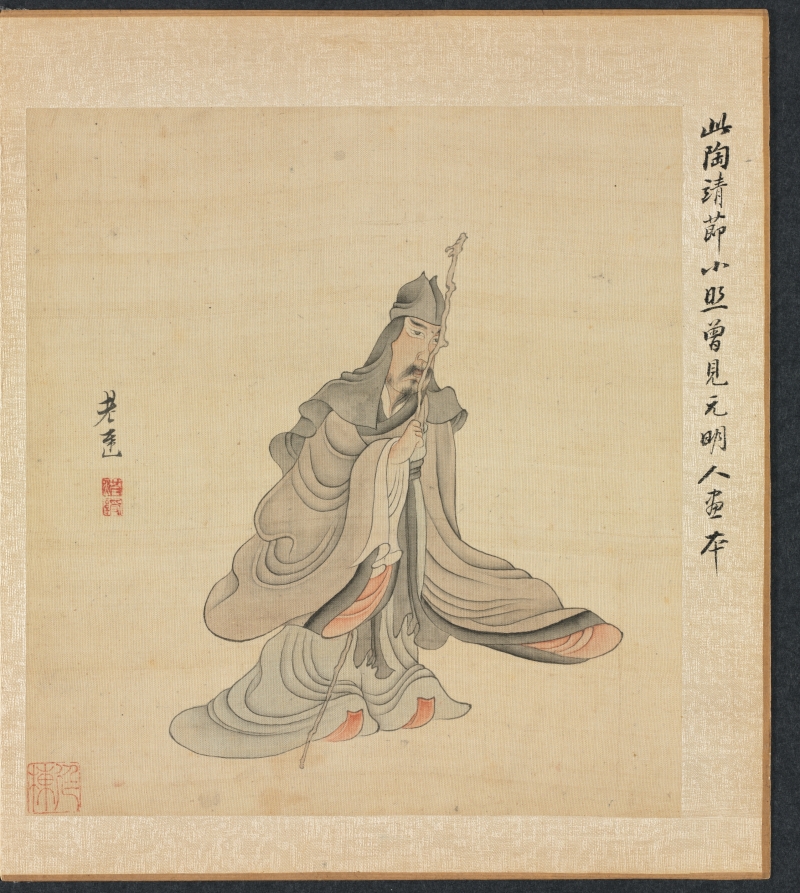
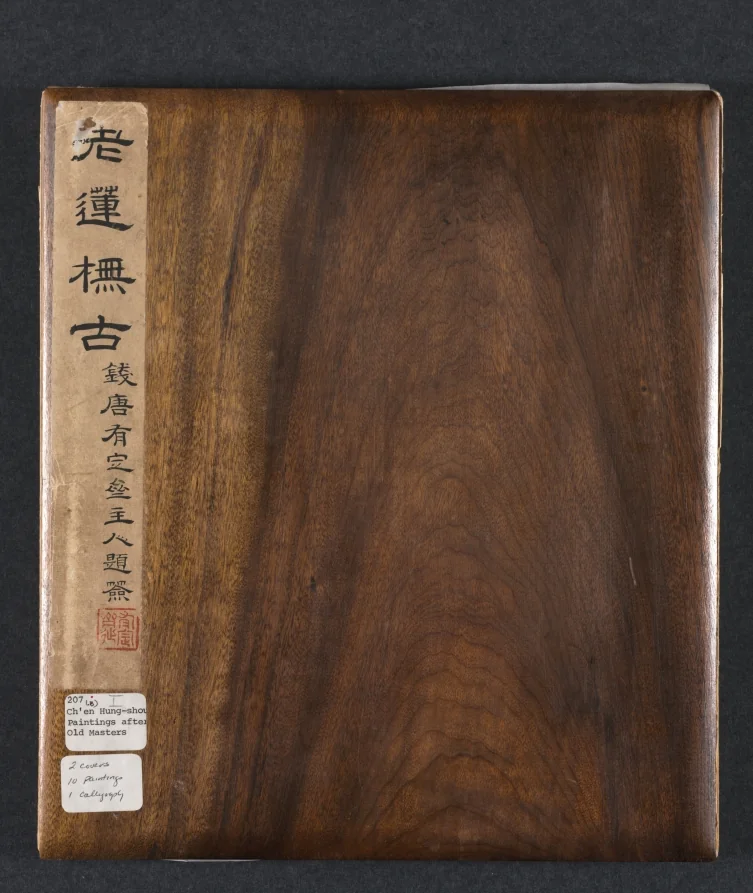
The twenty paintings in this double album by Chen Hongshou include landscapes, figures, and flowers. It also has one leaf featuring a woman, an often-used subject not found in the other albums from the latter part of his career. His late works are wonderful summations of Chen's peculiar and quirky art—archaistic, hyper-refined—but without accompanying shallowness or sentimentality.
His figures and landscapes in the late albums are miniaturized, not unlike the small Chinese gardens, or the carefully selected small table rocks or old roots used for contemplation to see the world in miniature. This loss of scale is quite deliberate and reflects the psychological situation of a depressed class like the Ming loyalist officials and scholars, deprived of their integrity and honor, and forced to lead a diminished and restricted existence.
His figures and landscapes in the late albums are miniaturized, not unlike the small Chinese gardens, or the carefully selected small table rocks or old roots used for contemplation to see the world in miniature. This loss of scale is quite deliberate and reflects the psychological situation of a depressed class like the Ming loyalist officials and scholars, deprived of their integrity and honor, and forced to lead a diminished and restricted existence.
Provenance
Weng Tonghe 翁同龢 [1830–1904], by descent to Wango H. C. Weng; (Wango H. C. Weng 翁萬戈 [1918–2020], Lyme, NH, sold to the Cleveland Museum of Art) (?–1979); The Cleveland Museum of Art, Cleveland, OH (1979–)
Accession Number
1979.27.1
Medium
Album with eleven leaves; ink or ink and color on silk
Dimensions
Overall: 30.2 x 26.7 cm (11 7/8 x 10 1/2 in.); Overall: 30.2 x 53.4 cm (11 7/8 x 21 in.)
Classification
Painting
Credit Line
John L. Severance Fund
Background & Context
Background Story
This album of eleven leaves is Volume 1 of Chen Hongshou's two-volume set "Paintings after Ancient Masters," created during the turbulent transition from the Ming to the Qing dynasty. Each leaf reinterprets the style of an earlier Chinese master, demonstrating Chen Hongshou's profound knowledge of painting history while showcasing his unmistakable personal vision. The album format allows for a cumulative experience: leaf by leaf, the viewer moves through art history as filtered through Chen's singular sensibility.
The subjects range across the spectrum of classical Chinese painting: landscapes in the manner of Li Cheng and Fan Kuan, figures evoking Gu Kaizhi and Wu Daozi, and flower-and-bird pieces recalling the Song dynasty academy. But Chen's versions are unmistakably his own—figures with elongated, almost distorted proportions; exaggerated rock formations; and a deliberate naivete in composition that belies their sophisticated pictorial intelligence. The silk support allows the ink to achieve a particular luminosity, and Chen's restrained use of mineral pigments—malachite green, azurite blue, cinnabar red—creates passages of startling color amid the predominantly monochrome ink work.
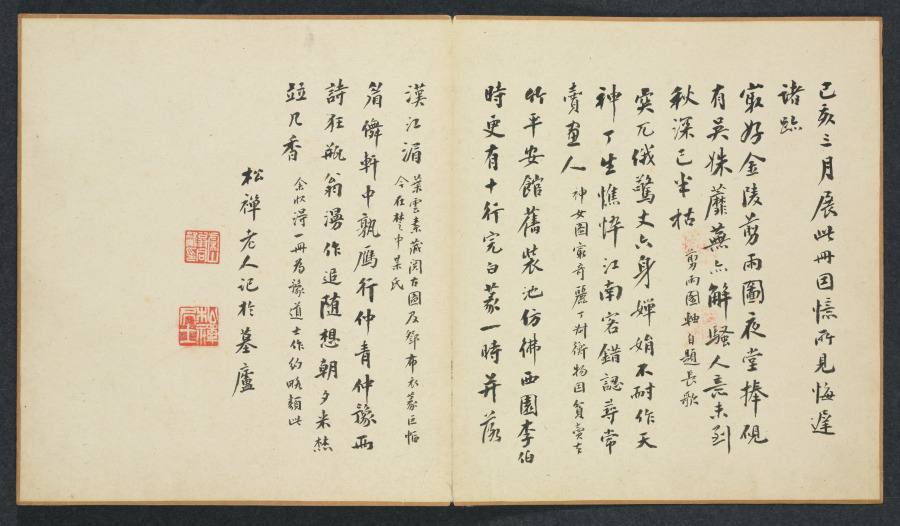
Chen Hongshou's approach to copying the ancients was fundamentally creative. In his inscription, he speaks of "transforming" (hua) rather than "imitating" (fang) the old masters—a distinction that reflects his belief that true engagement with tradition requires personal transformation. After the fall of the Ming in 1644, Chen retreated to the mountains, refusing to serve the new Qing regime. His late works, including this album, carry an undertone of political melancholy masked by the decorous language of artistic connoisseurship.
Cultural Impact
Chen Hongshou's "Paintings after Ancient Masters" represents one of the most sophisticated engagements with artistic tradition in Chinese history. His method—deep study of the past transformed through individual genius—became a model for later Chinese painters navigating between tradition and innovation.
Why It Matters
This album leaf by leaf demonstrates how Chen Hongshou made artistic tradition his own. In an era of political collapse, Chen's creative engagement with China's visual heritage was a form of cultural preservation and personal resilience expressed through the subtlest pictorial means.