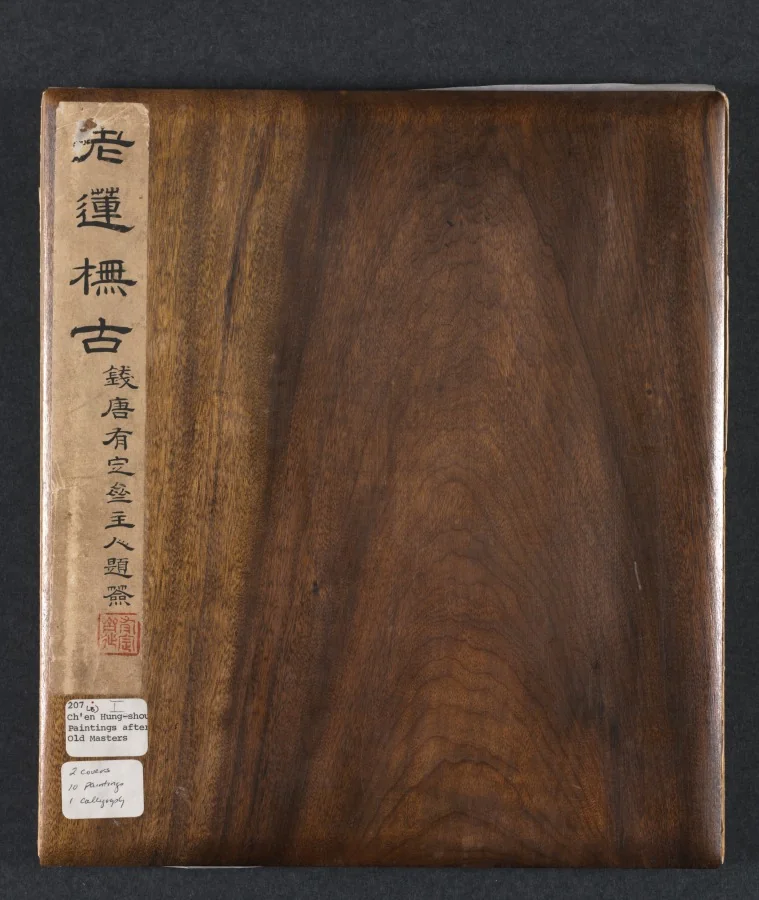
Description
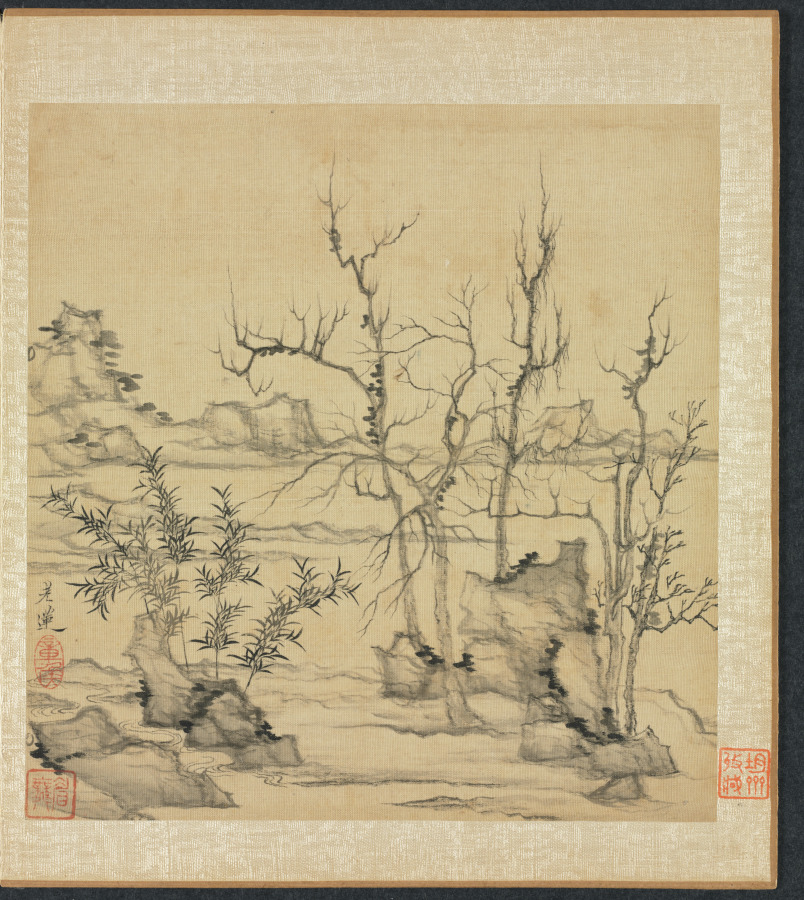
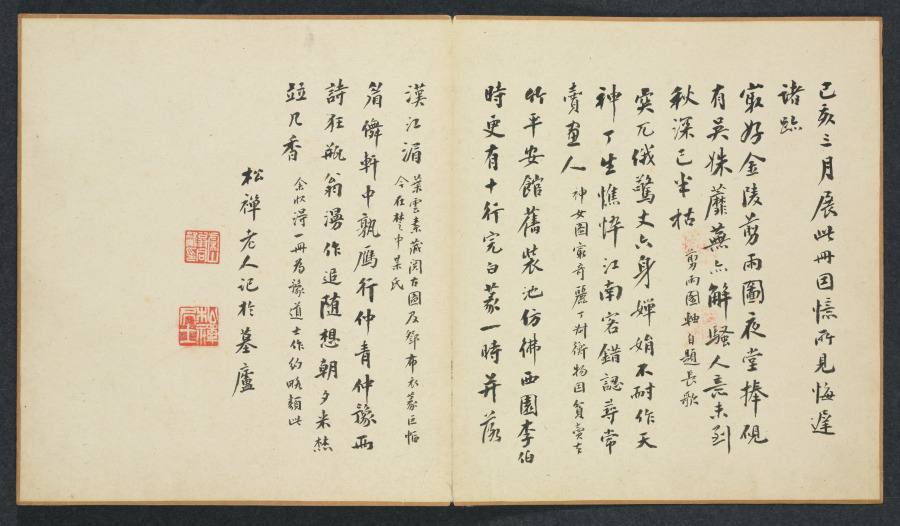
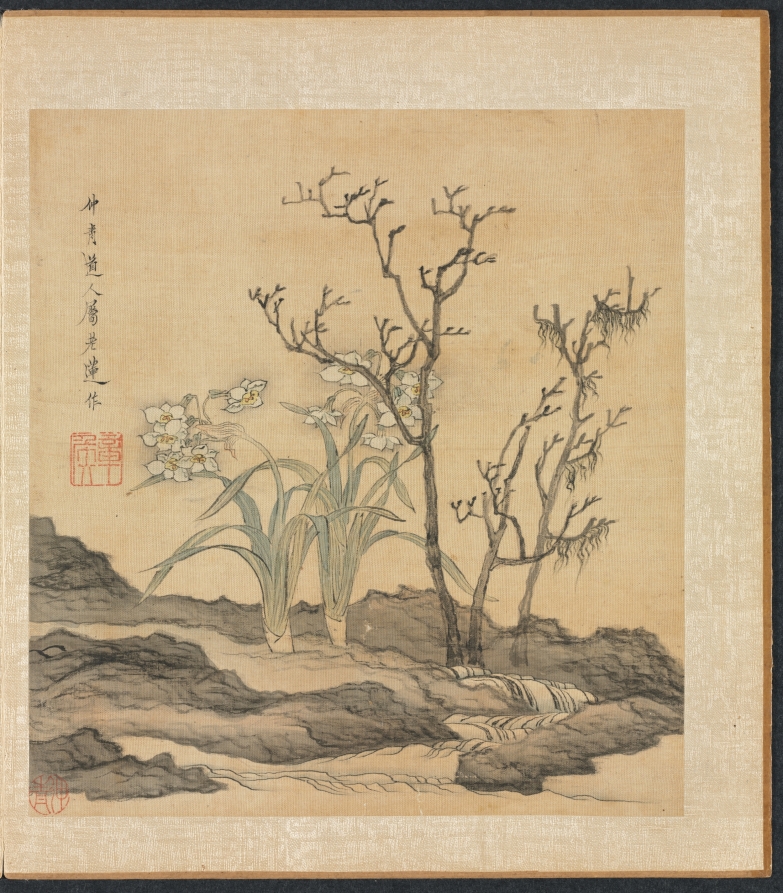
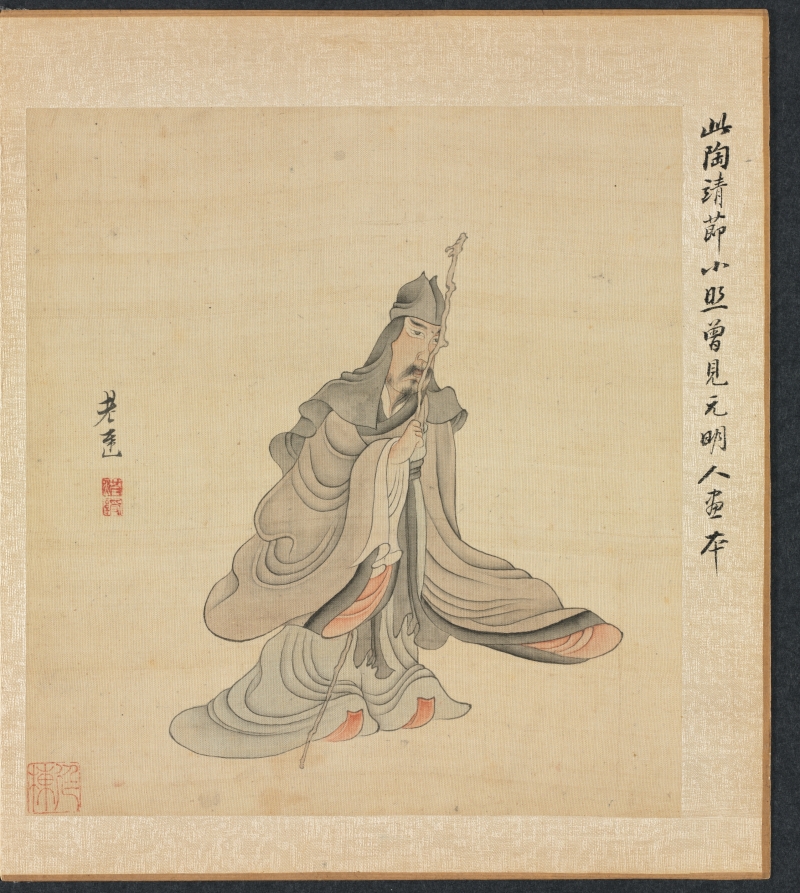
The twenty paintings in this double album by Chen Hongshou include landscapes, figures, and flowers. It also has one leaf featuring a woman, an often-used subject not found in the other albums from the latter part of his career. His late works are wonderful summations of Chen's peculiar and quirky art—archaistic, hyper-refined—but without accompanying shallowness or sentimentality.
His figures and landscapes in the late albums are miniaturized, not unlike the small Chinese gardens, or the carefully selected small table rocks or old roots used for contemplation to see the world in miniature. This loss of scale is quite deliberate and reflects the psychological situation of a depressed class like the Ming loyalist officials and scholars, deprived of their integrity and honor, and forced to lead a diminished and restricted existence.
His figures and landscapes in the late albums are miniaturized, not unlike the small Chinese gardens, or the carefully selected small table rocks or old roots used for contemplation to see the world in miniature. This loss of scale is quite deliberate and reflects the psychological situation of a depressed class like the Ming loyalist officials and scholars, deprived of their integrity and honor, and forced to lead a diminished and restricted existence.
Provenance
Weng Tonghe 翁同龢 [1830–1904], by descent to Wango H. C. Weng; (Wango H. C. Weng 翁萬戈 [1918–2020], Lyme, NH, sold to the Cleveland Museum of Art) (?–1979); The Cleveland Museum of Art, Cleveland, OH (1979–)
Accession Number
1979.27
Medium
Double album with twenty-two leaves; ink or ink and color on silk
Dimensions
Overall: 30.2 x 26.7 cm (11 7/8 x 10 1/2 in.)
Classification
Painting
Credit Line
John L. Severance Fund
Background & Context
Background Story
Chen Hongshou (1598–1652), one of the most original painters of the late Ming dynasty, created this double album of twenty-two leaves "after ancient masters" during his tumultuous lifetime. Chen lived through the collapse of the Ming dynasty and the Manchu conquest, events that profoundly shaped his artistic vision. Rather than directly depicting the chaos of his times, Chen turned to earlier Chinese painting traditions, reinterpreting them with his distinctive idiosyncratic style.
The album presents paintings executed in ink or ink and color on silk, each leaf referencing the style of a different earlier master—from Tang dynasty figure painters to Yuan dynasty landscape artists. This practice of "copying the ancients" was a cornerstone of Chinese artistic training, but Chen transformed it into something highly personal. His figures—whether scholars, Daoist immortals, or historical personages—are characterized by elongated proportions, exaggerated facial features, and a deliberately archaic manner that gives them an otherworldly quality.
Chen Hongshou's work represents the late Ming fascination with artistic archaism as a form of cultural resistance. By immersing himself in the styles of China's classical past, Chen asserted the continuity of Chinese civilization in the face of dynastic collapse. His influence was immense, shaping generations of later painters including the Eight Eccentrics of Yangzhou and the Shanghai School. Today, Chen is recognized as one of the most distinctive voices in Chinese painting—an artist whose willful eccentricity and profound erudition created works of startling originality within the framework of tradition.
Cultural Impact
Chen Hongshou stands as a pivotal figure in Chinese art history, bridging the late Ming and early Qing periods. His archaizing style was not mere revivalism but a sophisticated artistic strategy that used the past to critique the present and preserve cultural memory during a time of national trauma.
Why It Matters
This double album represents the culmination of Chen Hongshou's lifelong dialogue with Chinese painting tradition. Each leaf is both homage and transformation, demonstrating how the deepest originality can emerge from the most thorough engagement with the past.