Accession Number
66184
Medium
Oil on canvas
Dimensions
178.4 × 295 cm (70 1/4 × 118 in.)
Classification
Painting
Credit Line
Bequest of Solomon B. Smith
Background & Context
Background Story
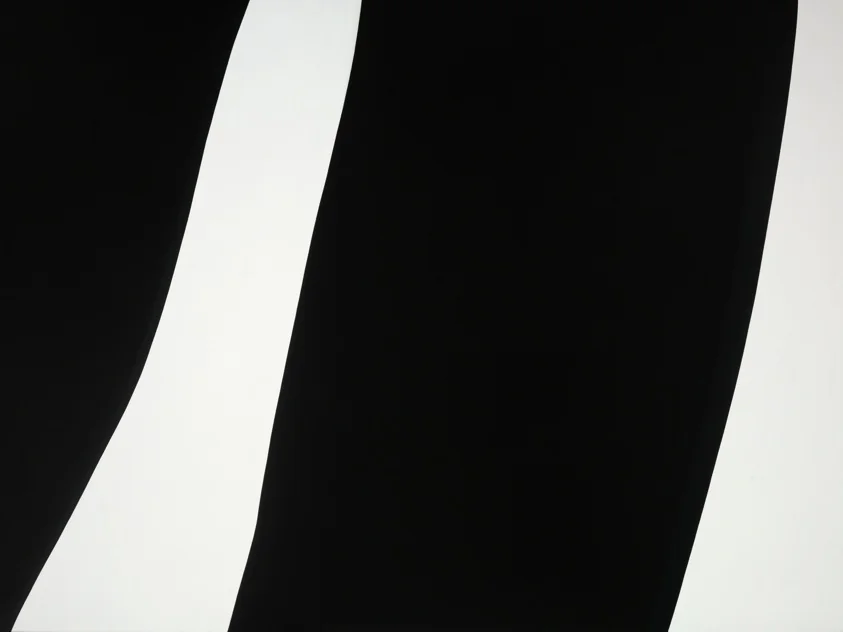
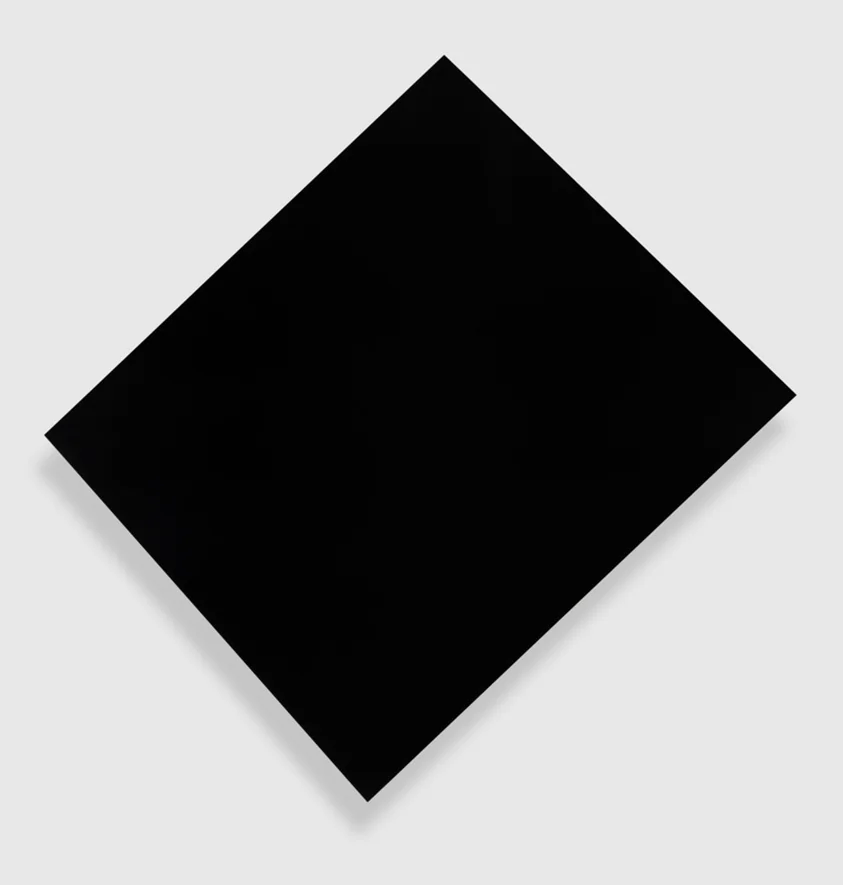
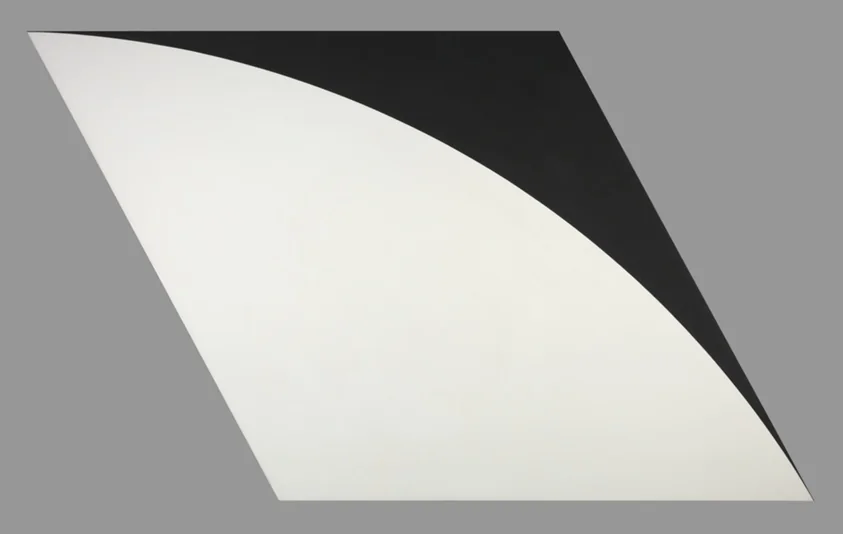
Ellsworth Kelly's "White/Black Curve" (1973) is an oil on canvas that combines the pure geometry of the curve with the radical simplicity of black and white. The painting likely consists of a white curve on a black ground, or a black curve on a white ground, or perhaps two panels—one white, one black—meeting in a curved boundary. The curve, for Kelly, was one of the fundamental forms of visual experience, present everywhere in nature—in the curve of a leaf, the arc of the sun, the bend of a river. But Kelly's curves are never merely decorative; they are precise, considered, and essential. This work dates from 1973, when Kelly was at the height of his powers, producing the shaped canvases and panel paintings that defined his mature style. The combination of black and white with the curve creates a work of extraordinary purity and power, a meditation on the simplest and most profound elements of visual form.
Cultural Impact
Kelly's curve paintings represent a sustained meditation on one of the most fundamental forms in nature and art, demonstrating the infinite variety that can be achieved through the simplest means.
Why It Matters
This black-and-white curve painting reduces art to its most essential elements—form, color, and the relationship between figure and ground—while achieving a visual presence that transcends its simplicity.