Accession Number
53474
Medium
Color lithograph from five aluminum plates and four stones on white wove paper
Dimensions
Image: 97 × 66.8 cm (38 1/4 × 26 5/16 in.); Sheet: 120.7 × 80.3 cm (47 9/16 × 31 5/8 in.)
Classification
lithograph
Credit Line
Gift of Fred Novy
Background & Context
Background Story
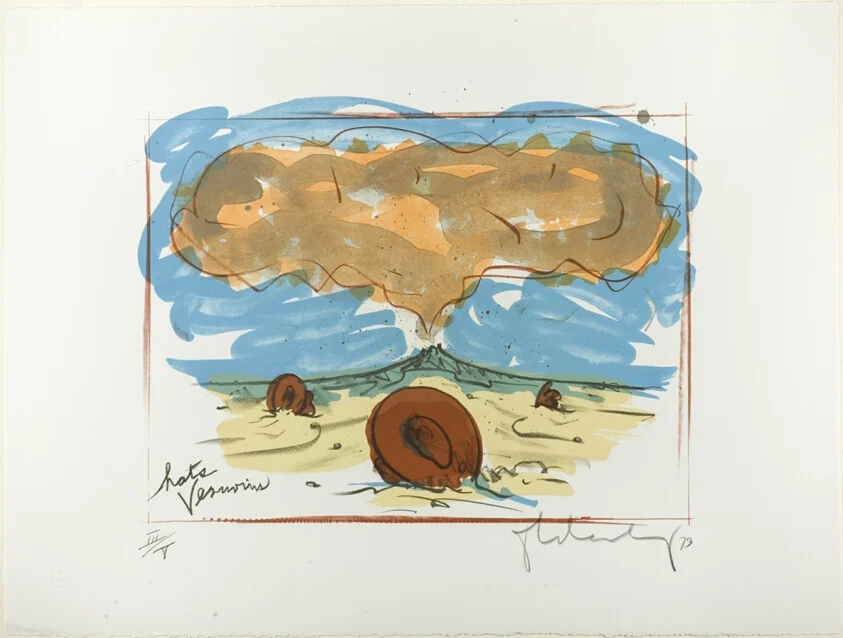
"Chicago Stuffed with Numbers" is a 1976–77 color lithograph by Claes Oldenburg that belongs to the series of prints in which the American Pop artist explored the relationship between urban architecture and consumer objects, the image showing the city of Chicago as a giant container filled with numbers that suggest both the statistical reality of modern urban life and the overwhelming sensory experience of the contemporary metropolis. The composition shows the familiar skyline or streetscape transformed by the insertion of numerical forms, the buildings becoming containers or vehicles for the abstract data that defines modern existence, the lithographic technique creating bold, flat areas of color that emphasize the graphic and poster-like quality of the image. The scale is large—120.7 × 80.3 centimeters—making the print a physical presence that confronts the viewer with the same overwhelming scale that the city itself imposes, the size of the work mirroring the immensity of the urban experience. Art historians have connected this print to the broader tradition of the city image in modern art, from the futurist celebrations of Marinetti to the critical urbanism of the Situationists, noting that Oldenburg's treatment is more humorous, more focused on the absurdity of the urban condition than the political or technological content of these predecessors. The work also demonstrates Oldenburg's mastery of the color lithograph: the five aluminum plates and four stones create a complex, layered image that combines the precision of commercial printing with the expressive freedom of artistic drawing.
Cultural Impact
This 1976–77 large-scale color lithograph made Chicago metropolis statistically overwhelming through five-plate four-stone numerical stuffing, using bold flat poster-like color to mirror urban immensity with commercial-printing precision and artistic drawing freedom.
Why It Matters
It matters because Oldenburg drew a city full of numbers and made statistics feel like they were eating the buildings—proving that even a skyline could be stuffed if the lithograph was big enough.