Description
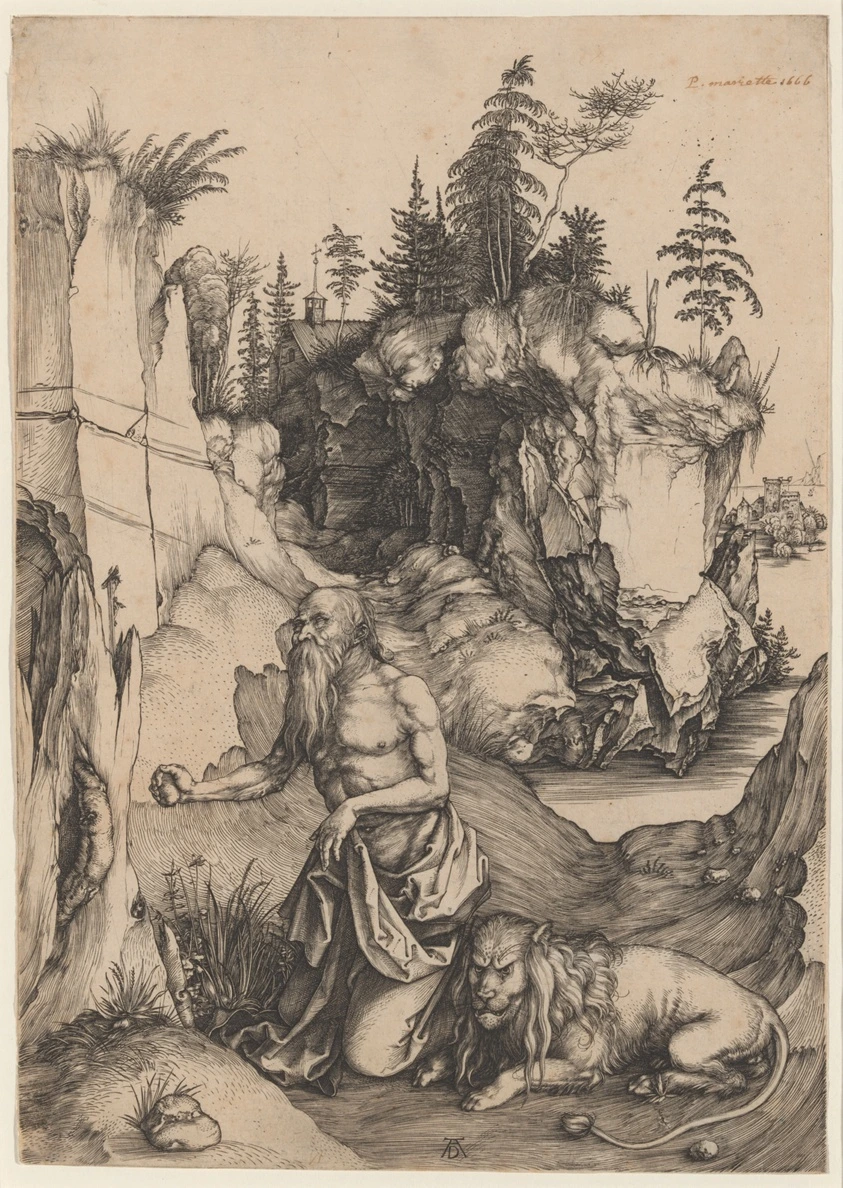
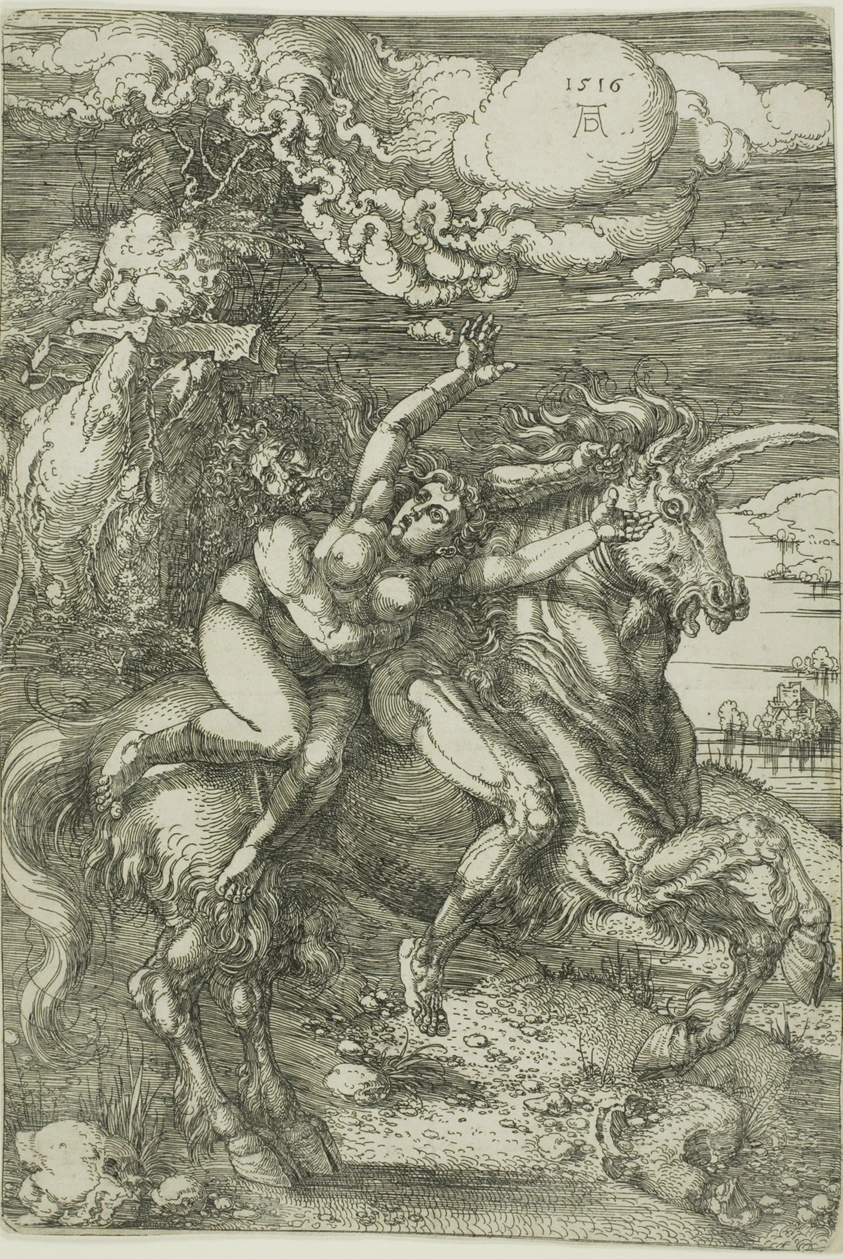
This is one of only six experiments by Dürer in the early art of etching and, reflecting the roots of that technique in armor decoration, is made on an uncompromising iron (rather than copper) plate. The composition, with its insistent linear background competing with the calligraphic freedom of the principal figures, represents Dürer's most mature printmaking style and his efforts to achieve an overall tonal unity.
Accession Number
60506
Medium
Etching in black on off-white laid paper
Dimensions
31.4 × 21.2 cm (12 3/8 × 8 3/8 in.)
Classification
etching
Credit Line
Clarence Buckingham Collection
Background & Context
Background Story
"The Abduction of Proserpine on a Unicorn" is one of Dürer's most enigmatic mythological etchings, executed in 1516 at a moment when the artist was exploring the medium with experimental freedom that belies the rigid reputation of Northern Renaissance draftsmanship. The image shows the Roman goddess Proserpine being carried away by a figure on a unicorn—a strange substitution for the traditional Pluto and chariot that has puzzled art historians for centuries. The unicorn itself is rendered with the same zoological precision that Dürer brought to his famous "Rhinoceros," the animal's spiraled horn and cloven hooves described with the authority of an eyewitness account despite being entirely imaginary. The composition is dynamic and diagonal, the rearing unicorn and struggling goddess creating a sense of violent movement that fills the rectangular plate. The etching technique is unusually free for Dürer: the lines are broader and more gestural than in his engravings, suggesting the speed and improvisation that the acid medium allowed. This looseness is significant because it reveals a side of Dürer that his more famous woodcuts and engravings conceal—the artist as spontaneous draftsman rather than meticulous calculator. The 1516 date places this work in the final years of Dürer's life, when he was increasingly drawn to mythological and allegorical subjects that allowed imaginative freedom beyond the doctrinal constraints of religious imagery. Art historians have debated the meaning of the unicorn substitution: some see it as a reference to the Christian symbolism of virginity and purity, others as an exploration of the artist's own creative imagination, free from iconographic convention. In the history of printmaking, the etching stands as evidence that even the most systematic of artists could surprise himself when experimenting with a new medium.
Cultural Impact
This 1516 mythological etching replaced Pluto's chariot with a unicorn in Proserpine's abduction, using experimental line freedom to reveal Dürer's spontaneous imagination beyond doctrinal religious constraints.
Why It Matters
It matters because Dürer drew a unicorn kidnapping a goddess and made it look like natural history—proving that even the most careful man could let himself dream in acid.