Accession Number
79896
Medium
Etching in black on ivory laid paper
Dimensions
Image: 11.1 × 6.5 cm (4 3/8 × 2 9/16 in.); Sheet: 11.1 × 6.6 cm (4 3/8 × 2 5/8 in.)
Classification
engraving
Credit Line
Hugh Dunbar Memorial Fund and John H. Wrenn Memorial Collection
Background & Context
Background Story
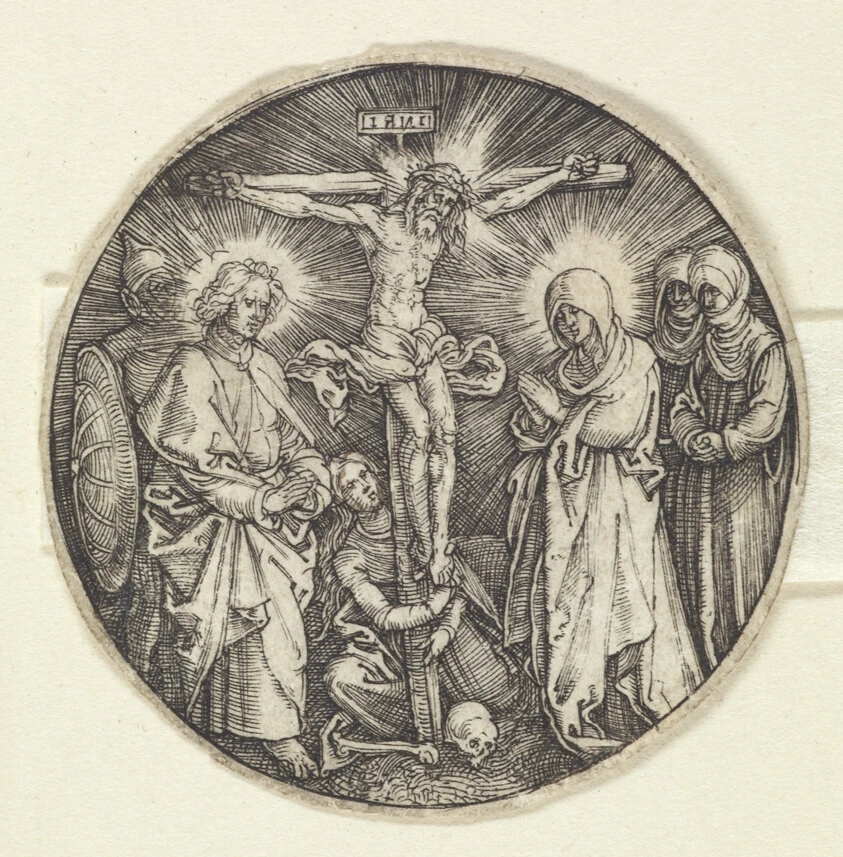
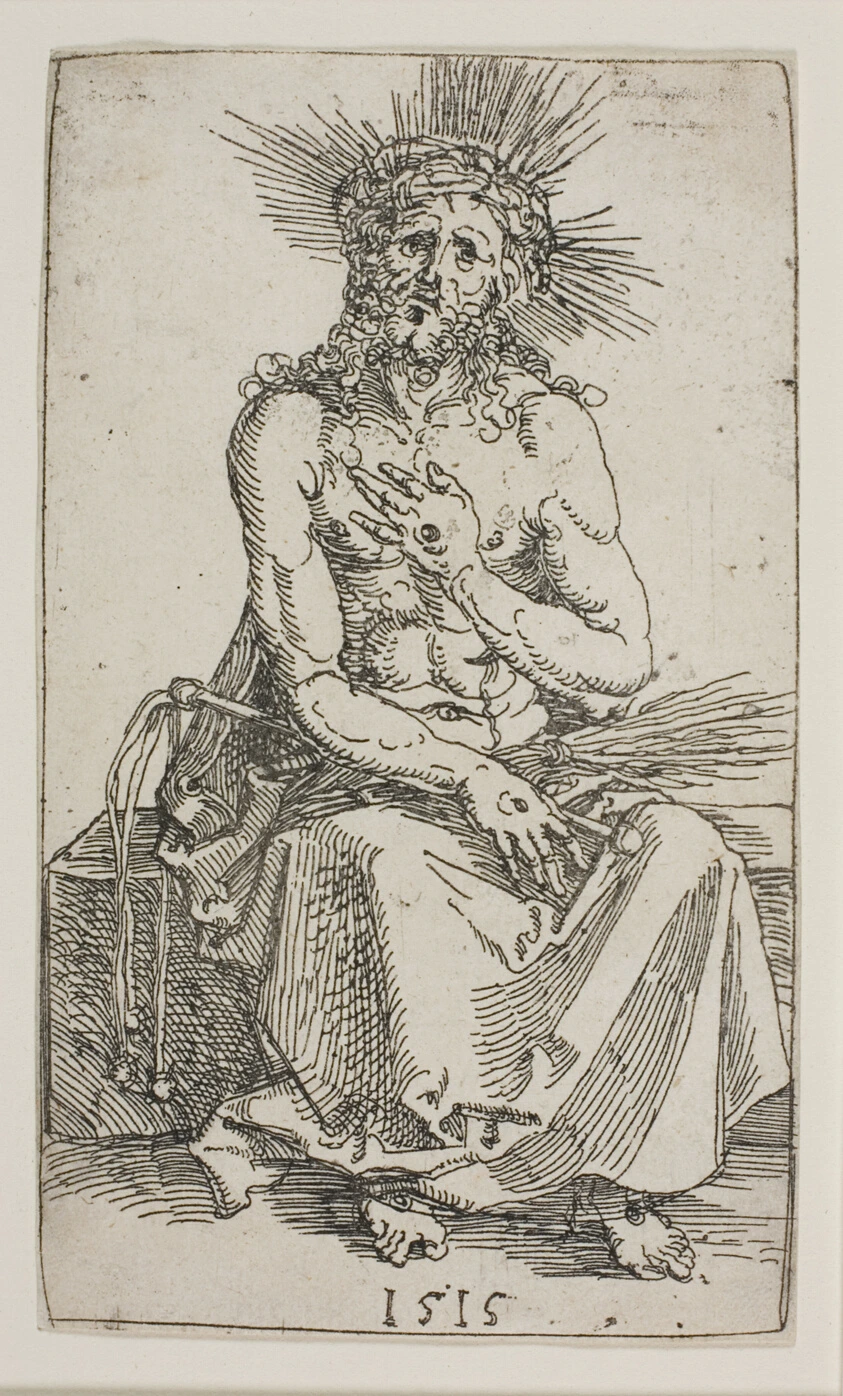
"Man of Sorrows, Seated" is one of Albrecht Dürer's most emotionally intense etchings from his late period, executed in 1515 when the Nuremberg master was at the height of his technical powers and increasingly preoccupied with the devotional imagery that would dominate his final years. The image shows Christ seated in the pose of the Man of Sorrows, the wounds of the Passion visible on his hands, feet, and side, his face turned toward the viewer with an expression of patient suffering that transcends the physical pain of crucifixion. The etching technique is extraordinarily refined: Dürer had learned the medium relatively late in his career, and this plate demonstrates the virtuosity with which he adapted the fluid possibilities of acid-bitten metal to the precision of his engraving style. The lines vary from hair-thin in the face and hands to broader, more expressive strokes in the drapery and background, creating a range of textures that make the small image feel monumental. The composition is intimate in scale—barely 11 × 7 centimeters—yet the emotional impact is disproportionate to the size, suggesting that Dürer understood how the concentrated format of the small print could intensify devotional focus. The ivory laid paper provides a warm, stable support that enhances the luminosity of the printed line. Art historians have connected this work to the broader tradition of German devotional printmaking that stretched from Schongauer to Baldung, noting that Dürer's treatment is more anatomically precise and psychologically penetrating than his predecessors. The image also reflects the theological climate of 1515: the Reformation was imminent, and the direct emotional appeal of the Man of Sorrows would play a central role in Protestant visual culture, though Dürer himself remained Catholic.
Cultural Impact
This 1515 etching compressed monumental devotional intensity into miniature scale, combining precise anatomy with patient suffering while bridging Catholic and imminent Reformation visual cultures.
Why It Matters
It matters because Dürer made Christ look small enough to fit in a hand but heavy enough to break a heart—proving that etching could carry what oil sometimes spilled.