We Will Not Become What We Mean to You

Description

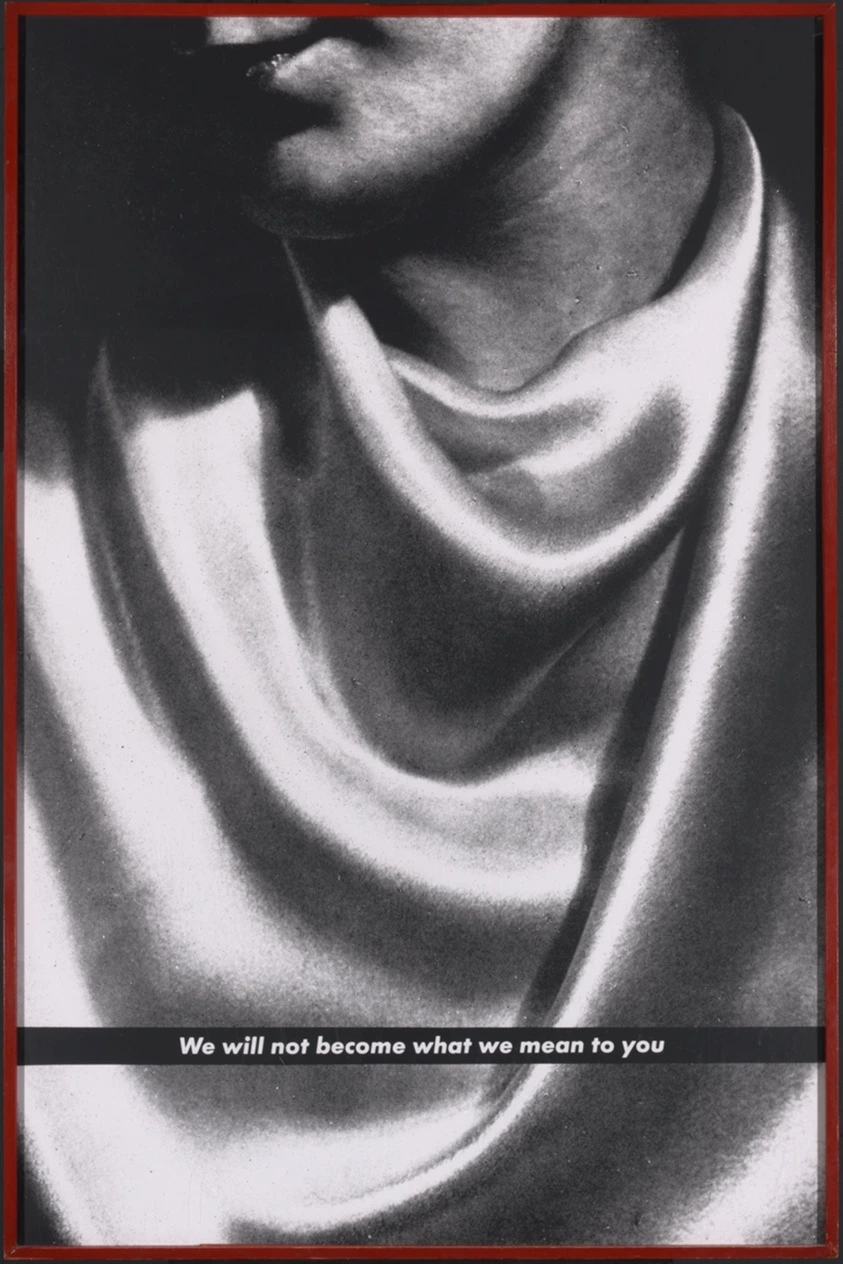
Barbara Kruger’s photo- and text-based images disrupt representations of power generated by commercial media, particularly those that affect women. Informed by her earlier profession as a graphic designer, her work typically combines images and iconography appropriated from 1940s and 1950s American film, television, and advertising with blunt slogans rife with insinuation. Kruger explained, “I’m interested in how identities are constructed, how stereotypes are formed, how narratives sort of congeal and become history.” Here the artist removed the identifying features of the figure and used the pronouns we and you to implicate the viewer, regardless of gender, in the objectification of this anonymous woman.

We Will Not Become What We Mean to You

Barbara Kruger

1983

Accession Number

184209

Medium

Gelatin silver print

Dimensions

184 × 121 × 5 cm (72 1/2 × 48 × 2 in.)

Classification

photograph

Museum

The Art Institute of Chicago

Chicago, United States

Credit Line

Gift of Susan and Lewis Manilow
Background & Context

Background Story

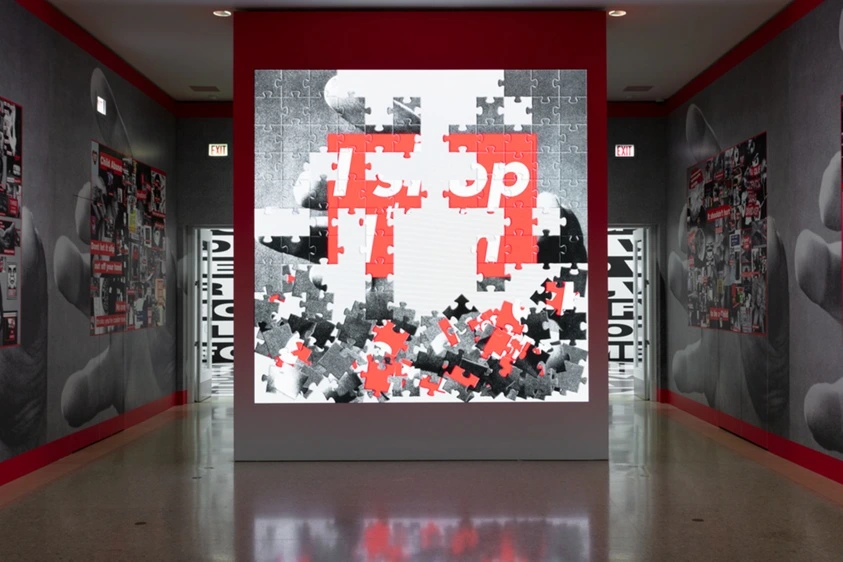
"We Will Not Become What We Mean to You" is one of Barbara Kruger's most direct and confrontational early photographic works, executed in 1983 during the period when she was establishing the visual vocabulary—found photographs overlaid with aggressive text in Futura Bold Oblique—that would make her one of the most influential artists of the 1980s and a defining voice of feminist cultural critique. The image is a gelatin silver print, probably based on a mass-media photograph of a woman or women, overlaid with the declarative text that refuses the projection of male desire, the passive objectification that Kruger identified as the central operation of consumer culture and patriarchal power. The technique is deliberately anti-craft: Kruger did not take the photograph herself but appropriated it from magazines, advertisements, or other mass-media sources, transforming the image through the addition of text that contradicts or subverts its original meaning. The scale of the work—184 × 121 centimeters—makes it a public declaration rather than a private object, a billboard-sized assertion that demands the viewer's attention and refuses to be ignored. The 1983 date places this work in the same period as Kruger's most famous images—"Your Body Is a Battleground," "I Shop Therefore I Am"—when she was achieving national recognition and influencing the development of the "Pictures Generation" of artists who engaged with media representation as both subject and method. Art historians have connected this work to the broader tradition of feminist art, from the performance works of Adrian Piper to the photographic investigations of Cindy Sherman, noting that Kruger's treatment is more directly political, more explicitly didactic than these contemporaries. The work also demonstrates Kruger's background in magazine design: the combination of image and text, the bold typography, and the direct address to the viewer all reflect her professional training in the commercial media that she was critiquing.

Cultural Impact

This 1983 billboard-scale appropriation refused patriarchal objectification through Futura-Bold text collision, transforming mass-media photography into feminist public declaration via anti-craft commercial-design subversion.

Why It Matters

It matters because Kruger stole a picture and wrote on it in letters too big to ignore—proving that even advertisements could become accusations if the font was bold enough.