Accession Number
57211
Medium
Oil on canvas
Dimensions
119.4 × 254 cm (47 × 100 in.)
Classification
oil on canvas
Credit Line
Gift of Mr. and Mrs. Albert L. Arenberg
Background & Context
Background Story
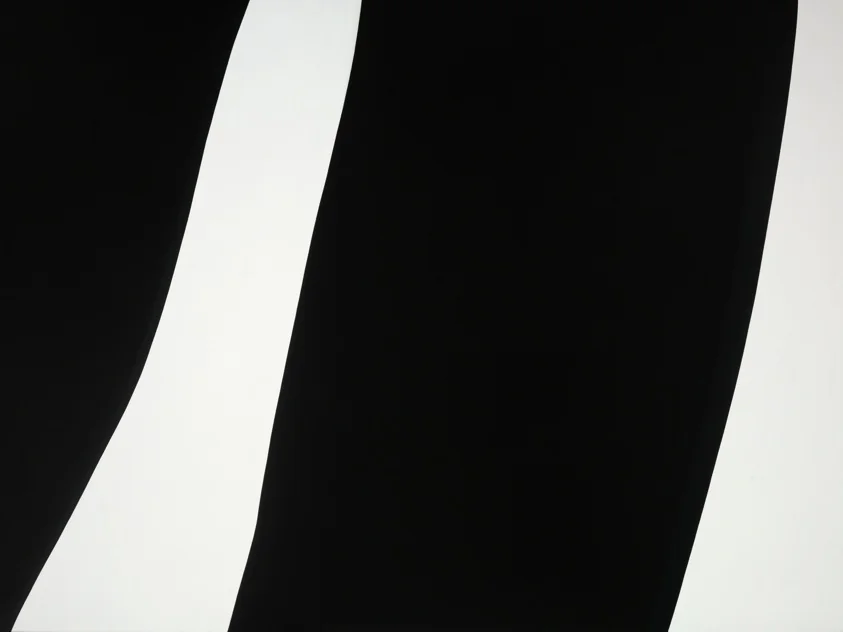
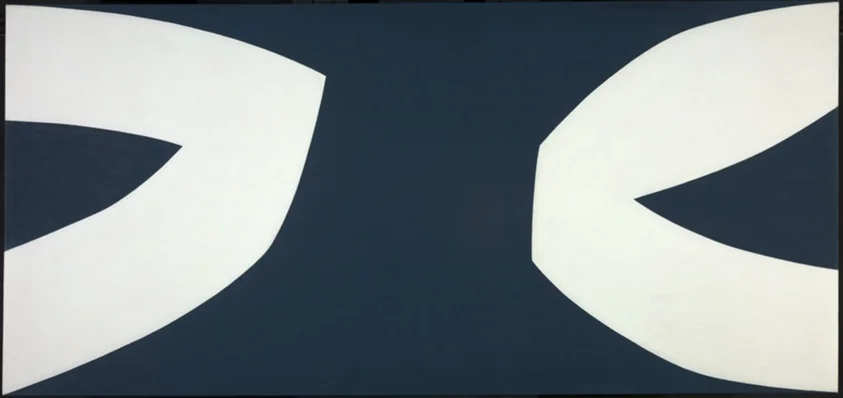
Ellsworth Kelly's "East River" (1959) is an oil on canvas from the period when Kelly was developing his mature style. The title refers to the East River in New York, where Kelly had his studio. But the painting is not a representation of the river—it is an abstract composition of colored forms that may have been inspired by the experience of looking at water, light, and movement. Kelly's working method involved observing the world around him—the curve of a shadow, the reflection on water, the shape of a bridge—and then translating those observations into simplified, abstract forms. "East River" likely consists of flat, uninflected areas of color arranged in a composition that echoes the rhythms and relationships Kelly observed in the river. The oil on canvas technique is smooth and controlled, the colors are bright and clear. This painting belongs to the period when Kelly was establishing his reputation as a leading figure in American abstraction, exhibiting at the Betty Parsons Gallery and gaining recognition for his radical approach to form and color.
Cultural Impact
Kelly's abstract works inspired by specific locations demonstrate his unique approach to abstraction: not the rejection of the visible world but its distillation into essential forms and colors.
Why It Matters
East River transforms the experience of looking at water and light into an abstract composition of colored forms, demonstrating Kelly's ability to extract the essential visual music from the ordinary world.