Provenance
(P. & D. Colnaghi, London); Ruth Kainen, Washington, D.C., purchased February 26, 1976; Gift to NGA, 2012.
Accession Number
2012.92.61
Medium
chiaroscuro woodcut printed in color on laid paper
Dimensions
sheet: 42 x 58.5 cm (16 9/16 x 23 1/16 in.)
Classification
Credit Line
Gift of Ruth Cole Kainen
Tags
Print Baroque (1600–1750) Paper Italian
Background & Context
Background Story
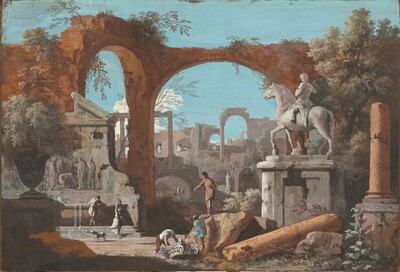
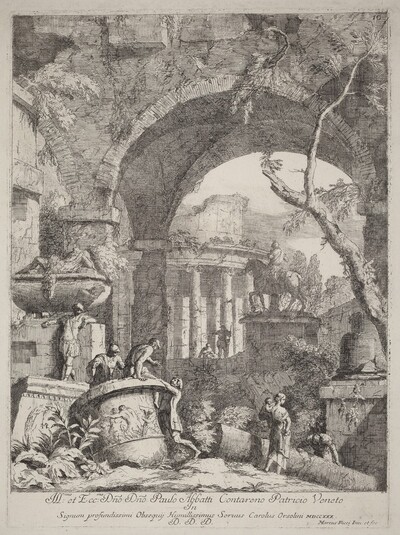
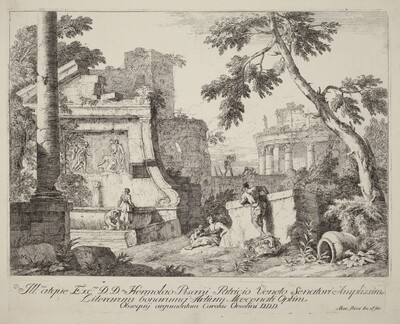
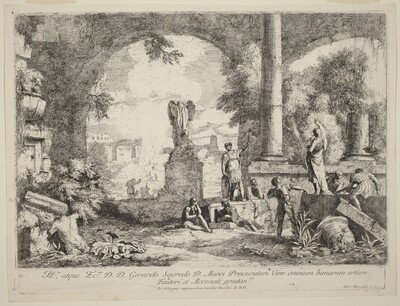
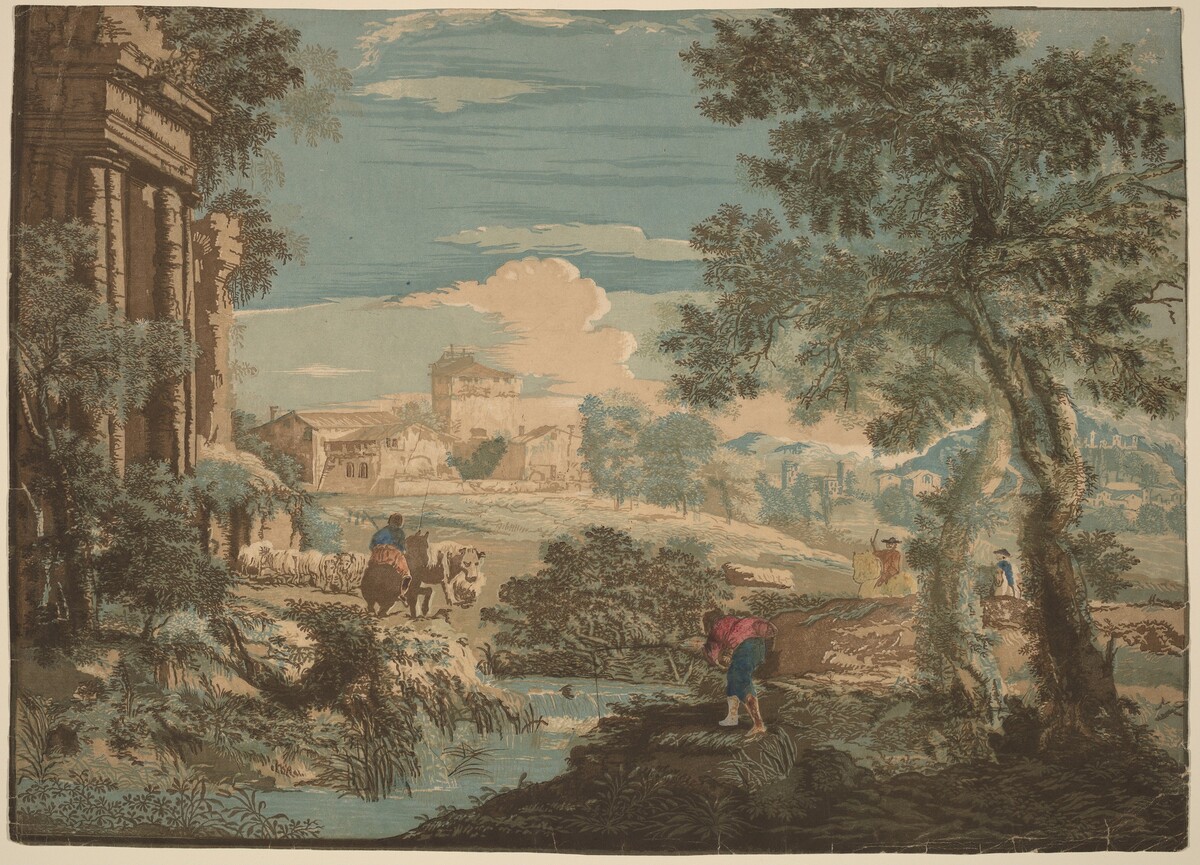
John Baptist Jackson (1701-1780) was a British printmaker known for the chiaroscuro woodcuts after Italian masters that make him one of the most accomplished printmakers of the 18th century. This etching after Marco Ricci (1676-1731) depicts a heroic landscape with fisherman, cows, and horsemen in the grand manner of the Italian landscape tradition that Ricci helped define. The 1744 date places this in Jackson's most productive period, when he was producing the chiaroscuro woodcuts and etchings after Italian masters that are his most accomplished works. Heroic landscape was one of the most important subjects in the Italian landscape tradition, and Jackson's print after Ricci shows how this tradition was being disseminated through printmaking.
Cultural Impact
Heroic Landscape with Fisherman, Cows, and Horsemen is important in the history of printmaking because it demonstrates the print after Marco Ricci tradition, in which Jackson disseminated the Italian landscape tradition through printmaking. Jackson's prints after Italian masters—combining the Italian landscape tradition with the printmaking technique that is his most distinctive contribution—represent one of the most accomplished traditions in 18th-century printmaking, and the 1744 print shows this tradition at its most accomplished.
Why It Matters
Heroic Landscape is Jackson's print after Ricci: a heroic landscape with fisherman, cows, and horsemen rendered in the etching manner of one of the most accomplished printmakers of the 18th century. The 1744 print shows how the Italian landscape tradition was disseminated through printmaking.