Provenance
Commissioned by Charles-Marie-Jean-Baptiste Marcotte d'Argenteuil [1773-1864], Paris; his daughter, Mme Alexandre Legentil, née Marie Marcotte [1828-1920], Paris, by 1867;[1] her niece, Mme Marcel Pougin de la Maisonneuve, née Elizabeth Marcotte [d. 1939], Paris, by 1921;[2] (Wildenstein & Co., New York), 1940-1949; sold June 1949 to the Samuel H. Kress Foundation, New York;[3] gift 1952 to NGA.
[1] The exhibition catalogue _Tableaux, études peintes, dessins et croquis de J.A.D. Ingres_, no. 73 (Ecole des Beaux Arts, Paris, 1867) gives the owner as M. Legentil. The 1949 Wildenstein précis in NGA curatorial files lists Marcotte's daughter, Mme Legentil, as the owner.
[2] According to the catalogue _Exhibition Ingres_, no. 19 (Association Franco-Américaine, Chambre Syndicale de la Curiosité et des Beaux-Arts, Paris, 1921). Hans Naef, in _Die Bildniszeichnungen von J.-A.-D. Ingres_, 5 vols., Bern, 1977-1980: II(1978):532-533, describes the inheritance of the Marcotte family portrait collection as follows: When Marie Legentil died without children in 1920, her entire collection was bequeathed to her niece, Mme Pougin de la Maisonneuve. When Mme Pougin de la Maisonneuve died in 1939, she left her collection divided between her two daughters, Geneviève de Laporte and Marie-Louise Chavane, and a trust for her grandson François-Louis (son of her deceased son).
[3] The Wildenstein invoice to the Kress Foundation for 16 items, including this painting, is dated 23 June 1949 (copy in NGA curatorial files, see also The Kress Collection Digital Archive, https://kress.nga.gov/Detail/objects/1660).
Accession Number
1952.2.23
Medium
oil on canvas
Dimensions
overall: 74.5 x 92.7 cm (29 5/16 x 36 1/2 in.) | framed: 98 x 117 x 8.3 cm (38 9/16 x 46 1/16 x 3 1/4 in.)
Classification
Painting
Credit Line
Samuel H. Kress Collection
Tags
Painting Neoclassical & Romantic (1751–1850) Oil Painting Canvas French
Background & Context
Background Story
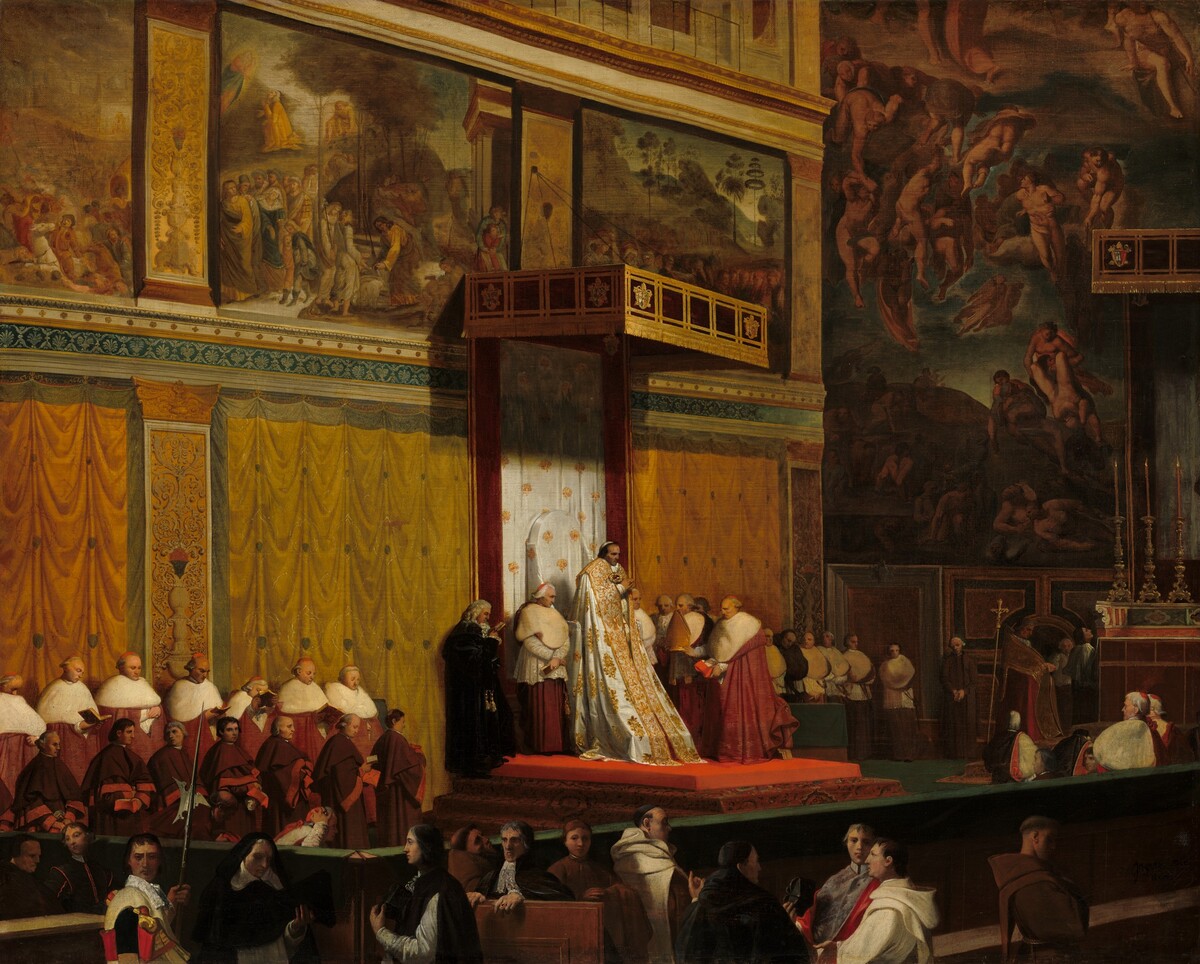
Pope Pius VII in the Sistine Chapel from 1814 is one of Ingres's most accomplished portraits, depicting Pope Pius VII (1742-1823) seated in the Sistine Chapel surrounded by cardinals in the precise, linear manner that distinguishes Ingres's best portraiture. The 1814 date places this during the period when Pius VII had been restored to Rome after Napoleon's imprisonment, and the portrait shows the Pope presiding over a ceremony in the Sistine Chapel, the spiritual center of the papacy. Ingres was commissioned to paint the portrait by the French government as part of a diplomatic gift to the Pope.
Cultural Impact
Pope Pius VII in the Sistine Chapel is important in Ingres's oeuvre because it demonstrates his ability to combine portrait precision with architectural grandeur in a composition that is simultaneously a portrait and a ceremonial scene. The 1814 painting shows Ingres applying the precise, linear manner of his portraiture to a subject that requires both the individual characterization of the Pope and the architectural context of the Sistine Chapel, creating a portrait that is both individual and institutional.
Why It Matters
Pope Pius VII in the Sistine Chapel is Ingres combining portrait precision with architectural grandeur: the Pope presiding over a ceremony in the Sistine Chapel, rendered with the precise, linear manner that distinguishes his best portraiture. The 1814 painting commissioned as a diplomatic gift to the restored Pope is simultaneously individual portrait and institutional ceremony.
Related Artworks
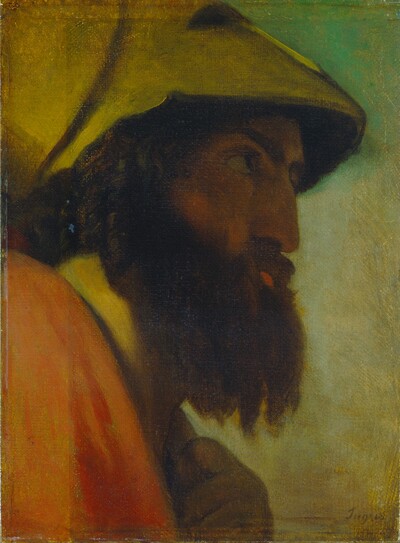
Ulysses
Ingres, Jean-Auguste-Dominique
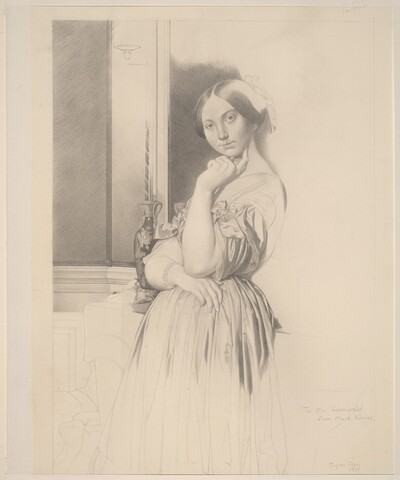
Ingres Copy (Comtesse d'Haussonville, Frick Collection)
Ingres, Jean-Auguste-Dominique
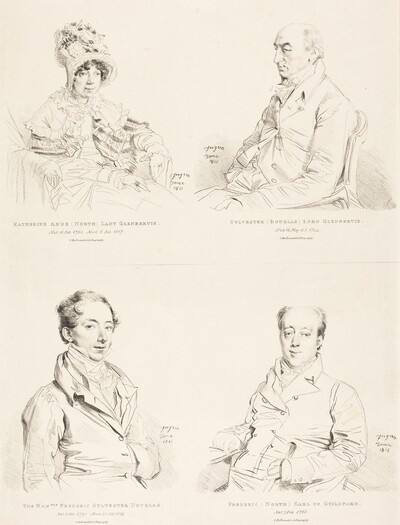
Sylvester (Douglas) Lord Glenbervie; Katherine Anne (North) Glenbervie; Frederic (North) Earl of Guilford; Frederic Sylvester Douglas
Ingres, Jean-Auguste-Dominique
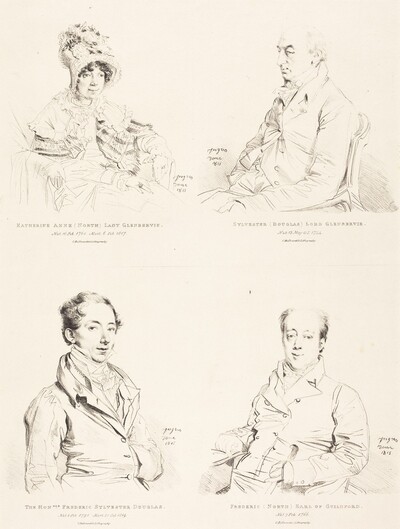
Sylvester (Douglas) Lord Glenbervie; Katherine Anne (North) Glenbervie; Frederic (North) Earl of Guilford; Frederic Sylvester Douglas
Ingres, Jean-Auguste-Dominique