Provenance
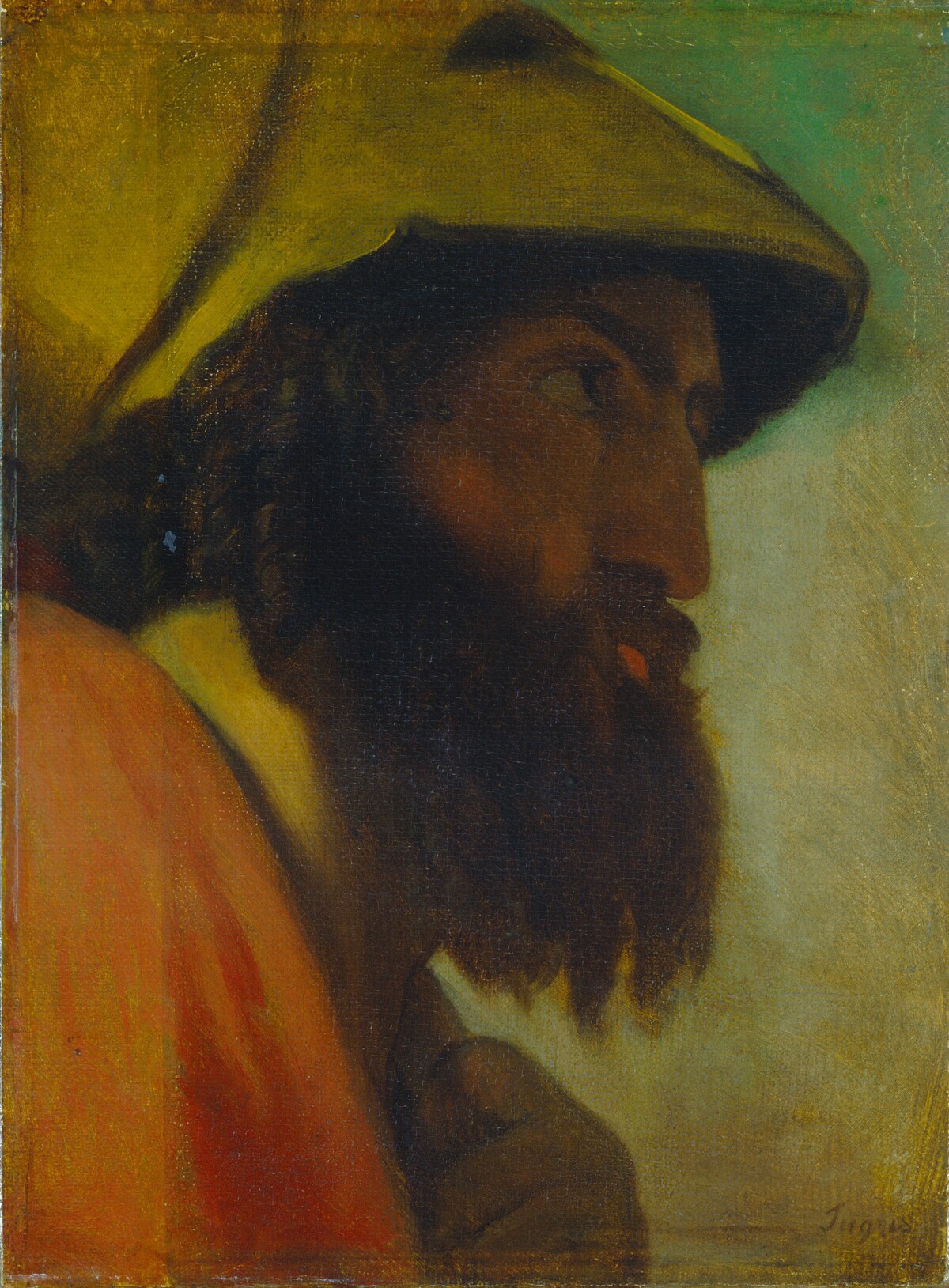
Sold by Ingres to Etienne François Haro [1827-1897] on 13 October 1866;[1] (Ingres sale, Hôtel Drouot, 6 May 1867, no. 32, bought in by Haro).[2] Etienne François Haro [1827-1897] and his sons, Jules [1855-1892] and Henri Haro [1855-1911], Paris; (their sale, Galerie Sedelmeyer, Paris, 30-31 May 1892, no. 113).[3] (Galerie Georges Bernheim, Paris); sold 1 June 1925 to Chester Dale [1883-1962], New York; bequest to NGA.
[1] According to documents cited by Henry Lapauze (_Ingres, sa vie et sa oeuvre [1780-1867] d'après documents inédites_, Paris, 1911: 552-553), the NGA painting was included in the bulk sale of thirty-one paintings and forty-seven drawings concluded by Ingres, three months before his death, with Haro, who had once been one of his studio assistants and was then a substantial dealer. In the document drawn up at the time, the NGA painting was listed, under number 10, among the many studies for the artist's monumental painting _Apotheosis of Homer_ (Louvre, Paris).
[2] The sale was first advertised in _La Chronique des arts_, no. 181 (21 April 1867), as "Vente de quatre-vingt-dix tableaux-dessins," and was accompanied by a _Catalogue des tableaux, dessins, aquarelles et études peints par M. J.D.A. [sic] Ingres_, which gives the dimensions of the various studies and describes them as being "on canvas, mounted on panel." Rather than a general sale of the contents of Ingres' studio, this auction in fact included only the selection of studies and drawings that Ingres had consigned to Haro the year before. Its organizers emphasised that it was Ingres himself who had designated these particular works for public sale: "tous ces tableaux, études et dessins, signés et datés, ont été choisis par M. Ingres pour être mis en vente publique" (_La Chronique des arts_ no. 182 [28 April 1867]). Reported to have been sold for the (low) price of five hundred francs (_La Chronique des arts_ no. 184 [12 May 1867]: 146), the NGA painting was in fact bought in and remained with the firm of Haro until 1892.
[3] Haro had at one time been an assistant in the studios of Ingres and Delacroix, his services to the latter as a color merchant, restorer, and framer from 1850 to 1858 being frequently mentioned in the artist's _Journals_. Though he had entertained artistic ambitions of his own and exhibited paintings at the Salons of 1866 and 1879, Haro gradually found his true vocation as a successful dealer in paintings. Two sons, Henri and Jules, assisted him in his business. It was the death of Jules in 1892 that prompted the sale that year of works from the collection of Haro, "père et fils," in which the NGA painting figured.
Accession Number
1963.10.34
Medium
oil on canvas on wood
Dimensions
overall: 25.1 x 19.2 cm (9 7/8 x 7 9/16 in.) | framed: 43.2 x 37.5 x 4.4 cm (17 x 14 3/4 x 1 3/4 in.)
Classification
Painting
Credit Line
Chester Dale Collection
Tags
Painting Neoclassical & Romantic (1751–1850) Oil Painting Canvas French
Background & Context
Background Story
Jean-Auguste-Dominique Ingres (1780-1867) was a French painter known for his precisely modeled figures and his championship of the classical tradition against the Romantic challenge of Delacroix. Ulysses from 1827 depicts the Homeric hero in the precisely modeled, linear manner that distinguishes Ingres's most accomplished work. The 1827 date places this in the period when Ingres was developing the combination of classical subject and precise modeling that would define his mature style, and the Homeric subject allows Ingres to demonstrate his commitment to the classical tradition at a time when the Romantic challenge was beginning to threaten the dominance of academic classicism.
Cultural Impact
Ingres's Ulysses is important in the history of French painting because it demonstrates the classical tradition at its most precisely modeled at the moment when the Romantic challenge of Delacroix was beginning to threaten academic classicism. The 1827 painting shows Ingres's commitment to the classical tradition in both subject and manner—the Homeric hero rendered with the precise modeling and linear refinement that Ingres championed as the true path of art against the Romantic color and movement of Delacroix.
Why It Matters
Ulysses is Ingres's classical precision against Romantic challenge: the Homeric hero rendered with the precisely modeled linearity that Ingres championed as the true path of art against Delacroix's Romantic color and movement. The 1827 painting demonstrates Ingres's commitment to the classical tradition at the moment when Romanticism was beginning to threaten its dominance.
Related Artworks
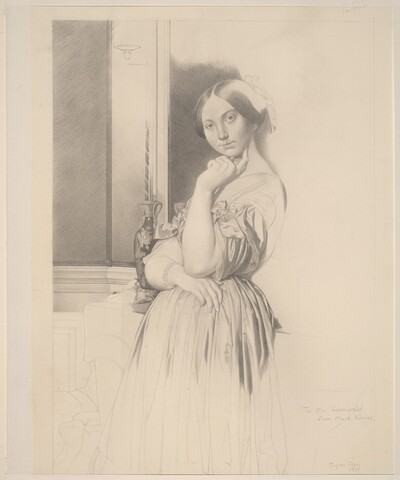
Ingres Copy (Comtesse d'Haussonville, Frick Collection)
Ingres, Jean-Auguste-Dominique
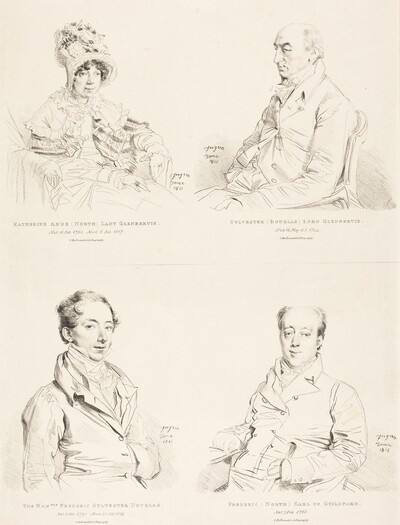
Sylvester (Douglas) Lord Glenbervie; Katherine Anne (North) Glenbervie; Frederic (North) Earl of Guilford; Frederic Sylvester Douglas
Ingres, Jean-Auguste-Dominique
Sylvester (Douglas) Lord Glenbervie; Katherine Anne (North) Glenbervie; Frederic (North) Earl of Guilford; Frederic Sylvester Douglas
Ingres, Jean-Auguste-Dominique
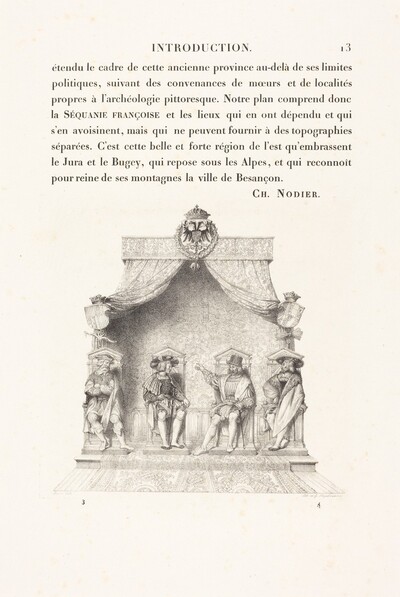
Four Magistrates of Besançon (Quatre magistrats de Besançon)
Ingres, Jean-Auguste-Dominique