Masters of Their Craft
Artists
Discover the visionaries who shaped the course of art history.
39,743 artists in the collection
Euler, Margaret Ida
British
British, born 1903
Eunice Pinney
European
European 17th Century
European
European 18th Century
European
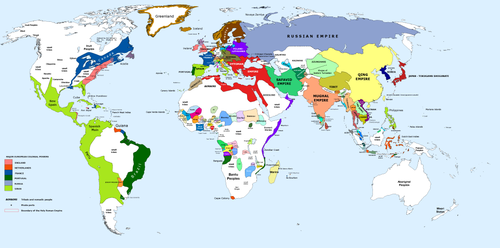
The 18th century lasted from 1 January 1701 (represented by the Roman numerals MDCCI) to 31 December 1800 (MDCCC). During the 18th century, elements of Enlightenment thinking culminated in the Atlantic Revolutions. Revolutions began to challenge the legitimacy of monarchical and aristocratic power structures. The Industrial Revolution began mid-century, leading to radical changes in human society and the environment. The European colonization of the Americas and other parts of the world intensified and associated mass migrations of people grew in size as part of the Age of Sail. During the century, slave trading expanded across the shores of the Atlantic Ocean, while declining in Russia and China. Western historians have occasionally defined the 18th century otherwise for the purposes of their work. For example, the "short" 18th century may be defined as 1715–1789, denoting the period of time between the death of Louis XIV of France and the start of the French Revolution, with an emphasis on directly interconnected events. To historians who expand the century to include larger historical movements, the "long" 18th century may run from the Glorious Revolution of 1688 to the Battle of...

European 19th Century
European
The 19th century began on 1 January 1801 (represented by the Roman numerals MDCCCI), and ended on 31 December 1900 (MCM). It was the 9th century of the 2nd millennium. It was characterized by vast social upheaval. Slavery was abolished in much of Europe and the Americas. The First Industrial Revolution, though it began in the late 18th century, expanded beyond its British homeland for the first time during the 19th century, particularly remaking the economies and societies of the Low Countries, France, the Rhineland, Northern Italy, and the Northeastern United States. A few decades later, the Second Industrial Revolution led to ever more massive urbanization and much higher levels of productivity, profit, and prosperity, a pattern that continued into the 20th century. The Catholic Church, in response to the growing influence and power of modernism, secularism and materialism, formed the First Vatican Council in the late 19th century to deal with such problems and confirm certain Catholic doctrines as dogma. Religious missionaries were sent from the Americas and Europe to Asia, Africa and the Middle East. In the Middle East, it was an era of change and reform. The Islamic gunpowder empires...
Eusebius Johann Alphen
Eustache-Hyacinthe Langlois
French
1777 - 1837
Eustache Le Sueur
Eustache Le Sueur
French
1617 - 1655
Eustáquio Neves
Euzerikhin, Emmanuil
Russian
Russian, 1911 - 1984