Masters of Their Craft
Artists
Discover the visionaries who shaped the course of art history.
39,743 artists in the collection
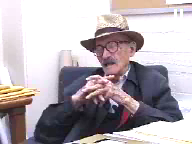
Engel, Jules
American
American, born 1915
Jules Engel (Hungarian: Engel Gyula; March 11, 1909 – September 6, 2003) was an American filmmaker, painter, sculptor, graphic artist, set designer, animator and teacher of Hungarian origin. He was the founding director of the experimental animation program at the California Institute of the Arts, where he taught until his death, serving as mentor to several generations of animators.
Engelke, Gerda
German
German, active 20th century
This is a list of notable German actors from 1895, the year of the first public showing of a motion picture by the Lumière brothers, to the present. Actors are listed in the period in which their film careers began and the careers of most spanned more than just one period. The list currently includes actors that appear in German movies, including those of foreign origin. For the periods corresponding to the era when Germany was divided the list is split into two categories: BRD for West German actors and DEFA for East German actors.

Engelmann, Gottfried
French
French, 1788 - 1839
Godefroy Engelmann (August 17, 1788 – April 25, 1839) was a Franco-German lithographer and chromolithographer.
Engetsudō
Japanese

Engleheart, John Cox Dillman
British
British, 1783 - 1862
John Cox Dillman Engleheart (1784–1862) was an English miniature painter.
English
English 12th Century
English

English 13th Century
English
The 13th century was the century which lasted from January 1, 1201 (represented by the Roman numerals MCCI) through December 31, 1300 (MCCC) in accordance with the Julian calendar. The Mongol Empire was founded by Genghis Khan, which stretched from Eastern Asia to Eastern Europe. The conquests of Hulagu Khan and other Mongol invasions changed the course of the Muslim world, most notably the Siege of Baghdad (1258) and the destruction of the House of Wisdom. Other Muslim powers such as the Mali Empire and Delhi Sultanate conquered large parts of West Africa and the Indian subcontinent, while Buddhism witnessed a decline through the conquest led by Bakhtiyar Khilji. The earliest Islamic states in Southeast Asia formed during this century, most notably Samudera Pasai. The Kingdoms of Sukhothai and Hanthawaddy would emerge and go on to dominate their surrounding territories. Europe entered the apex of the High Middle Ages, characterized by rapid legal, cultural, and religious evolution as well as economic dynamism. Crusades after the fourth, while mostly unsuccessful in rechristianizing the Holy Land, inspired the desire to expel Muslim presence from Europe that drove the Reconquista and...
English 14th Century
English
English 15th Century
English

English 16th Century
English
The 16th century begins with the Julian year 1501 (MDI) and ends with either the Julian or the Gregorian year 1600 (MDC) (depending on the reckoning used; the Gregorian calendar introduced a lapse of 10 days in October 1582). The Habsburg Spanish Empire, Portuguese Empire, Ottoman Empire, Safavid Persia, Mughal India and Ming China were the most powerful and hegemonic states. The Renaissance in Italy and Europe saw the emergence of important artists, authors and scientists, and led to the foundation of important subjects which include accounting and political science. Copernicus proposed the heliocentric universe, which was met with strong resistance, and Tycho Brahe refuted the theory of celestial spheres through observational measurement of the 1572 appearance of a Milky Way supernova. These events directly challenged the long-held notion of an immutable universe supported by Ptolemy and Aristotle, and led to major revolutions in astronomy and science. Galileo Galilei became a champion of the new sciences, invented the first thermometer and made substantial contributions in the fields of physics and astronomy, becoming a major figure in the Scientific Revolution in Europe. Spain...
English export ceramics