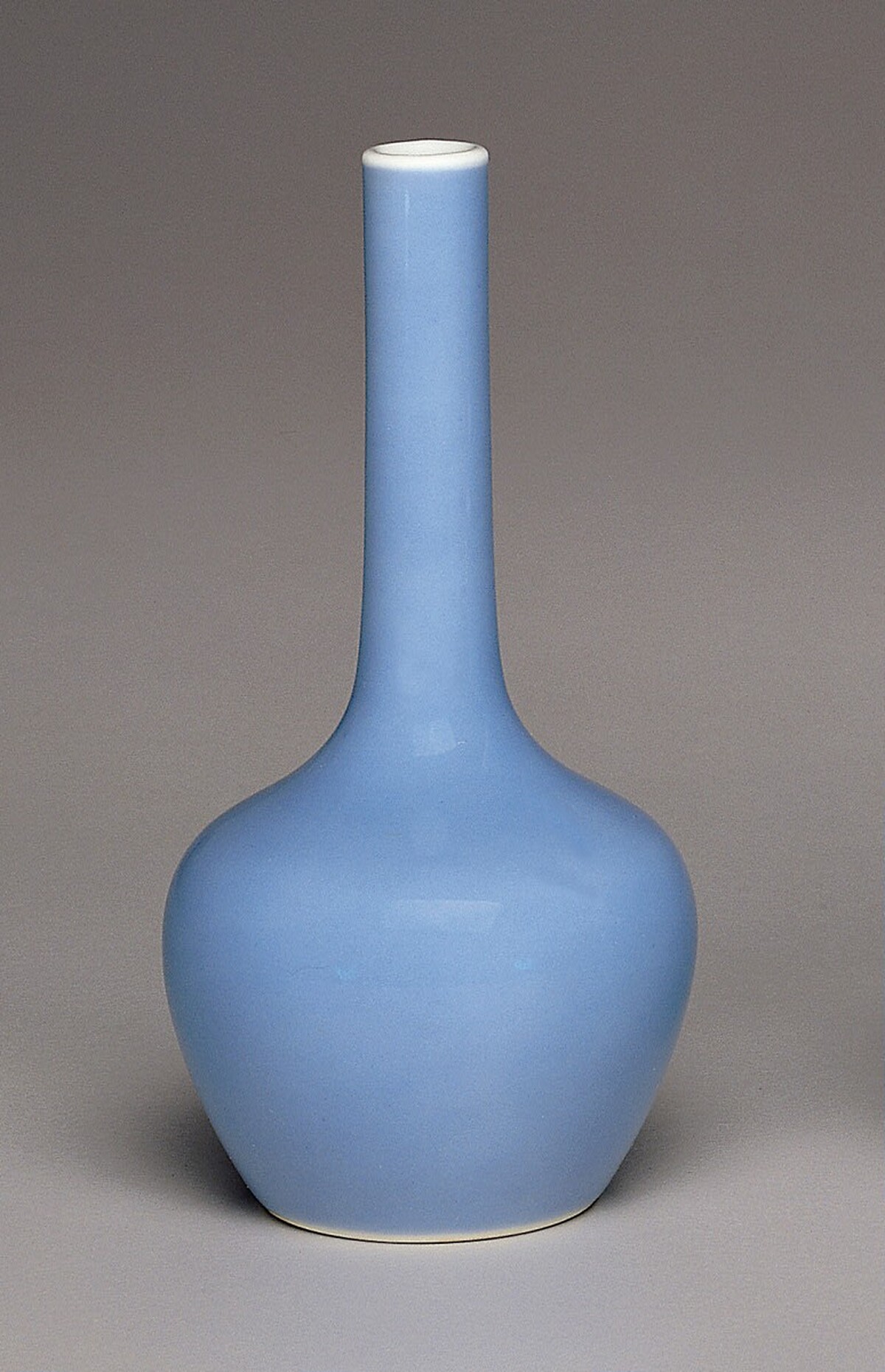
Provenance
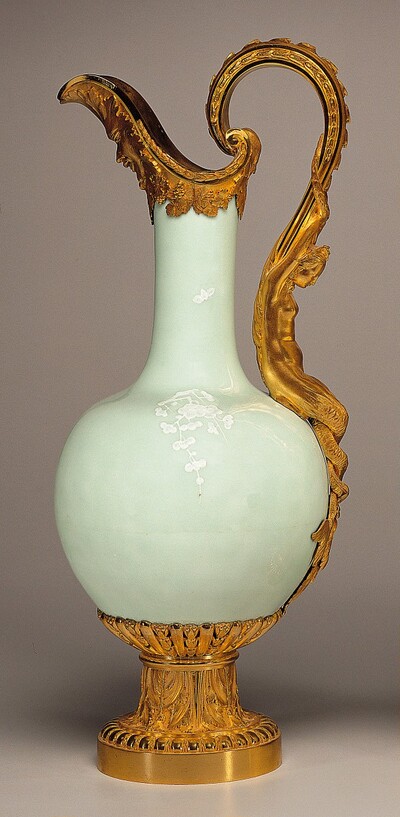
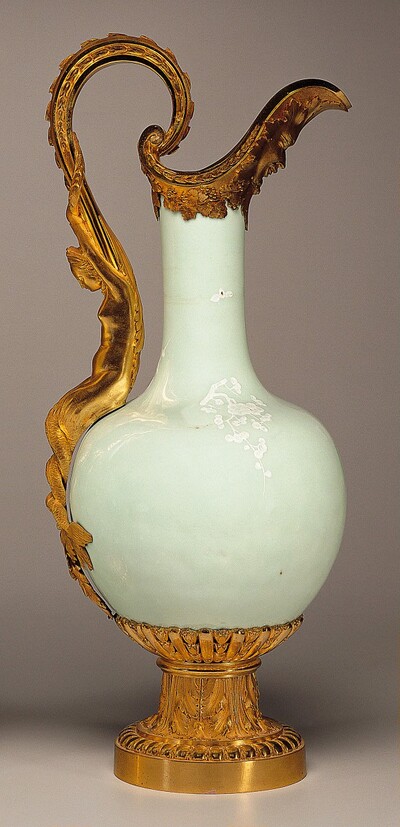
Considered a pair with NGA 1942.9.486. One vase acquired by Thomas B. Clarke [1848-1931], New York; sold 1913 to Peter A. B. Widener. The other vase acquired by J. Pierpont Morgan [1837-1913], New York, by 1911; sold to (Duveen Brothers, New York and London); sold 1915 to Peter A. B. Widener, Lynnewood Hall, Elkins Park, Pennsylvania; both vases inheritance from Estate of Peter A. B. Widener by gift through power of appointment of Joseph E. Widener, Elkins Park, Pennsylvania;[1] gift 1942 to NGA.
[1] The NGA curatorial records discuss 1942.9.485 and 1942.9.486 together, and note that one was acquired from Clarke, who reportedly obtained it from "Yan-li San, China, treasurer of Chinese empire," while the other was acquired from Duveen, who had obtained it from Morgan. In _Catalogue of the Morgan Collection of Chinese Porcelains; privately printed by order of Mr. J. Pierpont Morgan_, 2 vols., New York, 1904-1911: 2:82, no. 1340, this piece is said to have come from the imperial collection. The records, however, do not make clear which vase is which. A letter dated 1 November 1934 from Duveen Brothers concerning the Morgan piece (in NGA curatorial files), states that Yan Li San might have been a member of the imperial family, noting that Clarke, who worked on the second volume of the Morgan collection, in which this vessel is catalogued, "may have had means of identifying Yan Li San as a member of the imperial family, but omitted to mention the name in the catalogue." This suggests that Duveen Brothers had the impression that both vases had their origin in the same figure, a member of the imperial family. However, a plausible candiate as the former owner of at least one, if not both, of these vases is the high official of Mongol background, Yang Lishan (c. 1900), who served in the Imperial Household Department (Neiwu Fu). This might account for imperial associations surrounding the Morgan vase if indeed its origin was also with him. Eventually Yang became a president of the Board of Revenue (Hubu Shangshu), which could have been interpreted as "treasurer of the Chinese empire." His biography is in Erxun Zhao, et al., _Qing Shigao [Draft Standard History of Qing]_, Taipei, 1981: 18 juan 466, p. 12,763. Yang was known for what were thought to be proforeign views, and was executed 11 August 1900 after protesting against the encouragement of the antiforeign Boxers. Only a few days later the Allied Expeditionary Forces entered Beijing. Perhaps these vases were among the booty reportedly taken from Yang's house by the French missionary Bishop Alphonse Favier (1837-1905), according to The Compilation Group, _History of Modern China: The Yi Ho Tuan Movement of 1900_, Beijing, 1976: 93, and then dispersed, eventually reaching Thomas B. Clarke in the United States along with the somewhat garbled name and occupation of their original owner. Besides being a collector, Clarke imported and sold Chinese porcelains, and was familiar with Père Favier's collection, as shown in a note in Thomas B. Clarke and George B. Warren, _Catalogue of Antique Chinese Porcelains: Owned by George Warren of Troy, New York, with a note of introduction by Thomas B. Clarke of New York_, Boston, 1902: 11.
Accession Number
1942.9.485
Medium
porcelain with pale blue glaze
Dimensions
overall: 15.3 x 7.5 cm (6 x 2 15/16 in.)
Classification
Decorative Art
Credit Line
Widener Collection