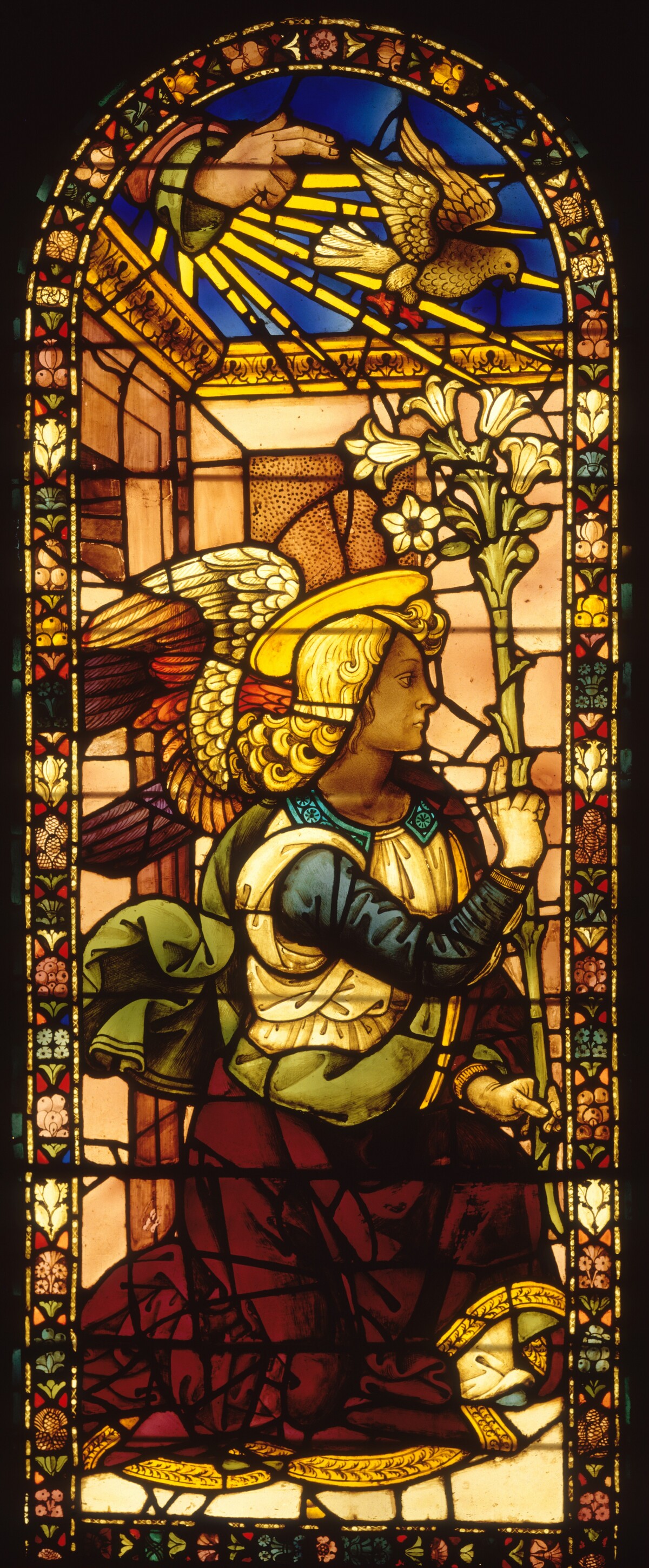
Provenance
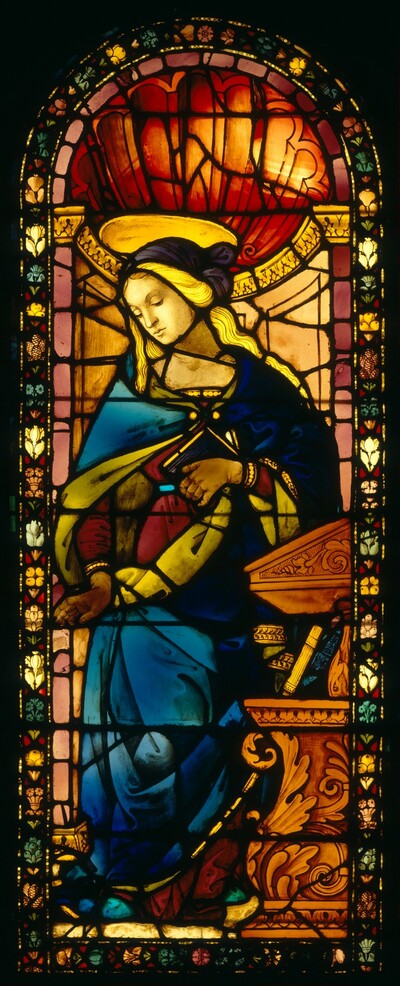
Church and convent of Cestello (later Santa Maria Maddalena de' Pazzi), Florence, c. 1503-after 1630.[1] Rodolphe Kann [1844/1845-1905], Paris, before 1907;[2] (Duveen Brothers, Inc., London, New York, and Paris);[3] purchased 3 April 1916 by Joseph E. Widener, Elkins Park, Pennsylvania, as Florentine, fifteenth century;[4] inheritance from Estate of Peter A.B. Widener by gift through power of appointment of Joseph E. Widener, Elkins Park, after purchase by funds of the Estate; gift 1942 to NGA.
[1] The provenance from the church of Santa Maria Maddalena de' Pazzi in Florence, first published in the Kann Collection catalogue in 1907, is confirmed by both documents and stylistic evidence. A record of February 1503 in the archive from that church in the Archivio di Stato, Florence, indicates that a priest called Ser Giovanni di Domenico "de vreti" ("of the stained glass windows") was due payment for "two windows made in the choir with figures" (Luchs, Alison, "Origins of the Widener Annunciation Windows," _Studies in the History of Art_ 7 [1975]: especially 89, doc. 5; Florence, Archivio di Stato Compagnie Religiose Soppresse, C.XVIII 502, no. 357, fol. 205.) It indicates Giovanni was to be paid at the same time for a window for the Riccialbani chapel in the church. The Riccialbani window, still in situ and bearing a simple coat of arms of that family in a roundel, has borders whose fruit-cluster and floral designs perfectly match those of the National Gallery windows. See Luchs 1977, 28-30, on the choir chapel, which was altered beyond recognition in 1628, and Luchs 1975 for the removal of the windows and their reinstallation in a new chapter house between 1628 and 1630. The date and circumstances of their removal from this location are unknown. Since the windows next appeared in a French collection, they may have been removed during Napoleon's Italian campaign, when several altarpieces from the church were taken to France. See Everett P. Fahy, Jr., "Les cadres d'origine de retables florentins du Louvre," _Revue du Louvre_ 26, no. 1 (1976): 6-14.
[2] Kann catalogue 1907, 1:15, no. 22.
[3] In a letter of 1 March 1916 to Joseph Widener, Joseph Duveen writes that Duveen Brothers "possess only a two-thirds share" in this window and NGA 1942.9.311; the dealer having the other third appears to have been Wildenstein's (Duveen Brothers Records, accession number 960015, Getty Research Institute, Los Angeles: Series II.I. Collectors' files, 1901-1965; Joseph E. Widener, box 523, folder 6, reel 378; copy in NGA curatorial files).
[4] For an undated photograph of the windows installed in the Raphael Room at Lynnewood Hall see David Alan Brown, _Berenson and the Connoisseurship of Italian Painting_ [exh. cat., National Gallery of Art] (Washington, 1979), 20, fig. 33.
Accession Number
1942.9.312
Medium
stained glass
Dimensions
overall: 199.4 × 78.8 cm (78 1/2 × 31 in.) | framed: 215.9 × 89.54 × 4.76 cm (85 × 35 1/4 × 1 7/8 in.)
Classification
Decorative Art
Credit Line
Widener Collection