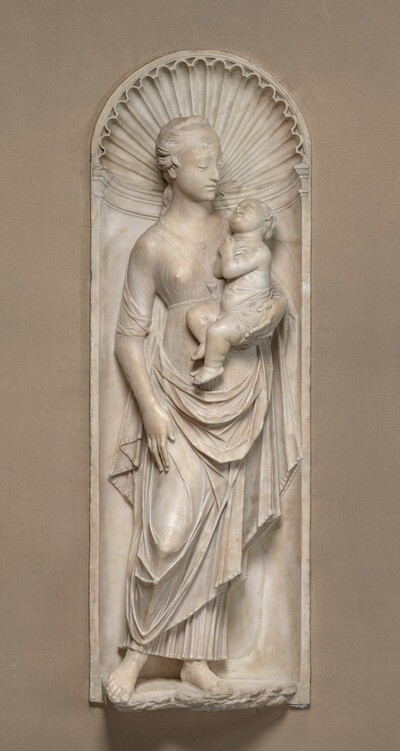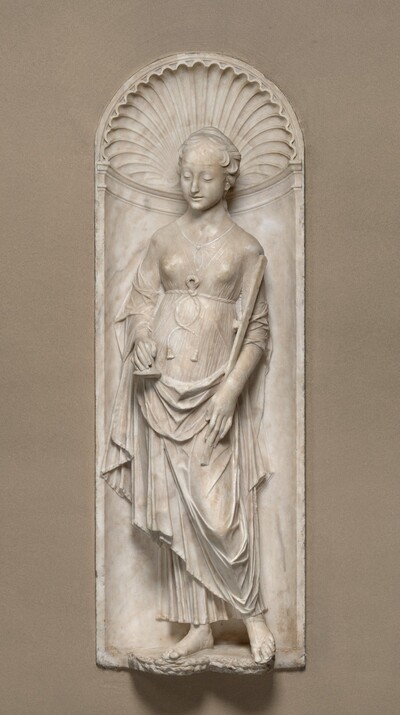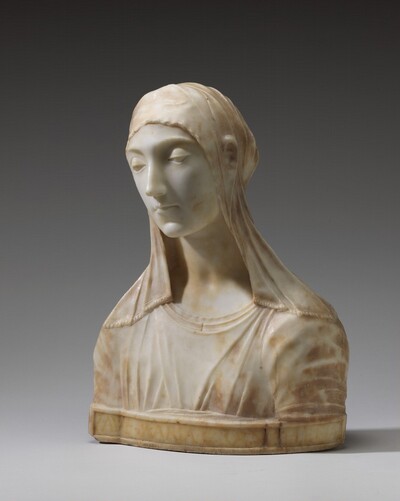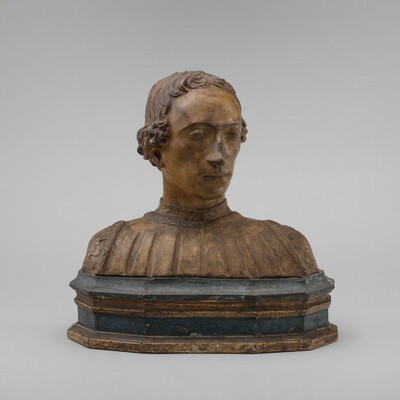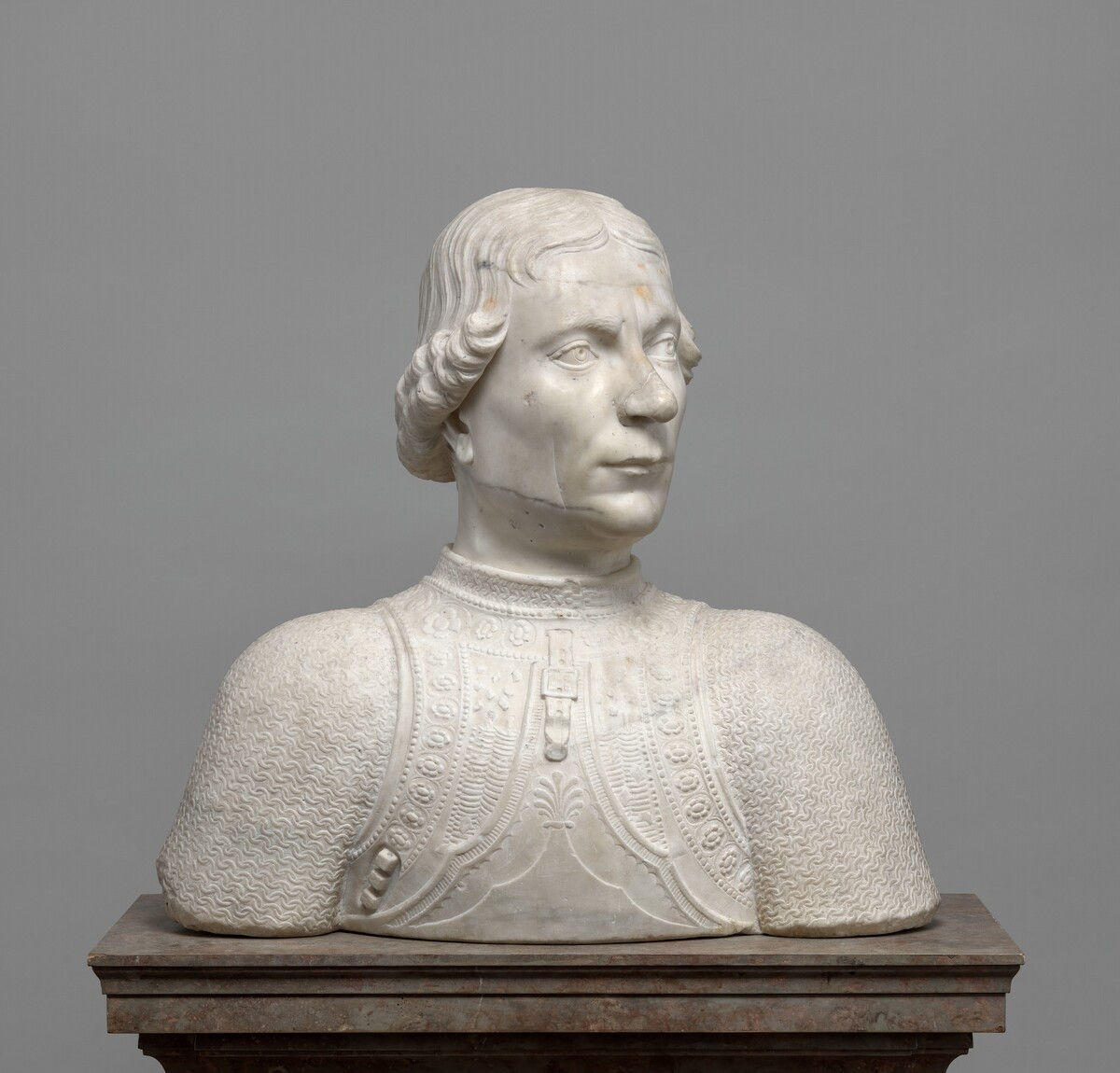
Provenance
Louis-Charles Timbal [1821-1880], Paris.[1] Baron Arthur de Schickler [1828-1919], Paris, and Martinvast, Normandy (near Cherbourg); by inheritance to his daughter, Marguerite, Comtesse Hubert de Pourtalès [1870-1956], Paris, and Martinvast, Normandy; sold April 1919 to (Duveen Brothers, Inc., London, New York, and Paris) in part-share agreement with (Wildenstein & Co., Inc., New York) and (Arnold Seligmann & Co., Paris);[2] inheritance from Estate of Peter A.B. Widener by gift through power of appointment of Joseph E. Widener, Elkins Park, Pennsylvania, after purchase 13 January 1922 by funds of the Estate;[3] gift 1942 to NGA.
[1] _Duveen Sculpture in Public Collections of America_, New York, 1944: no. 108, repro.
[2] The Baron's daughter married Comte Hubert de Pourtalès in 1890, and was her father's sole heiress. Edward Fowles (_Memories of Duveen Brothers_, London, 1976: 102-103, 134) discusses the original purchase agreement with Wildenstein and Seligmann, and the subsequent 1922 distribution of the works among the three dealers.
[3] Provenance according to Widener card files in NGA curatorial records.
Accession Number
1942.9.135
Medium
marble
Dimensions
overall: 51.5 x 54.2 x 27.7 cm (20 1/4 x 21 5/16 x 10 7/8 in.)
Classification
Sculpture
Credit Line
Widener Collection