Provenance
(Tooth Brothers, London), sold 15 May 1919 to Thomas B. Clarke [1848-1931], New York;[1] his estate; sold as part of the Clarke collection on 29 January 1936, through (M. Knoedler & Co., New York), to The A.W. Mellon Educational and Charitable Trust, Pittsburgh; gift 1942 to NGA.
[1] The name of the seller and the date of purchase are recorded in a copy of _Portraits by Early American Artists of the Seventeenth, Eighteenth and Nineteenth Centuries Collected by Thomas B. Clarke_, Exh. cat., Philadelphia Museum of Art, 1928, annotated with information from files of M. Knoedler & Co., NY (copy in NGA curatorial records and in NGA library). Correspondence about the sale was with G. Stanley Sedgwick, who seems to have had a business arrangement with the Tooth Brothers and with Clarke. His letters of 14 and 24 April and 5 May 1919 precede the shipping notice from Hensel, Bruckmann & Lorbacher dated 13 May 1919, announcing the arrival of the painting in New York (NGA curatorial files). Additional correspondence indicates that Sedgwick hoped to locate other works by Gilbert Stuart for Clarke's collection and was searching for _The Skater_ [NGA 1950.18.1] and portraits of the Hartigans [NGA 1942.8.16], Luke White [NGA 1942.8.28], and the Pollocks [NGA 1942.8.18 and 1942.8.19] (NGA Clarke collection files).
Accession Number
1942.8.39
Medium
oil on canvas
Dimensions
overall: 75.8 x 63 cm (29 13/16 x 24 13/16 in.) | framed: 102.9 x 89.5 x 10.2 cm (40 1/2 x 35 1/4 x 4 in.)
Classification
Painting
Credit Line
Andrew W. Mellon Collection
Tags
Painting Neoclassical & Romantic (1751–1850) Oil Painting Canvas American
Background & Context
Background Story
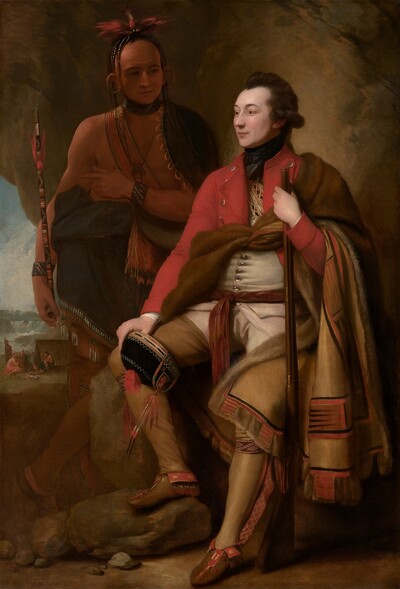
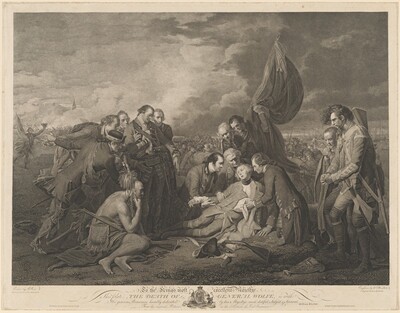
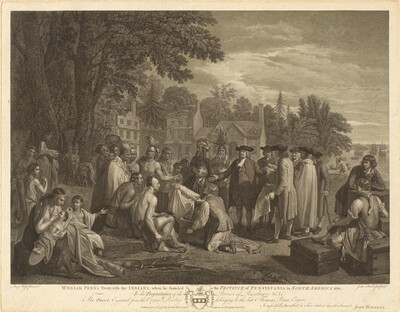
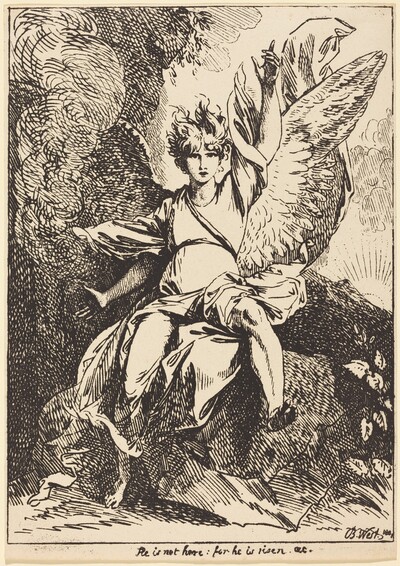
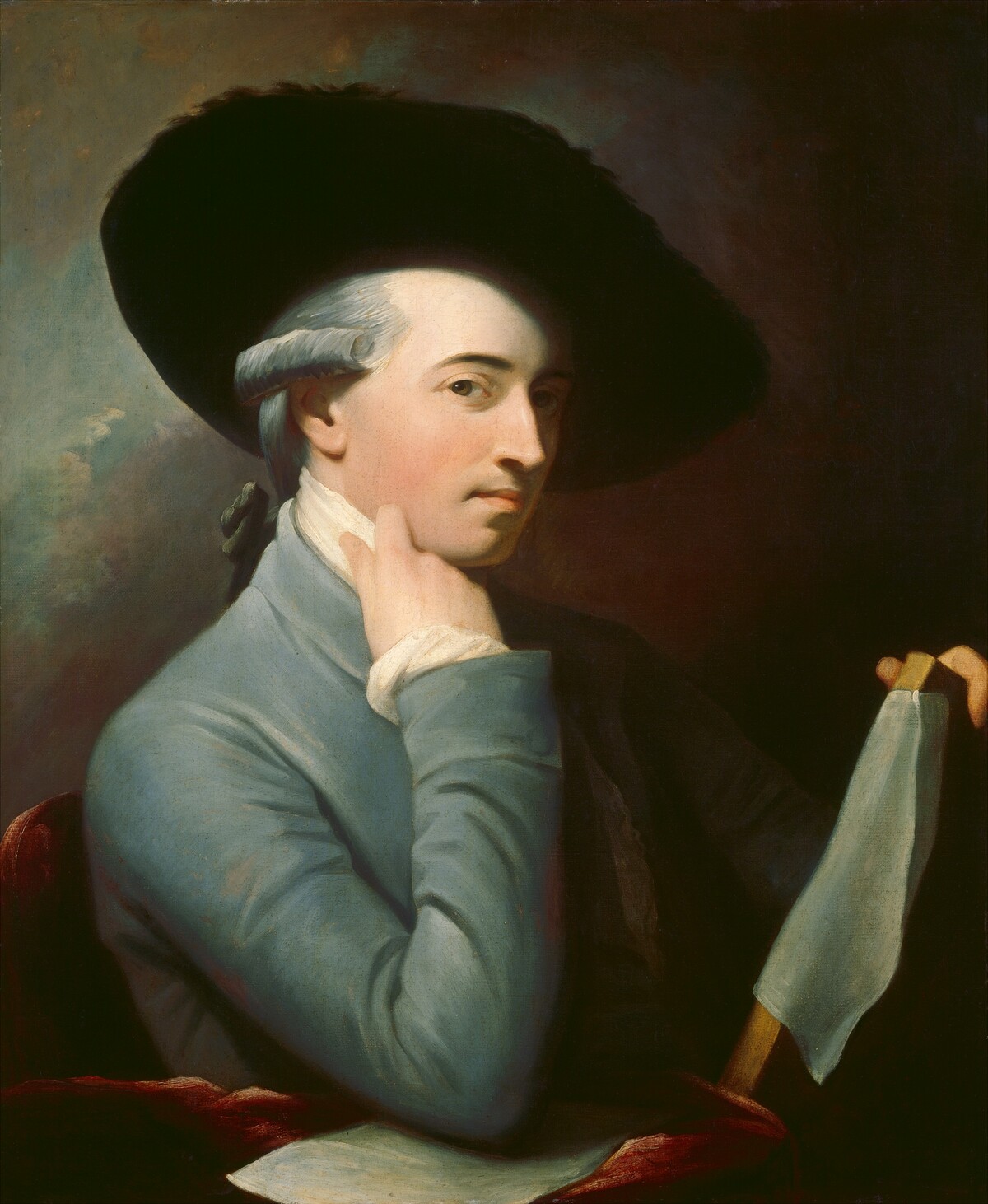
This work, attributed to an artist working 'after Benjamin West,' is a copy or variant of a West composition. West was the most influential American-born artist of the 18th century — president of the Royal Academy for nearly thirty years and a central figure in London's art world. Copies of his work circulated widely, reflecting his enormous popularity on both sides of the Atlantic. This particular painting demonstrates how West's compositions served as models for less inventive artists who nonetheless wanted to participate in the neoclassical and history-painting traditions that West championed.
Cultural Impact
The existence of workshop copies and variants testifies to West's dominance of Anglo-American visual culture. He was known as the 'American Raphael' in his lifetime, and his historical paintings set the standard for how the new nation should visualize its own history — even though West spent almost his entire career in London.
Why It Matters
This after-West painting reminds us that West's influence extended far beyond his own hand. His compositions, poses, and narrative strategies shaped how a generation of artists approached history painting.