Accession Number
1973.18.1
Medium
gouache on paper, cut and pasted on white paper, mounted on canvas
Dimensions
overall: 295.5 × 154 cm (116 5/16 × 60 5/8 in.) | gross weight: 63.504 kg (140 lb.)
Classification
Painting
Credit Line
Ailsa Mellon Bruce Fund
Background & Context
Background Story
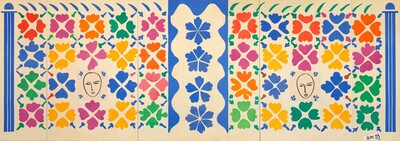
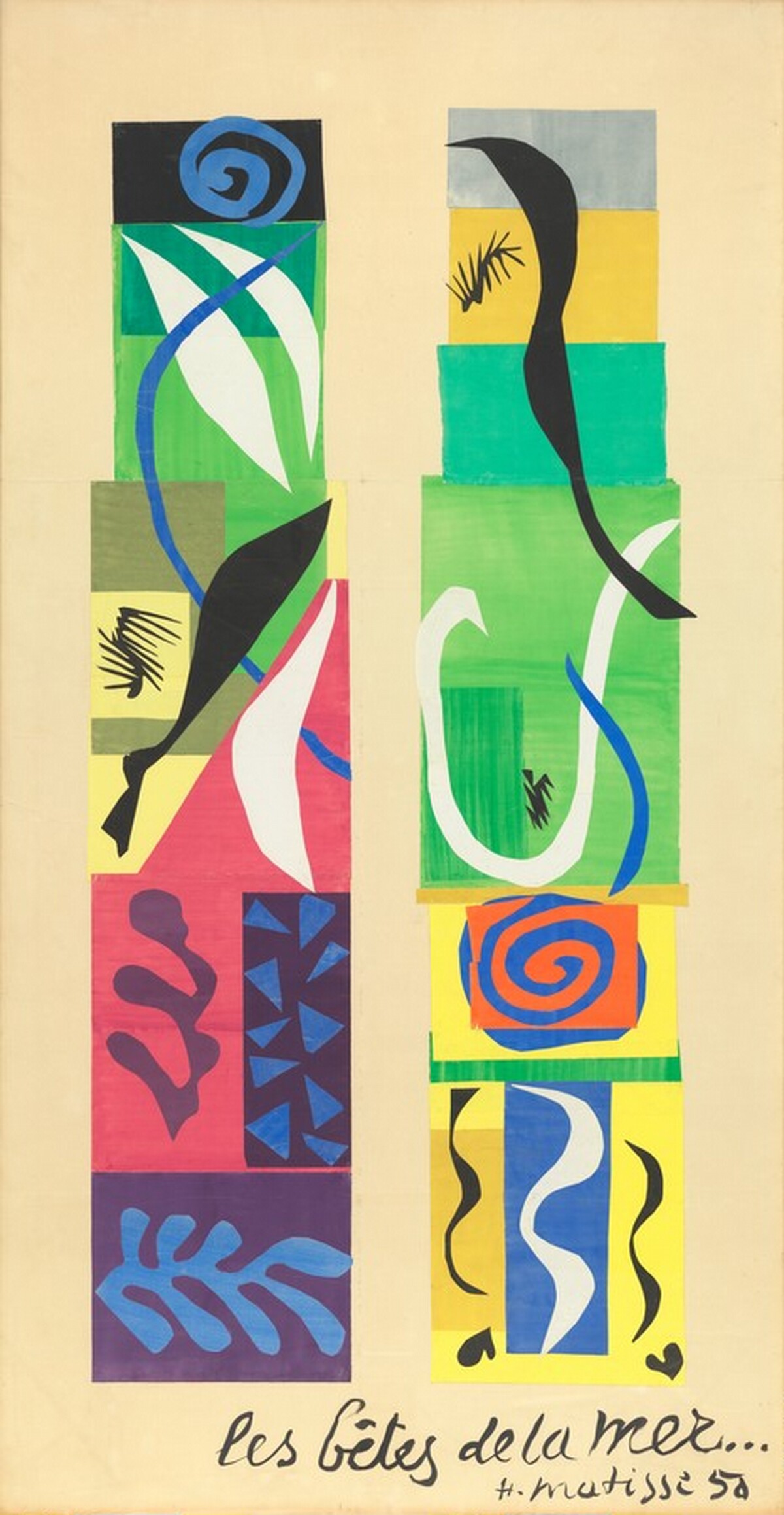
Beasts of the Sea from 1950 is one of Matisse's celebrated cut-outs, the papier découpés that he created during the last decade of his life when ill health confined him to bed and wheelchair. The cut-out technique—cutting shapes from paper painted with gouache and arranging them in compositions on the wall or canvas—allowed Matisse to continue making art when he could no longer paint, and the resulting works are among the most joyful and inventive of his career. Beasts of the Sea depicts marine forms—fish, coral, seaweed—in the bright colors and simplified shapes that define the cut-outs.
Cultural Impact
The cut-outs are among the most important works in 20th-century art because they demonstrate that Matisse's creative powers were undiminished by his physical limitations. Beasts of the Sea exemplifies the cut-out technique at its most inventive: the marine forms are both recognizable and abstract, the colors are bright and joyful, and the composition has the spontaneity and freedom that distinguish Matisse's best work. The cut-outs influenced generations of artists who saw in them a new way of making art—if painting was impossible, cutting and pasting could achieve the same expressive results.
Why It Matters
Beasts of the Sea is Matisse's cut-out technique at its most joyful: marine forms cut from gouache-painted paper and arranged in a composition of bright colors and simplified shapes that demonstrates the creative freedom Matisse found in the papier découpé technique. The 1950 work proves that physical limitations could not diminish artistic invention.