Provenance
Estate of the artist; bequeathed 1873 to Mount Vernon Ladies' Association, Mount Vernon, Virginia; gift 1944 to the Corcoran Gallery of Art, Washington; acquired 2014 by the National Gallery of Art.
Accession Number
2014.136.64
Medium
oil on canvas
Dimensions
overall: 349.25 × 306.07 cm (137 1/2 × 120 1/2 in.) | framed: 394.97 × 351.16 × 19.69 cm (155 1/2 × 138 1/4 × 7 3/4 in.)
Classification
Painting
Credit Line
Corcoran Collection (Gift of the Mount Vernon Ladies Association, Mount Vernon, Virginia)
Tags
Painting Neoclassical & Romantic (1751–1850) Oil Painting Canvas American
Background & Context
Background Story
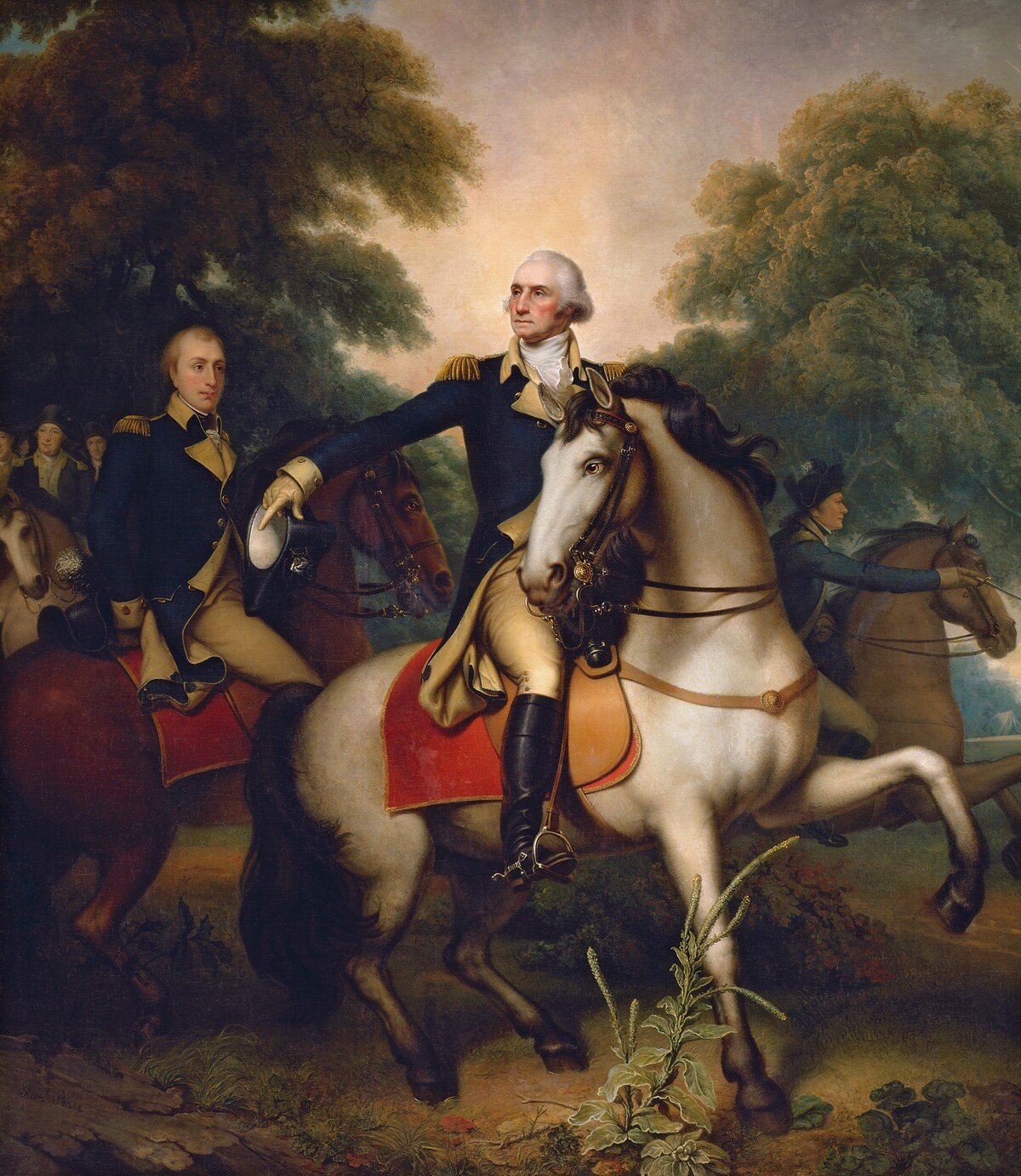
Rembrandt Peale (1778-1860) was an American painter known for his portraits of George Washington and other founding fathers, following in the tradition of his father Charles Willson Peale. Washington before Yorktown from 1824, reworked 1825, depicts General Washington before the decisive Battle of Yorktown in 1781, in the grand manner history painting tradition that Peale brought to American subjects. The 1824 date places this in Peale's mature period, when he was producing the grand manner history paintings of American subjects that are his most accomplished works, and the reworking in 1825 shows the artist's continued attention to the composition.
Cultural Impact
Washington before Yorktown is important in the history of American painting because it demonstrates the grand manner history painting tradition that Peale brought to American subjects. The grand manner—using the compositional devices of European history painting to depict American historical subjects—was one of the most important traditions in early American painting, and the 1824 painting shows this tradition applied to the decisive battle of the American Revolution.
Why It Matters
Washington before Yorktown is Rembrandt Peale's grand manner American history painting: General Washington before the decisive battle rendered in the compositional tradition of European history painting. The 1824 painting, reworked 1825, shows the grand manner tradition applied to the most decisive moment of the American Revolution.