Provenance
Edward C. [d. 1915] and Mary Griffin [1855-1937] Walker, Walkerville, Ontarior, and Washington; bequest 4 May 1937 to the Corcoran Gallery of Art, Washington; acquired 2015 by the National Gallery of Art.
Accession Number
2015.19.64
Medium
oil on wood
Dimensions
overall: 23.5 × 37.47 cm (9 1/4 × 14 3/4 in.) | framed: 46.36 × 60.96 × 6.99 cm (18 1/4 × 24 × 2 3/4 in.)
Classification
Painting
Credit Line
Corcoran Collection (Edward C. and Mary Walker Collection)
Tags
Painting Neoclassical & Romantic (1751–1850) Oil Painting French
Background & Context
Background Story
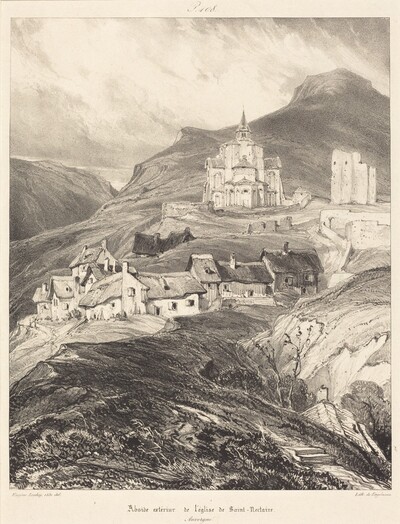
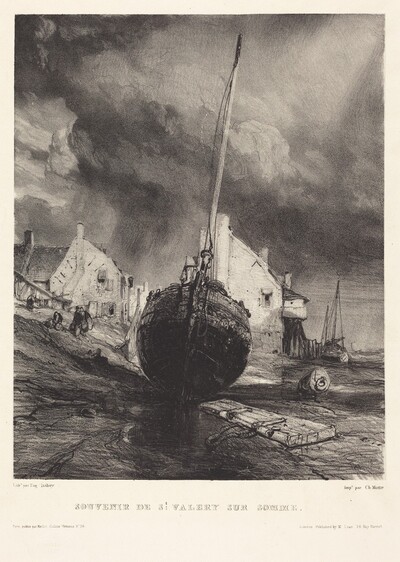
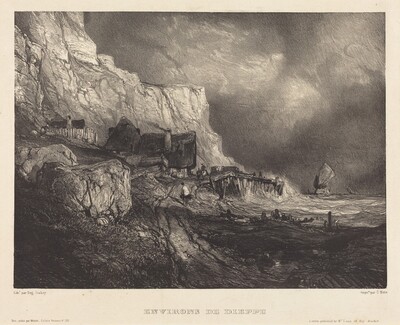
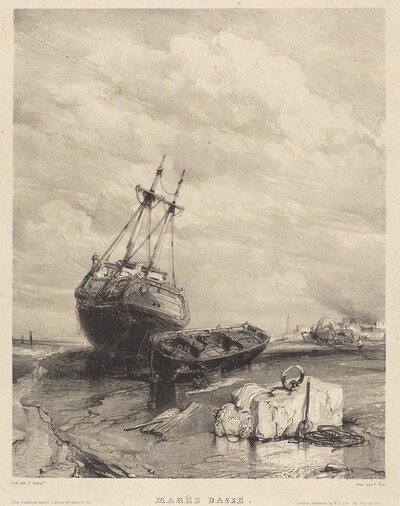
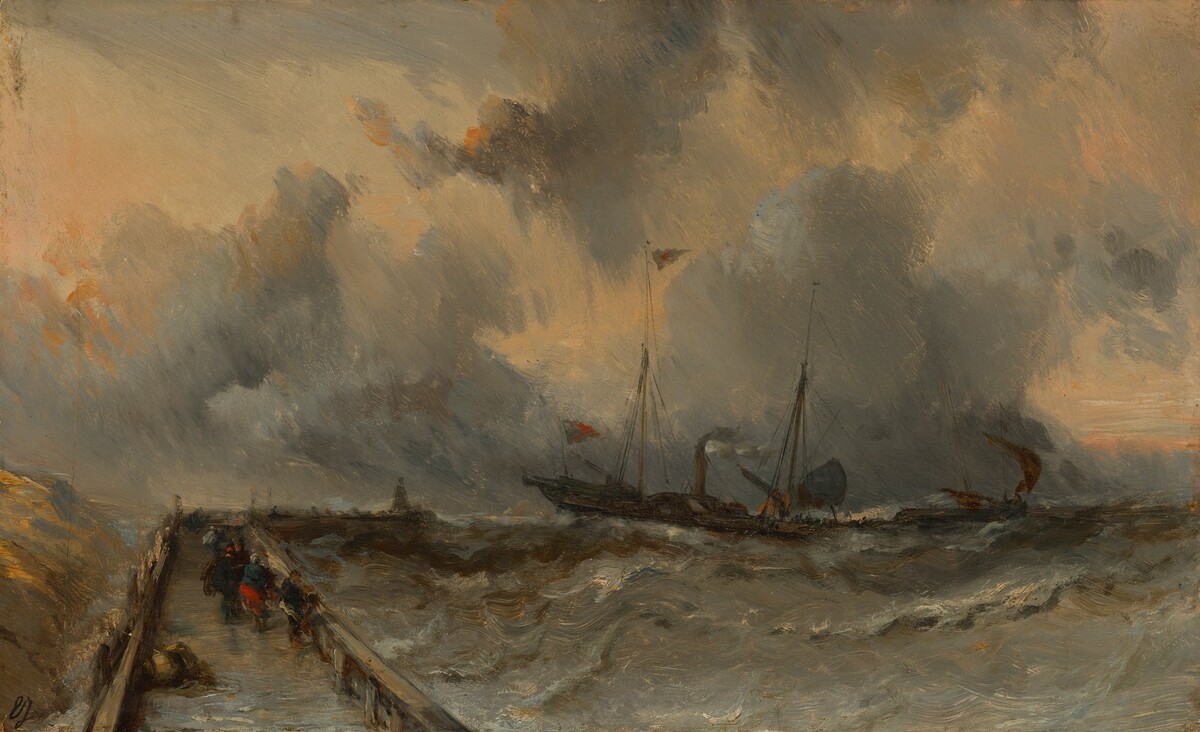
Eugène Isabey (1803-1886) was one of the most influential French marine painters of the 19th century, celebrated for his stormy seascapes and coastal scenes rendered in a style that combined Romantic drama with observational precision. This Marine from around 1830 shows Isabey developing the approach that would make his reputation: turbulent seas, dramatic skies, and the small human figures that provide scale and narrative interest in an otherwise overwhelming natural setting. The wood panel support gives the paint a luminosity and fineness that enhances the atmospheric effects of the sea and sky.
Cultural Impact
Isabey's 1830s marine paintings were tremendously influential on the generation of painters who would become the Barbizon School and the Impressionists. His willingness to paint the sea in its most turbulent and dramatic states—to find beauty in storms rather than calm—connected him to the Romantic movement's celebration of nature's power, while his observational precision connected him to the realist tradition that would emerge in the following decades.
Why It Matters
Marine is Isabey's Romantic seascape in its purest form: turbulent water, dramatic sky, and human figures dwarfed by nature's power. The wood panel gives the paint a luminosity that enhances the atmospheric effects, and the small scale concentrates the drama into an intimate space.