Provenance
Acquired March 1951 from the artist by the Corcoran Gallery of Art, Washington;[1] acquired 2015 by the National Gallery of Art.
[1] The painting received the W.A. Clark First Prize at the 22nd Corcoran Biennial exhibition in 1951.
Accession Number
2015.19.75
Medium
oil on canvas
Dimensions
overall: 76.2 × 61.6 cm (30 × 24 1/4 in.) | framed: 97.47 × 82.23 × 4.76 cm (38 3/8 × 32 3/8 × 1 7/8 in.)
Classification
Painting
Credit Line
Corcoran Collection (Museum Purchase, William A. Clark Fund)
Tags
Painting Early Modern (1901–1950) Oil Painting Canvas American
Background & Context
Background Story
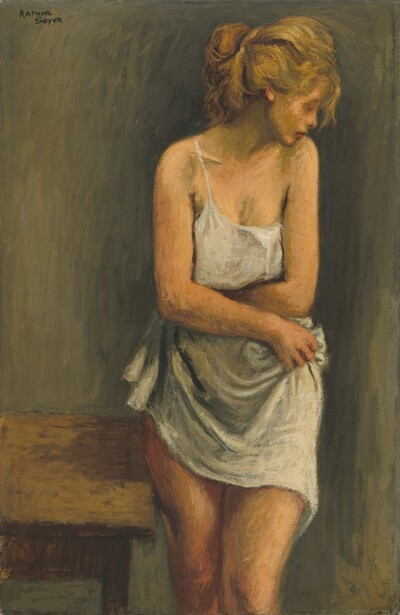
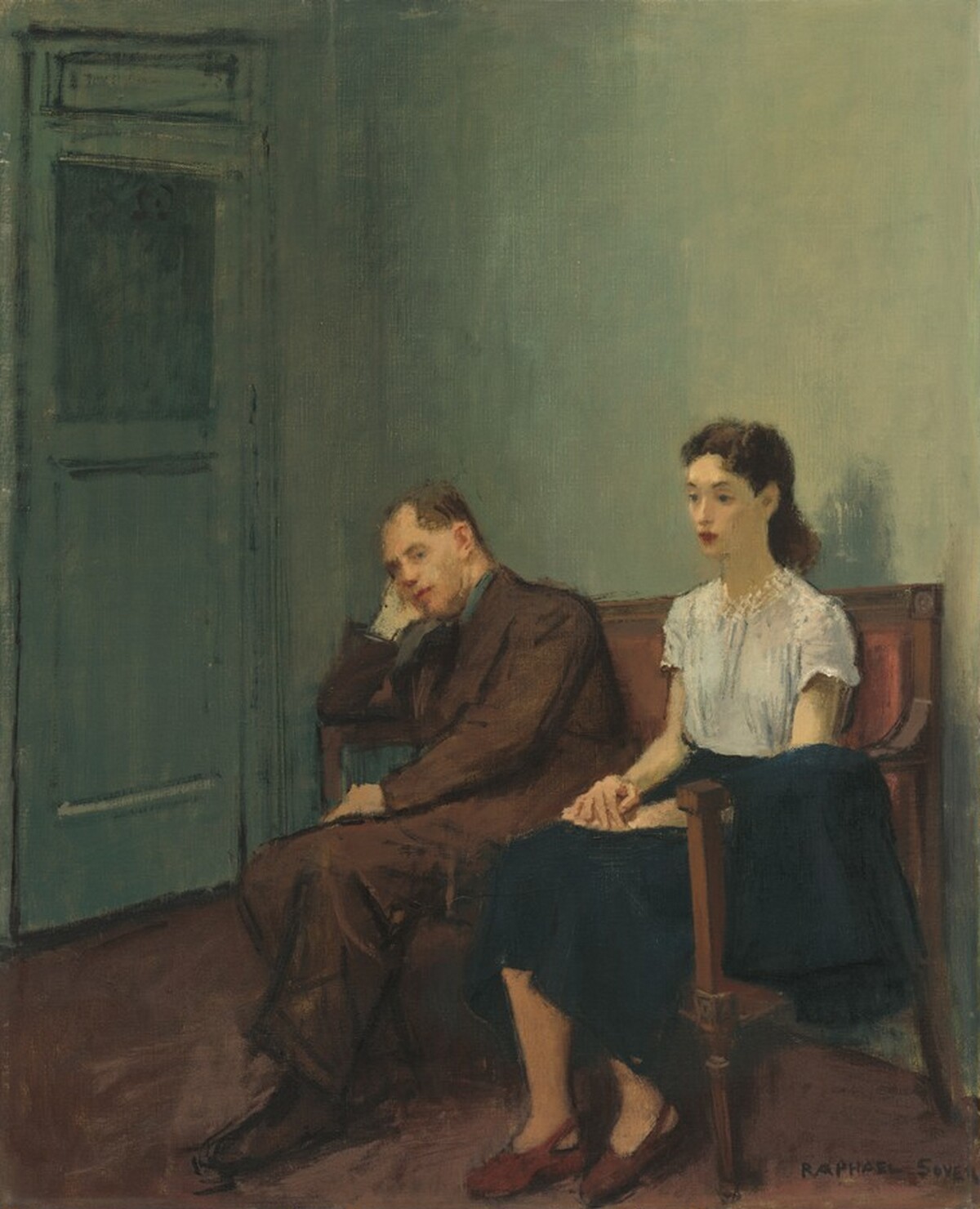
Raphael Soyer (1899-1987) was a Russian-born American painter known for his Realist figure paintings of urban life—women in waiting rooms, dancers, and unemployed men rendered with the empathy and social awareness that distinguish his work from the more decorative manner of American Scene painting. Waiting for the Audition from c. 1950 depicts a woman waiting for an audition in the empathetic, unsentimental manner that is Soyer's most characteristic mode. The 1950 date places this in Soyer's most productive period, when he was producing the figure paintings of urban life that maintained the Realist tradition during the ascendancy of Abstract Expressionism.
Cultural Impact
Waiting for the Audition is important in the history of American Realist painting because it demonstrates Soyer's commitment to figurative Realism during the period when Abstract Expressionism dominated the American art world. Soyer's empathetic but unsentimental treatment of his subjects—women waiting for auditions, dancers, unemployed men—shows that Realist figure painting could still produce works of genuine artistic quality even during the abstract domination of the 1950s.
Why It Matters
Waiting for the Audition is Soyer's Realist empathy: a woman waiting for an audition rendered with the empathetic but unsentimental manner that distinguishes his figure paintings from the more decorative American Scene painting. The c. 1950 painting maintained Realist figurative painting during the ascendancy of Abstract Expressionism.