Provenance
Commissioned 1837 by Robert Gilmor, Jr. [1774-1848], Baltimore; by descent to his nephew, Charles Smith Gilmor [1817-1866], Baltimore; (Freyer & Bendann, Baltimore); purchased 20 October 1874 by the Corcoran Gallery of Art, Washington; acquired 2014 by the National Gallery of Art.
Accession Number
2014.79.28
Medium
oil on wood
Dimensions
overall: 42.5 × 55.9 cm (16 3/4 × 22 in.) | framed: 66.4 × 79.7 × 13 cm (26 1/8 × 31 3/8 × 5 1/8 in.)
Classification
Painting
Credit Line
Corcoran Collection (Museum Purchase, Gallery Fund)
Tags
Painting Neoclassical & Romantic (1751–1850) Oil Painting American
Background & Context
Background Story
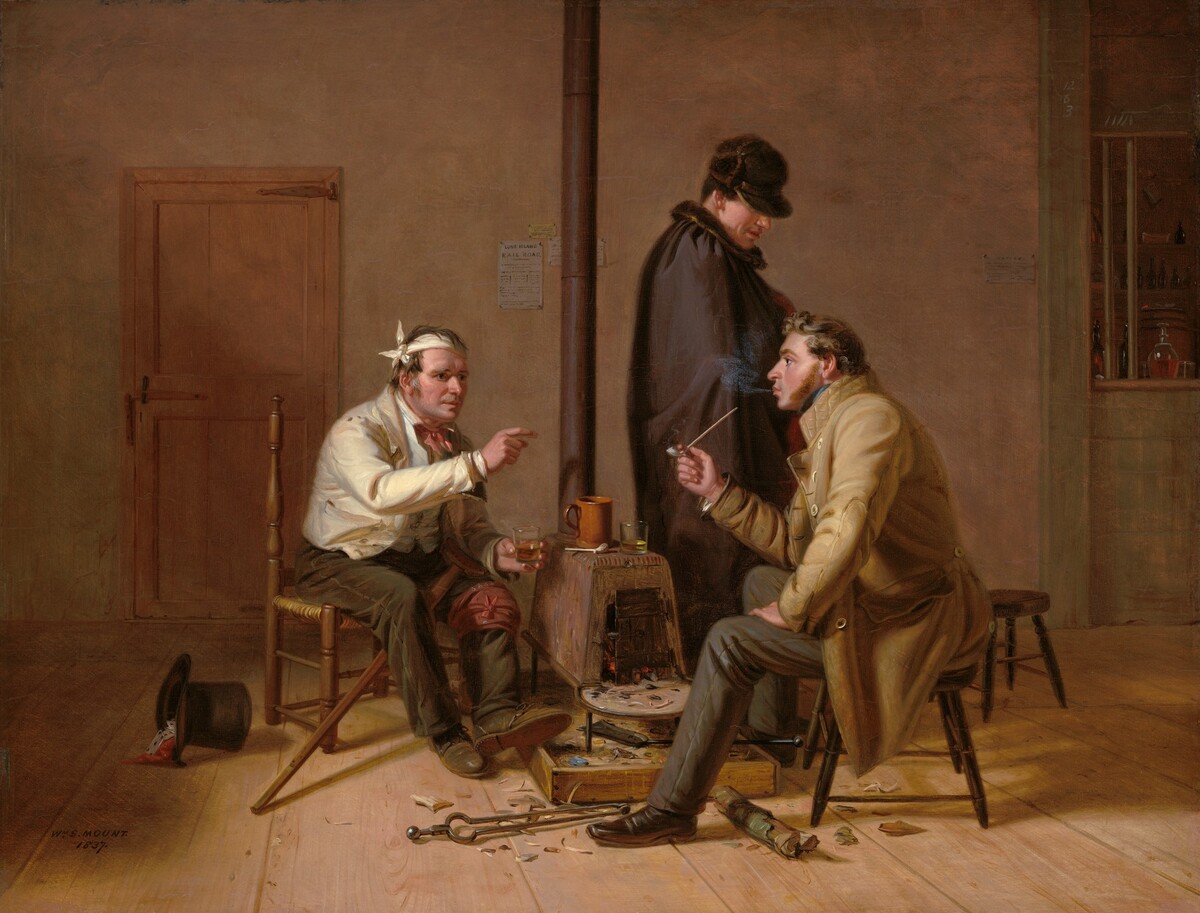
William Sidney Mount (1807-1868) was an American painter known for his genre scenes of rural Long Island life that depict the everyday social interactions of American country people with the humor and observation that distinguish the best American genre painting. The Tough Story - Scene in a Country Tavern from 1837 depicts a group of men in a country tavern listening to a storyteller, rendered with the narrative detail and humor that make Mount's genre scenes both entertaining and ethnographically valuable. The 1837 date places this in Mount's most productive period, when he was producing genre scenes of Long Island life that established him as the most accomplished American genre painter of the antebellum period.
Cultural Impact
The Tough Story is important in the history of American genre painting because it demonstrates the narrative detail and humor that distinguish Mount's best work. The country tavern subject allows Mount to exercise his talent for depicting the social interactions of American country people—conversation, storytelling, humor—with the ethnographic precision that makes his genre scenes uniquely valuable documents of antebellum American rural life.
Why It Matters
The Tough Story - Scene in a Country Tavern is Mount's American genre painting at its most charming and observant: men in a country tavern listening to a storyteller, rendered with the humor and narrative detail that make his scenes both entertaining and ethnographically valuable. The 1837 painting documents antebellum American rural social life with unmatched specificity.
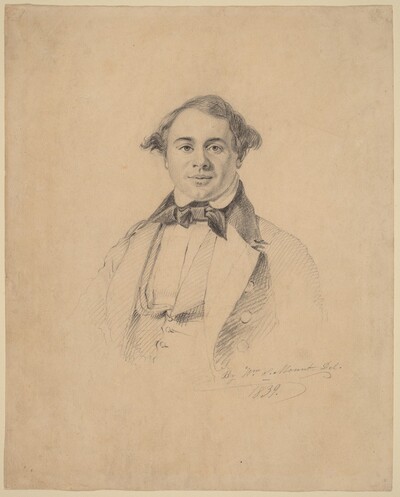
![Shepard Alonzo Mount, Age Twenty-Three [recto]](https://api.nga.gov/iiif/6e1e47a7-143a-4f3f-8e0a-7d9b8fae6804/full/400,/0/default.jpg)
![Sketch of a Standing Man [verso]](https://api.nga.gov/iiif/428eb2ee-849c-408f-b750-075d24abb14f/full/400,/0/default.jpg)