Provenance
Aron de Joseph de Pinto [d. 1785], Spain and The Netherlands, by 1780.[1] Lopes Leao de Laguna, The Netherlands.[2] (Leo Nardus [1868-1955], Suresnes, France, and New York); sold 1897 to Peter A.B. Widener, Lynnewood Hall, Elkins Park, Pennsylvania; inheritance from the Estate of Peter A.B. Widener by gift through power of appointment of Joseph E. Widener, Elkins Park; gift 1942 to NGA.
[1] _Catalogue of Paintings Forming the Private Collection of P.A.B. Widener, Ashbourne-near Philadelphia. Part II. Early English and Ancient Painting_. (1885-1900), 270, no. 270. The painting is not listed in the catalogue of the de Pinto sale, Amsterdam, Van der Schley & Yver, 11 April 1785; letter of 16 December 1988 to John Hand from Gerbrand Kotting, Rijksbureau voor Kunsthistorische Documentatie, The Hague.
[2] See note 1.
Accession Number
1942.9.39
Medium
oil on canvas
Dimensions
overall: 133.3 x 167.4 cm (52 1/2 x 65 7/8 in.)
Classification
Painting
Credit Line
Widener Collection
Tags
Painting Baroque (1600–1750) Oil Painting Canvas German
Background & Context
Background Story
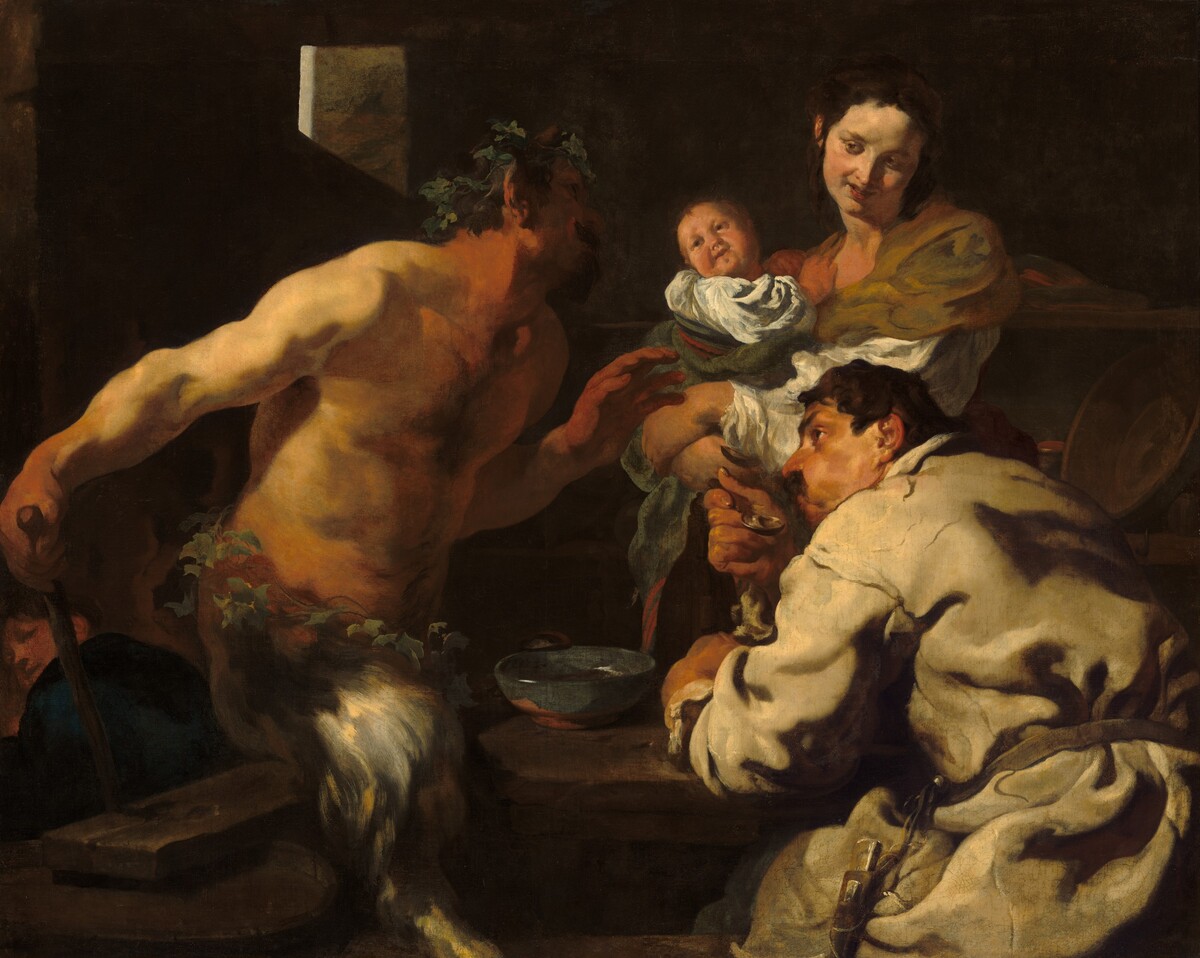
Johann Liss (c. 1590-1629) was a German-born painter who worked in Venice and Rome, known for his combination of Northern European genre subjects with the color and composition of the Italian Baroque. The Satyr and the Peasant from possibly c. 1623-26 depicts Aesop's fable of the satyr and the peasant, in which a satyr is shocked to discover that the peasant can blow both hot and cold from his mouth—first warming his hands, then cooling his soup. Liss's treatment combines the genre subject of the fable with the rich color and dramatic composition that distinguish Italian Baroque painting, creating a work that is simultaneously Northern in its narrative subject and Italian in its visual manner.
Cultural Impact
The Satyr and the Peasant is important in the history of European painting because it demonstrates the combination of Northern genre subject and Italian Baroque manner that distinguishes the work of Northern painters who worked in Italy. Liss's treatment of Aesop's fable combines the genre detail of Northern painting with the color and composition of the Italian Baroque, creating a type of painting that is both narrative and visually dramatic in a way that neither purely Northern nor purely Italian painting could achieve.
Why It Matters
The Satyr and the Peasant is Liss combining Northern genre with Italian Baroque: Aesop's fable of the satyr and the peasant rendered with the rich color and dramatic composition of Italian painting and the narrative detail of Northern genre. The possibly c. 1623-26 painting bridges Northern and Italian traditions.