Provenance
Sadie Miller, McPherson, Kansas, by 1950.[1] (Kodner Gallery, St. Louis); acquired jointly May 2000 by (Gerald Peters Gallery, Santa Fe) and (John Berggruen Gallery, San Francisco); sold January 2001 to (Owen Gallery, New York);[2] purchased January 2001 by Helen L. Henderson [1939-2021], Washington, D.C.; gift (partial and promised) 2001 to NGA; gift completed 2021.
[1] This Information is on the appraisal report, copy in NGA curatorial files.
[2] This Information was kindly provided by the Gerald Peters Gallery.
Accession Number
2001.122.1
Medium
oil on canvas
Dimensions
overall: 52.1 x 74.9 cm (20 1/2 x 29 1/2 in.) | framed: 71.1 x 94 x 4.8 cm (28 x 37 x 1 7/8 in.)
Classification
Painting
Credit Line
Gift (Partial and Promised) of Helen Lee Henderson in memory of Helen Ruth Henderson, Founder, HRH Foundation
Tags
Painting Early Modern (1901–1950) Oil Painting Canvas American
Background & Context
Background Story
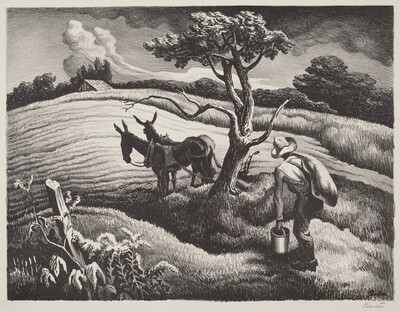
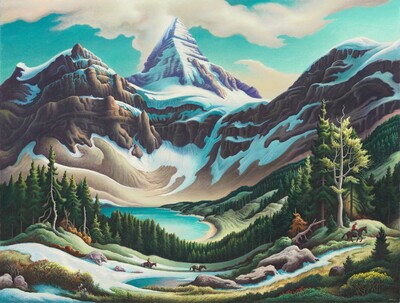
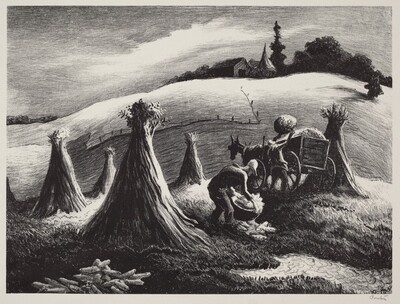
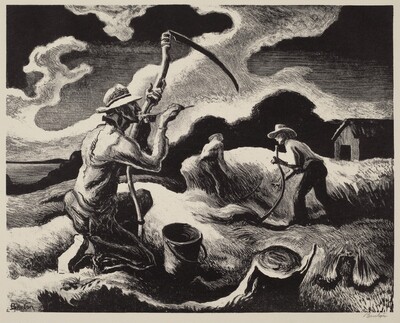
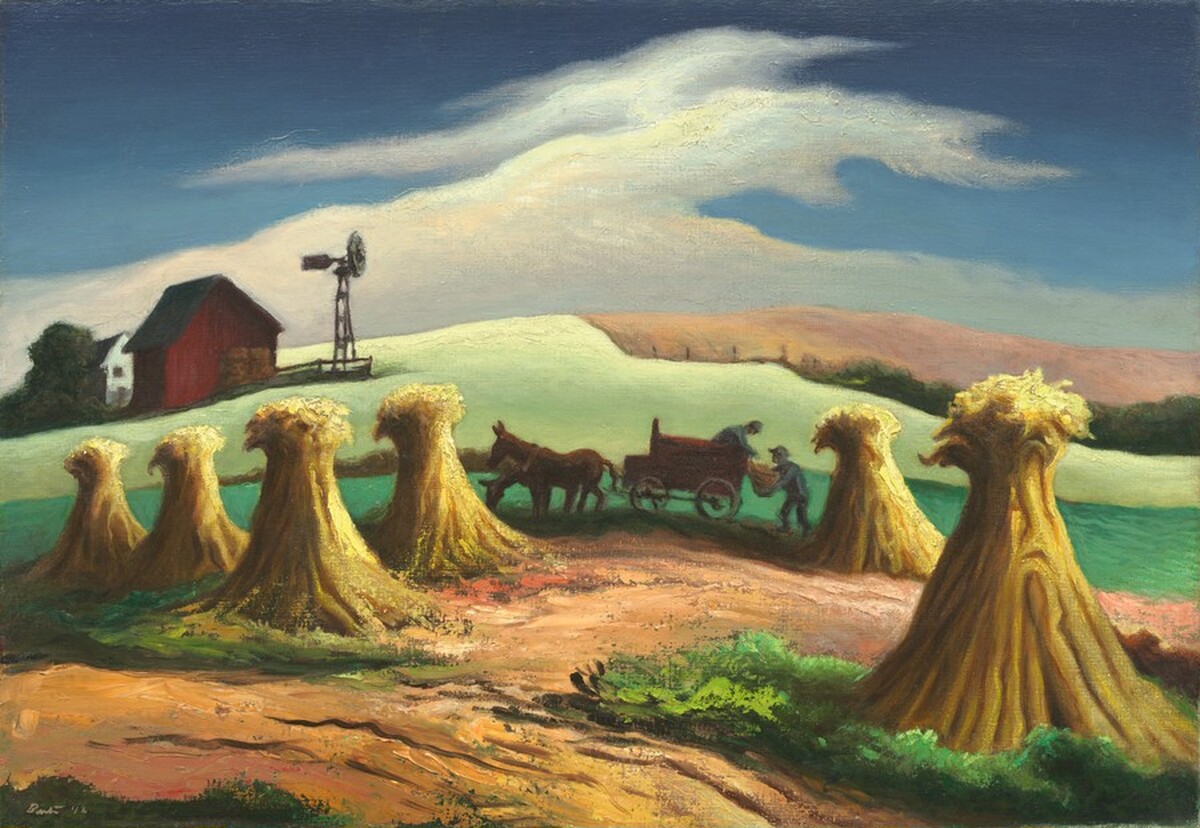
Thomas Hart Benton (1889-1975) was an American painter known as one of the leading figures of Regionalism, the American art movement that depicted rural and small-town life in the Midwest and South during the 1930s and 1940s. Corn and Winter Wheat from 1948 depicts the American agricultural landscape in the bold, rhythmic manner that distinguishes Benton's best work from the more documentary Regionalist paintings of his contemporaries. The 1948 date places this in Benton's mature period, when he was producing the bold, rhythmic landscape paintings that are his most accomplished works.
Cultural Impact
Corn and Winter Wheat is important in the history of American painting because it demonstrates the bold, rhythmic manner that Benton brought to the American landscape as one of the leading figures of Regionalism. Benton's bold, rhythmic approach—using flowing, muscular forms and warm colors to depict the American agricultural landscape—represents one of the most distinctive traditions in American painting, and the 1948 painting shows this tradition at its most accomplished, depicting the productive American farmland with muscular energy.
Why It Matters
Corn and Winter Wheat is Benton's Regionalist landscape: the American agricultural landscape rendered in the bold, rhythmic manner of one of the leading figures of Regionalism. The 1948 painting shows the productive American farmland depicted with flowing, muscular forms and warm colors—the most distinctive tradition of American landscape painting of the 1930s-40s.