Provenance
Paul Rosenberg Gallery, New York, c. 1928; John U. and Elinor Castle Nef, Chicago; John U. Nef and his second wife, Evelyn Stefansson Nef, Washington, D.C.; bequest to NGA, 2010.
Accession Number
2011.60.43
Medium
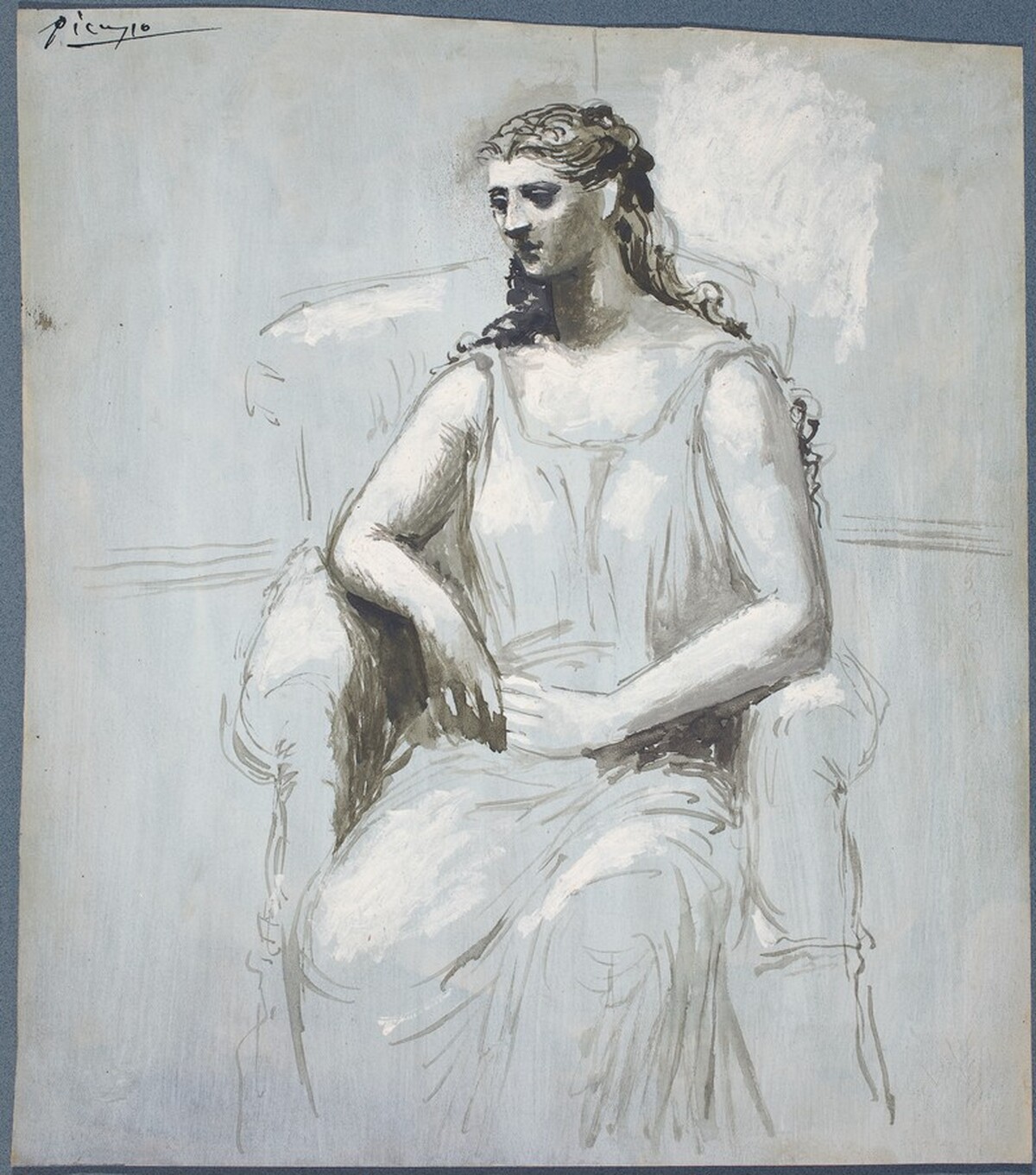
brush and gray ink with white gouache and black ink on paper washed light blue
Dimensions
overall: 27.1 x 23.7 cm (10 11/16 x 9 5/16 in.)
Classification
Drawing
Credit Line
The John U. and Evelyn S. Nef Collection
Tags
Drawing Early Modern (1901–1950) Ink Gouache Paper Spanish
Background & Context
Background Story
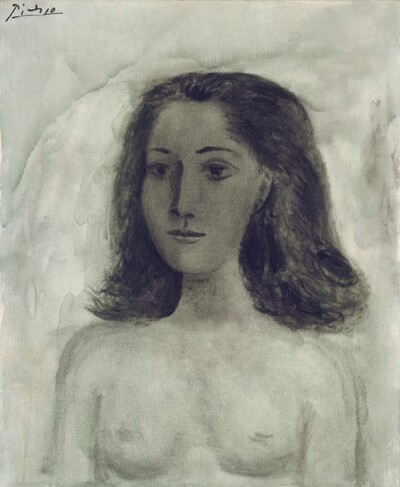
Young Woman Seated in an Armchair (1921-1922) belongs to Picasso's Neoclassical period, depicting a woman in a monumental style that references the European tradition while infusing it with modernist simplification. The armchair—a domestic piece of furniture—anchors the composition in the interior setting where Picasso's Neoclassical portraits were typically placed. The young woman's pose—seated, monumental, and self-possessed—reflects the classical tradition's emphasis on the seated figure as a vehicle for formal and psychological exploration. The 1921-22 date places this during the height of Picasso's Neoclassical engagement, when he was producing some of the most accomplished figurative paintings of his career. The painting's combination of classical volume and modernist simplification creates figures that are simultaneously traditional and contemporary—monumental but not pompous, simplified but not schematic. The young woman's features, rendered with the generalized quality of classical sculpture rather than the specificity of portraiture, suggest that this is a figure painting rather than a portrait—the subject being the seated woman's form and presence rather than an individual's identity. The armchair, with its formal structure and decorative elements, provides a compositional counterpoint to the figure's organic form, creating the dialogue between geometry and anatomy that characterized Picasso's best Neoclassical work.
Cultural Impact
Picasso's Neoclassical figure paintings influenced the return to order in 1920s European art, demonstrating that figurative painting could be modern without being radical. The paintings influenced later painters who similarly sought to combine classical form with modernist sensibility, from the interwar School of Paris to post-war realist painters. The seated woman subject influenced how the classical tradition of the seated figure was reinterpreted in modern art.
Why It Matters
This painting matters because it demonstrates that Picasso's modernist achievements were not limited to Cubism—the same formal intelligence that had deconstructed the figure in Analytic Cubism could reconstruct it in Neoclassical figuration, arguing that artistic greatness is a function of range rather than of narrow innovation.