Accession Number
1995.47.63
Medium
watercolor and graphite on laid paper
Dimensions
overall: 17.9 x 16.1 cm (7 1/16 x 6 5/16 in.)
Classification
Drawing
Credit Line
Collection of Mr. and Mrs. Paul Mellon
Tags
Drawing Early Modern (1901–1950) Watercolor Graphite & Pencil Paper Spanish
Background & Context
Background Story
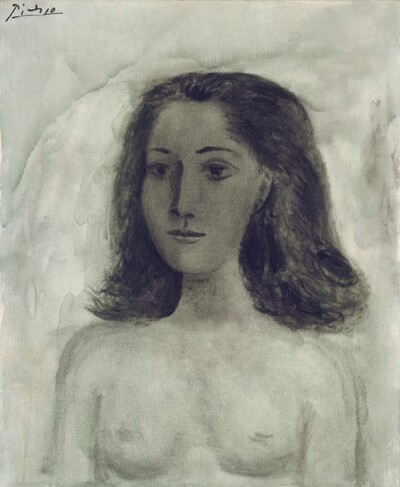
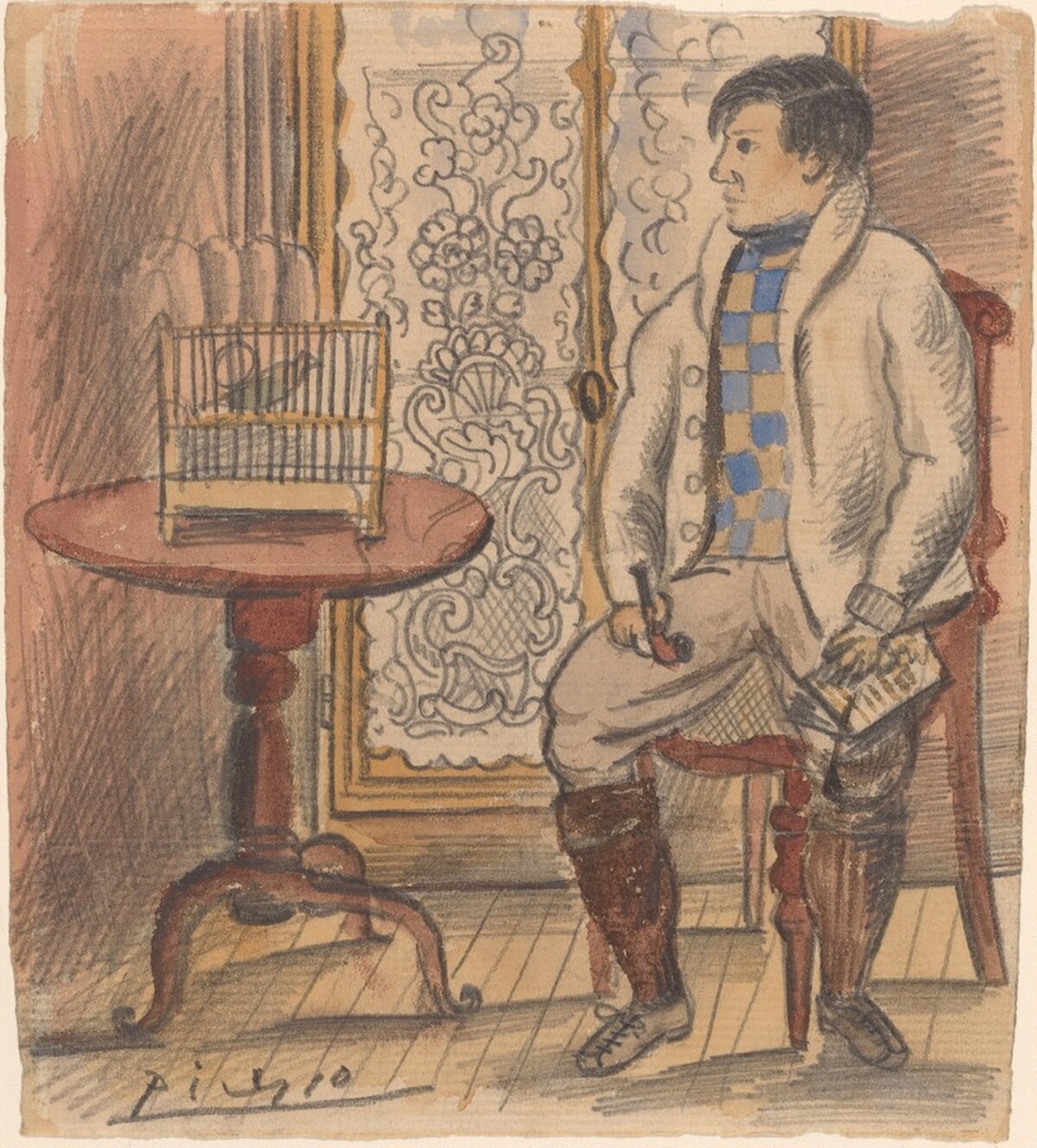
Self-Portrait (1919) depicts Picasso at the age of thirty-eight, during the period when he was one of the most famous artists in the world. The painting belongs to his Neoclassical period, when the revolutionary who had shattered representational convention in Cubism was painting with the ordered restraint of the European tradition. The year 1919 places this during Picasso's post-war reassessment—.period when he was navigating the transition from revolutionary innovator to established master. The self-portrait's style—classical, measured, and self-possessed—presents a Picasso very different from the wild bohemian of popular mythology. This is the artist as gentleman: confident, established, and working with the authority that a decade of unprecedented artistic achievement had earned. The painting's handling—refined, assured, and technically masterful—demonstrates that Picasso's Neoclassical work was not a retreat but a demonstration of range: the same artist who had invented Cubism could also work in the classical tradition, and his mastery of both argued that artistic greatness was not limited to a single style or direction. The self-portrait also captures Picasso's physical appearance at a specific moment—young enough to be vigorous, old enough to be authoritative—providing a visual document of the artist at the height of his powers.
Cultural Impact
Picasso's 1919 self-portrait influenced how the artist's public image was constructed, presenting the established master rather than the revolutionary bohemian. The painting influenced how Neoclassicism was understood in modern art, demonstrating that contemporary artists could work in traditional styles without compromising their modernist credentials. The self-portrait influenced how Picasso's career was periodized, documenting the Neoclassical phase with personal specificity.
Why It Matters
This painting matters because it captures Picasso at the moment when he was transforming from revolutionary to master—the transition that every major artist must navigate. The self-portrait's classical style presents this transition as a choice rather than a compromise, arguing that artistic authority derives from range rather than from narrow innovation.