Description
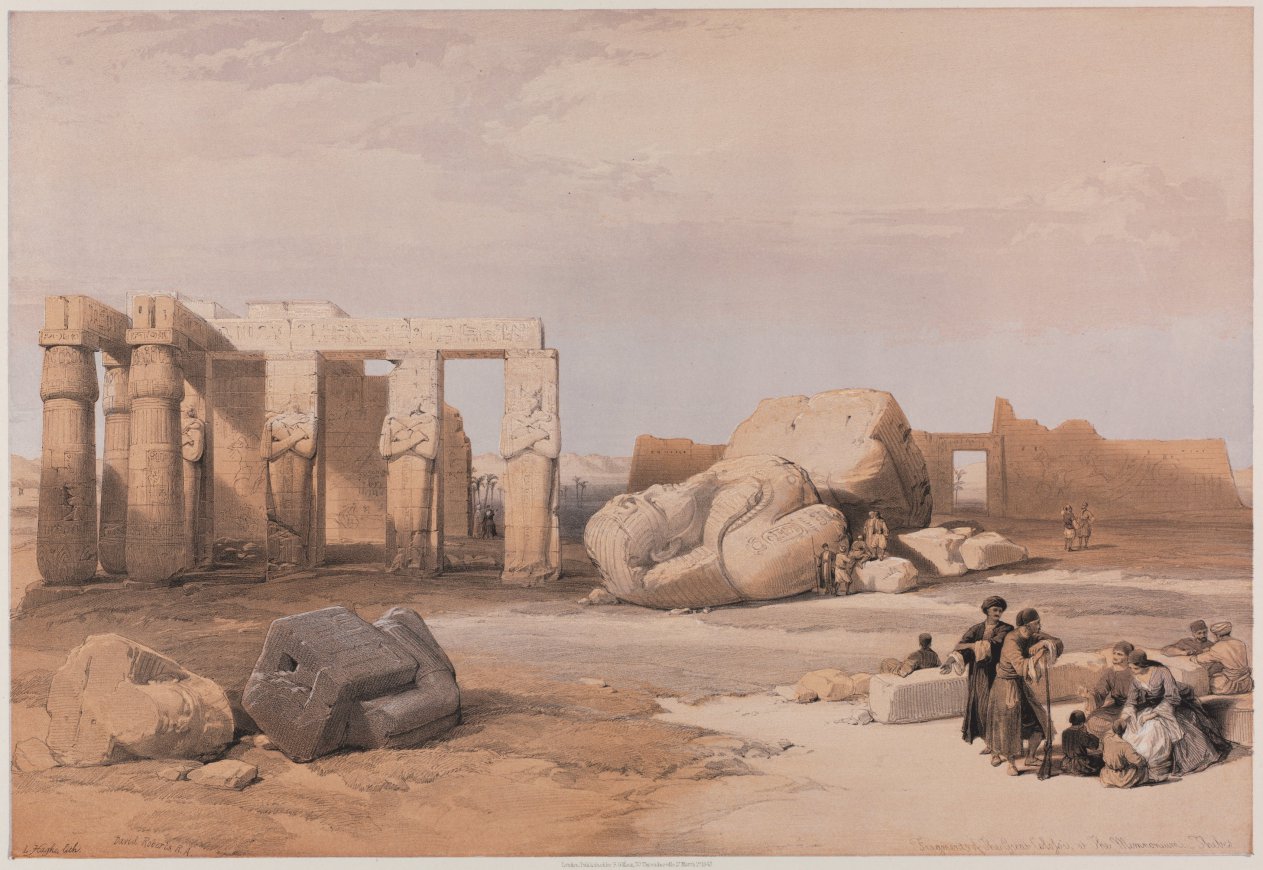
By the mid-19th century, the complexities of printing in numerous colors had been mastered, culminating in one of the high points of European printmaking. The plates drawn by Haghe, which copy the watercolors that David Roberts made in Egypt, are exquisite examples of color lithography. Egypt was a distant, mysterious country for Europeans and Haghe, a Scottish topographical and architectural artist who spent the year of 1838 traveling across this ancient land. The resulting prints—the first comprehensive series of views of the monuments, landscapes, and people of the Near East—were especially appreciated for their brilliant color and large scale. Collector John Bonebrake’s 134 prints of Egypt are an important addition to the Cleveland Museum of Art’s collection, and in a sense they have returned home: a large group of them was loaned to the 1992 exhibition Nineteenth-Century Views of Egypt.
Provenance
[Otto Schreiber]
Egypt and Nubia, Volume II: Fragments of the Great Colossi at the Memnonium, Thebes
1847
Accession Number
2012.149
Medium
color lithograph
Dimensions
Sheet: 43.4 x 60.4 cm (17 1/16 x 23 3/4 in.); Image: 34.8 x 51 cm (13 11/16 x 20 1/16 in.)
Classification
Credit Line
Bequest of John Bonebrake
Related Artworks
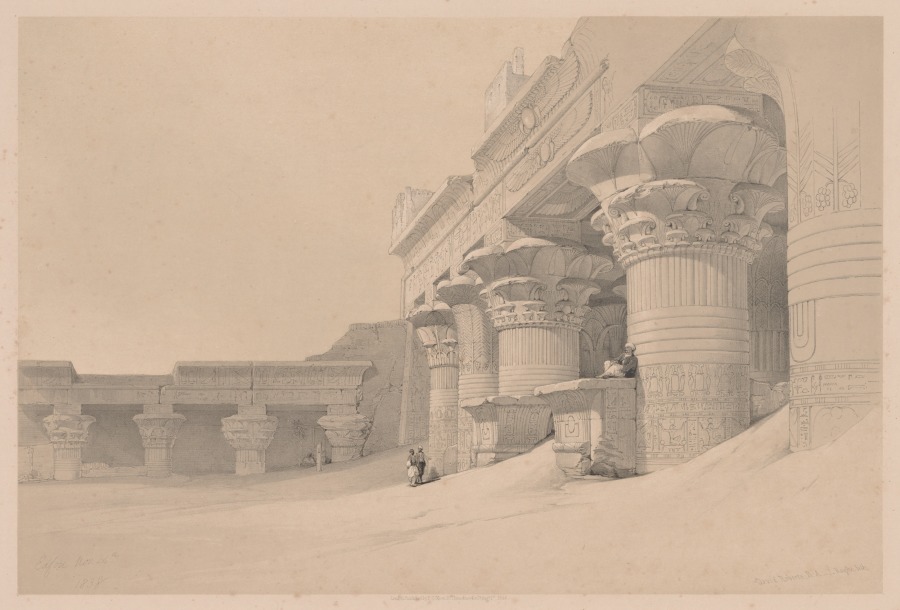
Egypt and Nubia: Volume I - No. 10, Edfou
Louis Haghe
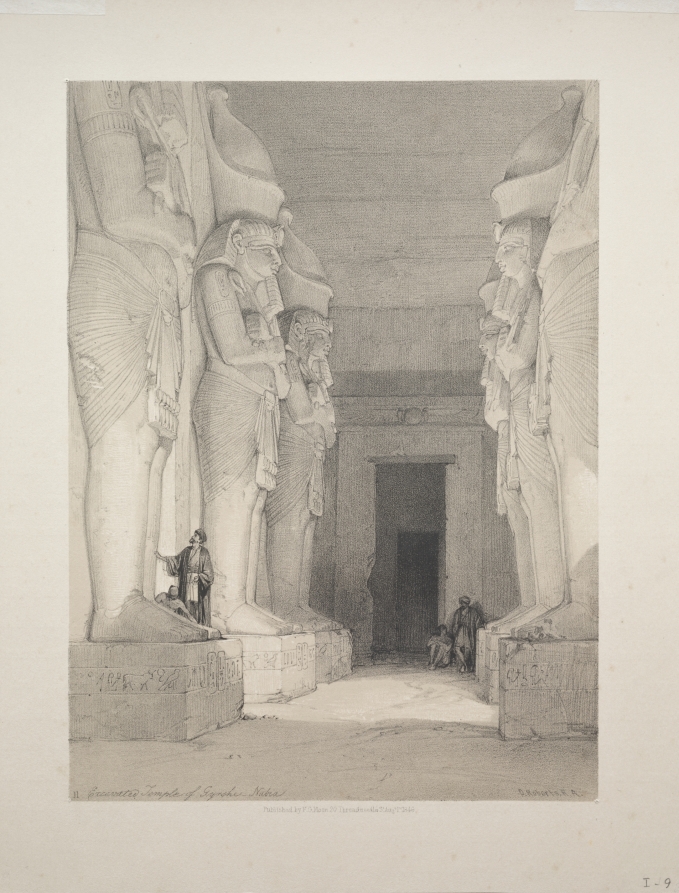
Egypt and Nubia: Volume I - No. 9, Excavated Temple of Gyrshe, Nubia
Louis Haghe
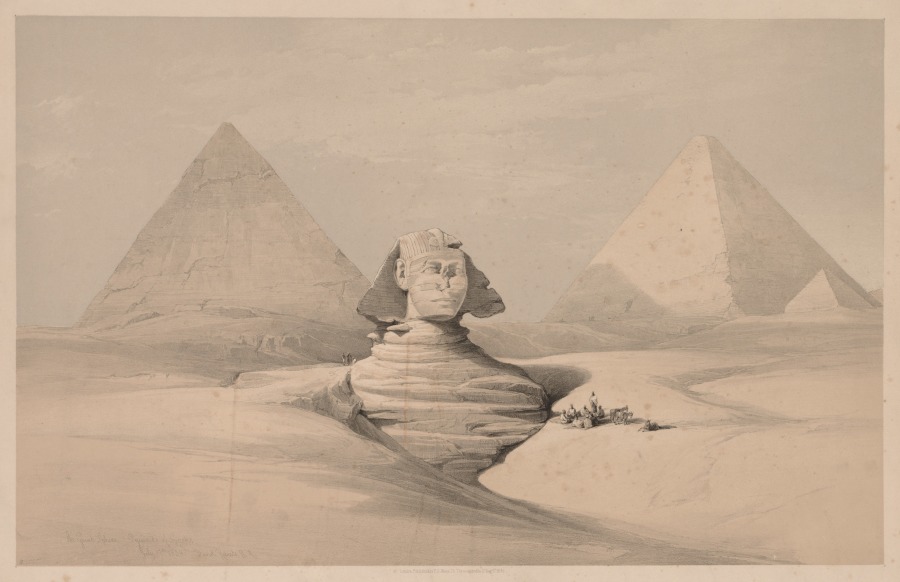
Egypt and Nubia: Volume I - No. 18, The Great Sphinx, Pyramids of Gizeh, Front View
Louis Haghe
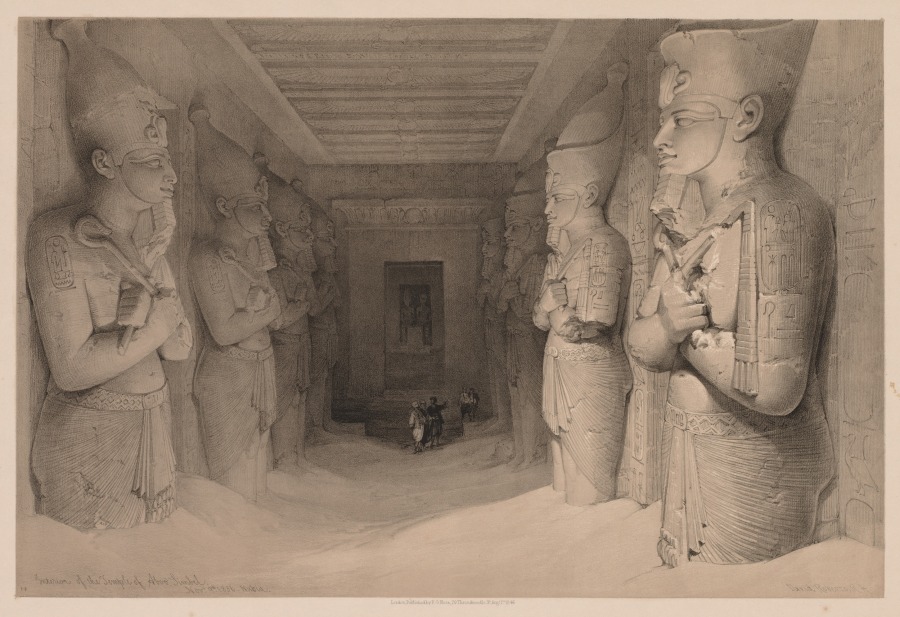
Egypt and Nubia: Volume I - No. 14, Interior of the Temple Aboo Simbel
Louis Haghe