Description
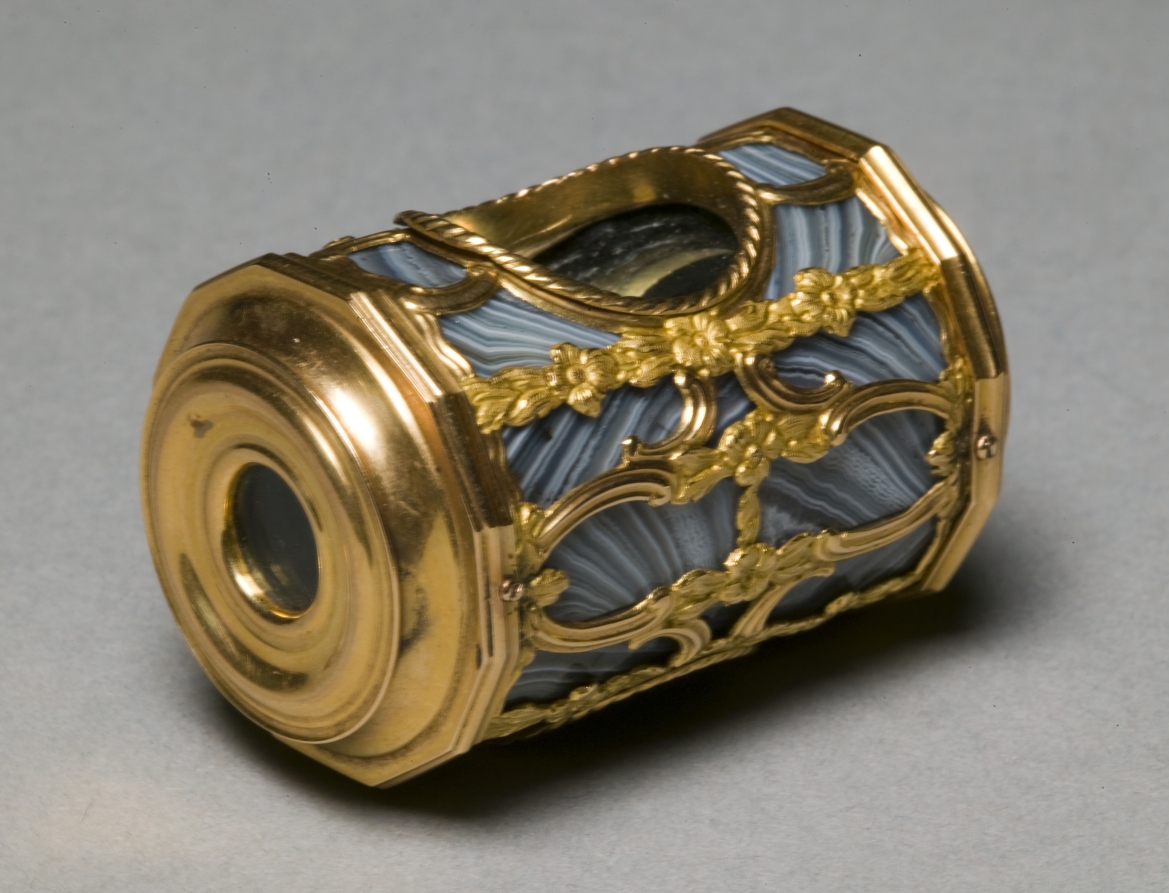
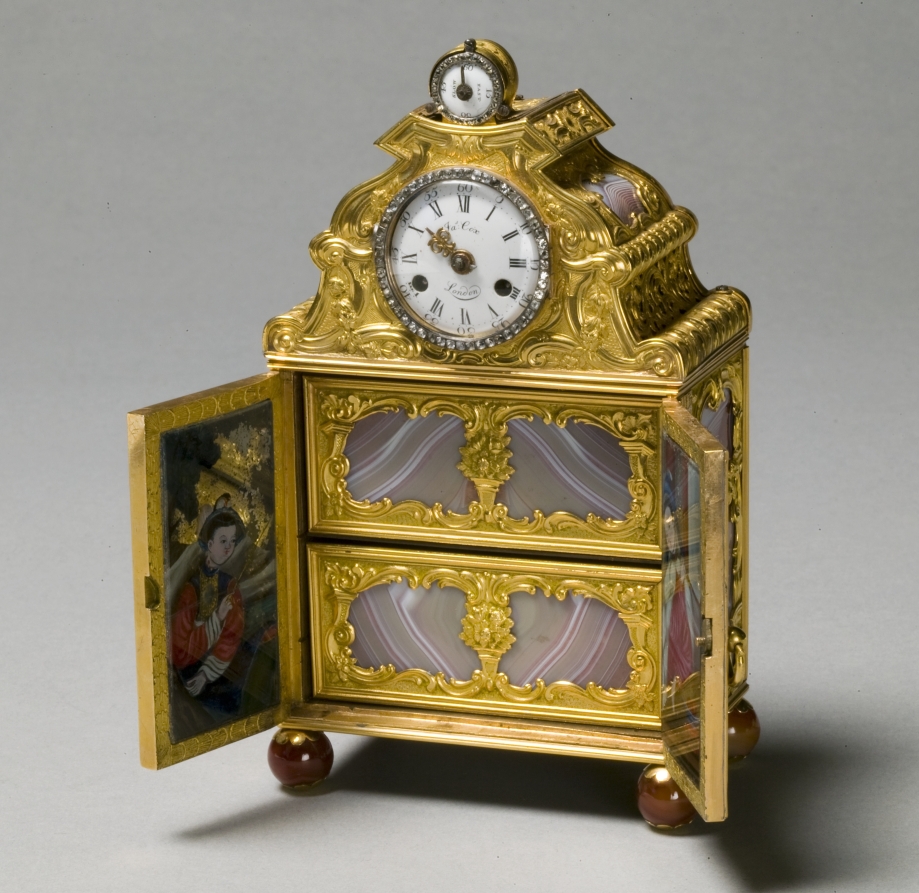
In the 1700s and early 1800s, luxurious objects such as jewelry, miniatures, snuff boxes, and vanity cases emphasized their owner’s refinement and wealth. Especially popular were small cases with clocks and moving mechanical devices that played a handful of musical tunes. James Cox, the London goldsmith responsible for this clock and case, was known for creating such tuneful surprises, although this work no longer contains such a mechanism. Its glittering surface disguises a system based on the labor and suffering of enslaved people, whether in gold and stone mines or in shops where these goods were made by indentured apprentices. Many of these timepieces were designed for export and sold to the Chinese emperor Ch'ien Lung (1711–1799) and his court in attempt to balance out the substantial amount of tea that Britain was importing at the time.
Provenance
Private collection, New York; Howard F. Stirn [1923-2016], Cleveland, OH, given to the Cleveland Museum of Art (-2009); The Cleveland Museum of Art, Cleveland, OH (2009-)
Accession Number
2009.77
Medium
gold, agate, enamel dial, glass
Dimensions
Overall: 16.5 x 8.9 cm (6 1/2 x 3 1/2 in.)
Classification
Miscellaneous
Credit Line
Gift of Howard F. Stirn