Description
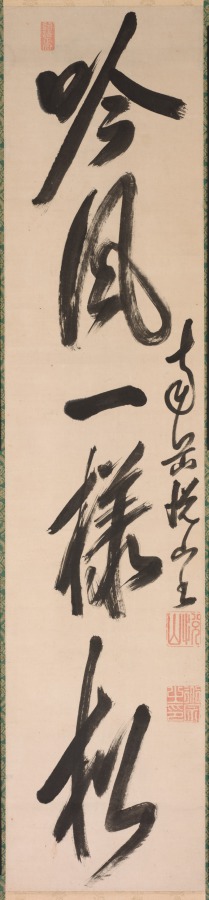
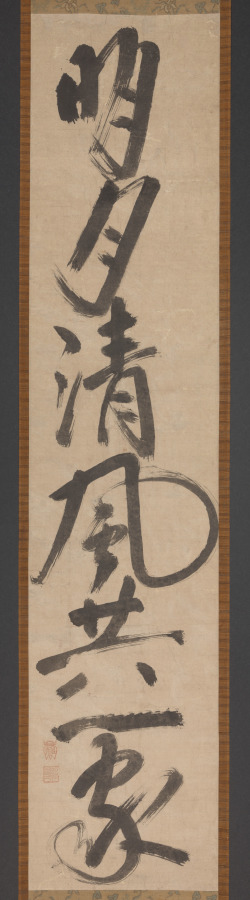
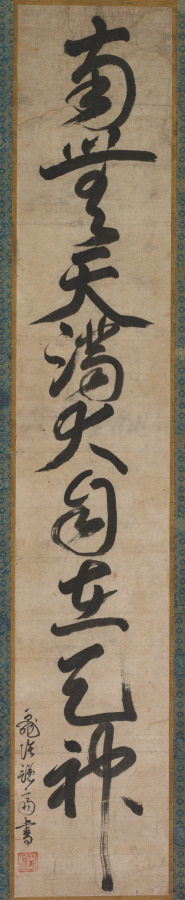
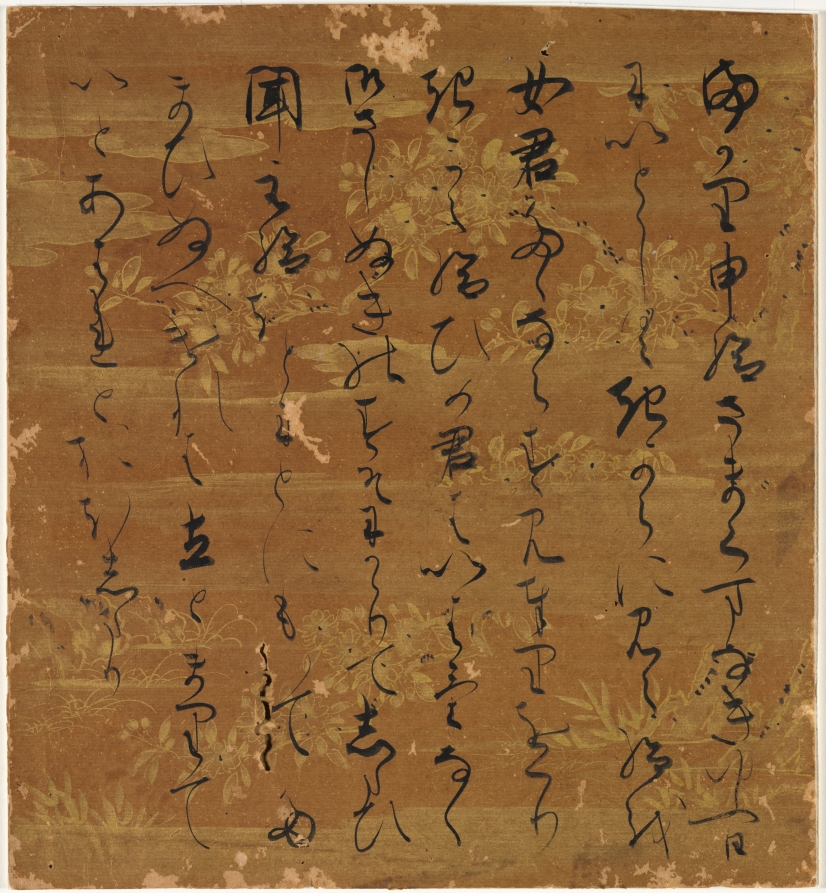
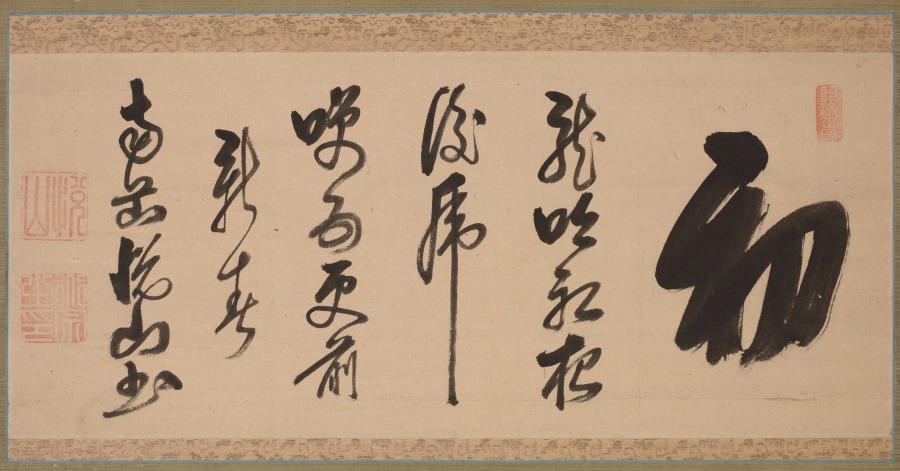
This spontaneous, bold calligraphy style is characteristic of members of the Japanese Ōbaku school (Huangbo in Chinese) of Chan (Zen in Japanese) Buddhism, which was founded in Japan by Chinese monks in the 1600s. The monk Yueshan emigrated to Japan from the Chinese province of Fujian, taking a priestly post at Manpukuji, the headquarters of the Ōbaku school in Japan. He later became the seventh abbot of the distinguished temple.
Yueshan’s calligraphy features rounded characters that allow him to fuse strokes and characters in speedy brush movements. Here the text begins with the large character chu (初, “the beginning”), the initial focus of meditation on the text: The dragon murmurs after sunset. The tiger roars before dawn.
Yueshan’s calligraphy features rounded characters that allow him to fuse strokes and characters in speedy brush movements. Here the text begins with the large character chu (初, “the beginning”), the initial focus of meditation on the text: The dragon murmurs after sunset. The tiger roars before dawn.
Provenance
(Chinese Porcelain Factory, NY, sold to Mr. and Mrs. Robert Gow); Robert [1940–2019] and Kay Gow [b. 1951], Naples, FL, given to the Cleveland Museum of Art (?–2003); The Cleveland Museum of Art, Cleveland, OH (2003–)
Accession Number
2003.353
Medium
Hanging scroll; ink on paper
Dimensions
Image: 28.6 x 64.1 cm (11 1/4 x 25 1/4 in.); Overall with knobs: 115.6 x 73.8 cm (45 1/2 x 29 1/16 in.)
Classification
Calligraphy
Credit Line
Gift of Mr. and Mrs. Robert T. Gow